
Scholar Cohort 2026 empowers future women leaders in computing
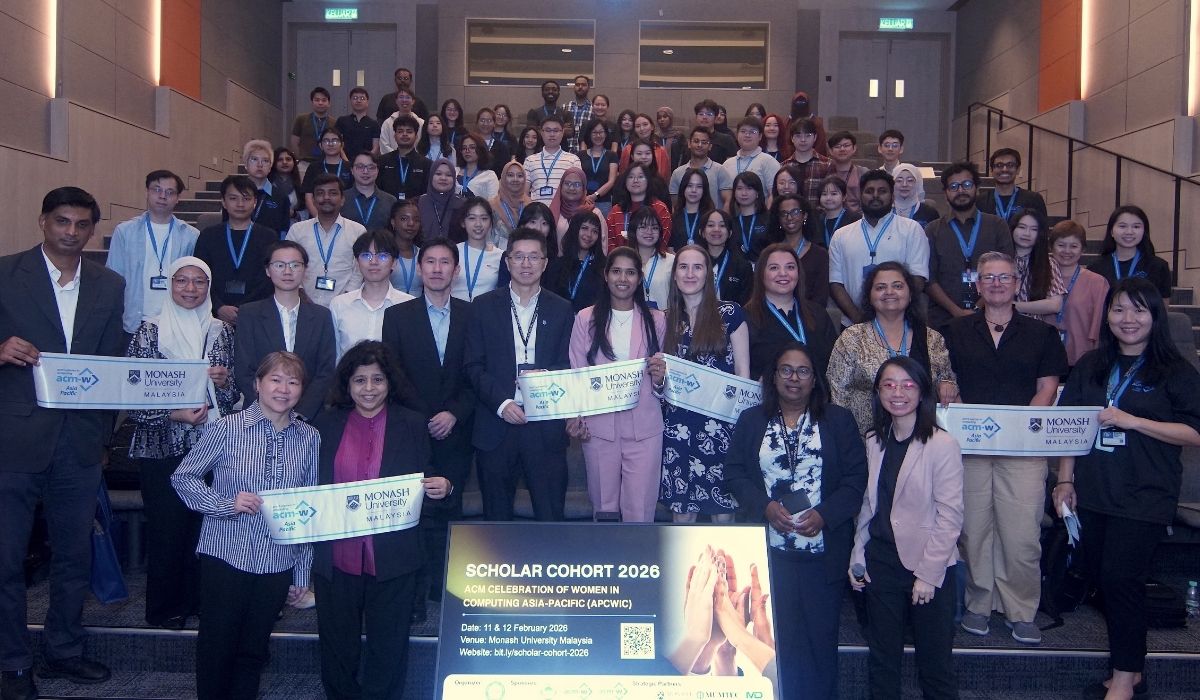 A group photo of the attendees as well as the speakers during the first day of the Scholar Cohort 2026.
The School of Information Technology (IT), with support from the Association for Computing Machinery (ACM), hosted the inaugural ACM-W Scholar Cohort 2026: ACM Celebration of Women in Computing Asia-Pacific (APCWiC) on 11 and 12 February 2026. Organised by the Monash University Malaysia ACM-W Student Chapter Women Asia Pacific and ACM Women Global, the event welcomed university students from Malaysia and across the region for two days of keynotes, workshops and networking.
The program opened with a welcoming ceremony featuring Professor Anthony Guo, Monash University Malaysia’s Head of the School of Engineering and IT, Associate Professor Bimlesh Wadhwa, Chair of ACM-W Asia Pacific and Vice Dean (Student Life) at the School of Computing, National University of Singapore, and Dr Rukiye Altin, Researcher in Computer Science Education, Computer Science and Gender Diversity, Chair of ACM-W Global and former Chair of ACM-W Europe.
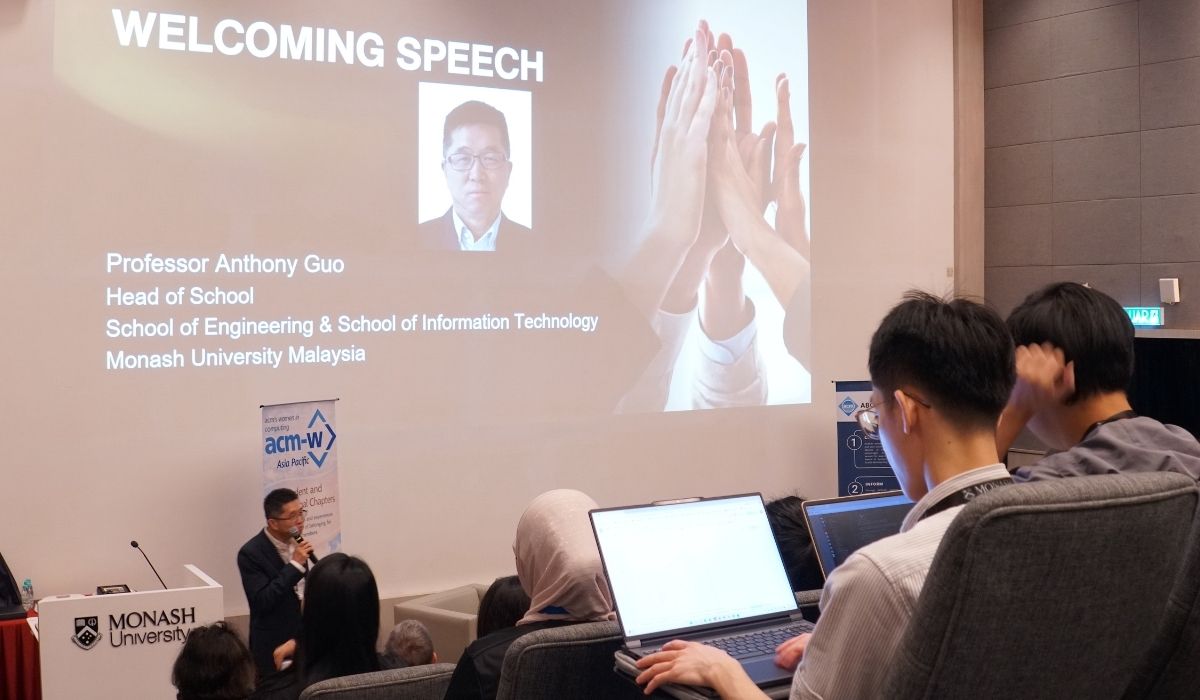 Professor Anthony Guo gave his welcoming speech during the first day of the event.
Professor Guo emphasised the importance of inclusive spaces in technology education. “We are building a community that supports and uplifts women in computing across the region,” he said. Associate Professor Wadhwa highlighted the broader mission of ACM-W in advancing gender equity in computing. “Representation matters. When women see other women leading, innovating and shaping the field, it transforms what feels possible,” she noted, with Dr Altin reinforcing the same message.
The first keynote, Humans in the Loop: Human-Centred Computing for the Internet of Things, was delivered by Dr Judy Bowen, Professor of Software Engineering and Computer Science, from the University of Waikato, New Zealand. Drawing on her research in safety-critical systems and interactive technologies, Dr Bowen challenged the common attribution of system failures to “human error”. “When we say human error, what we often mean is design error,” she explained. She stressed that many failures occur because systems are not designed with users’ real-world contexts in mind.
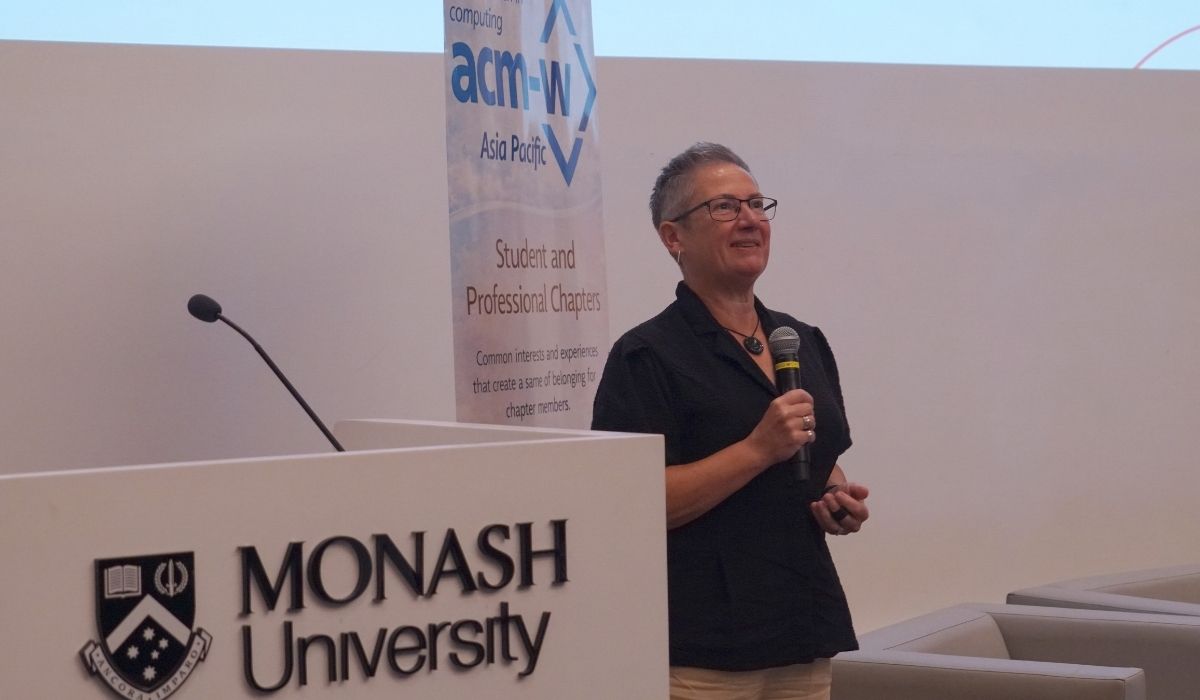 Dr Judy Bowen (Professor in Software Engineering and Computer Science, from the University of Waikato, New Zealand) talking during the keynote on Humans in the Loop: Human-Centred Computing for the Internet of Things.
She concluded with the Māori proverb He aha te mea nui o te ao? He tāngata, he tāngata, he tāngata, which means “What is the most important thing in the world? It is people, it is people, it is people,” reminding the audience that technological advancement must remain grounded in human values.
The keynote was followed by a panel discussion on Ethical and Responsible AI, moderated by Dr Anuja Dharmaratne, Associate Professor in the Department of Human-Centred Computing, Monash University, with the panellists consisting of Dr Judy Bowen, Dr Arati Dixit, Senior Scientist at Applied Research Associates, North Carolina, USA and Chair of ACM-W Regional Activities Committee, along with Dr Susi Susilawati, Senior Lecturer at Monash University Malaysia, who explored how ethical principles can be applied in practice.
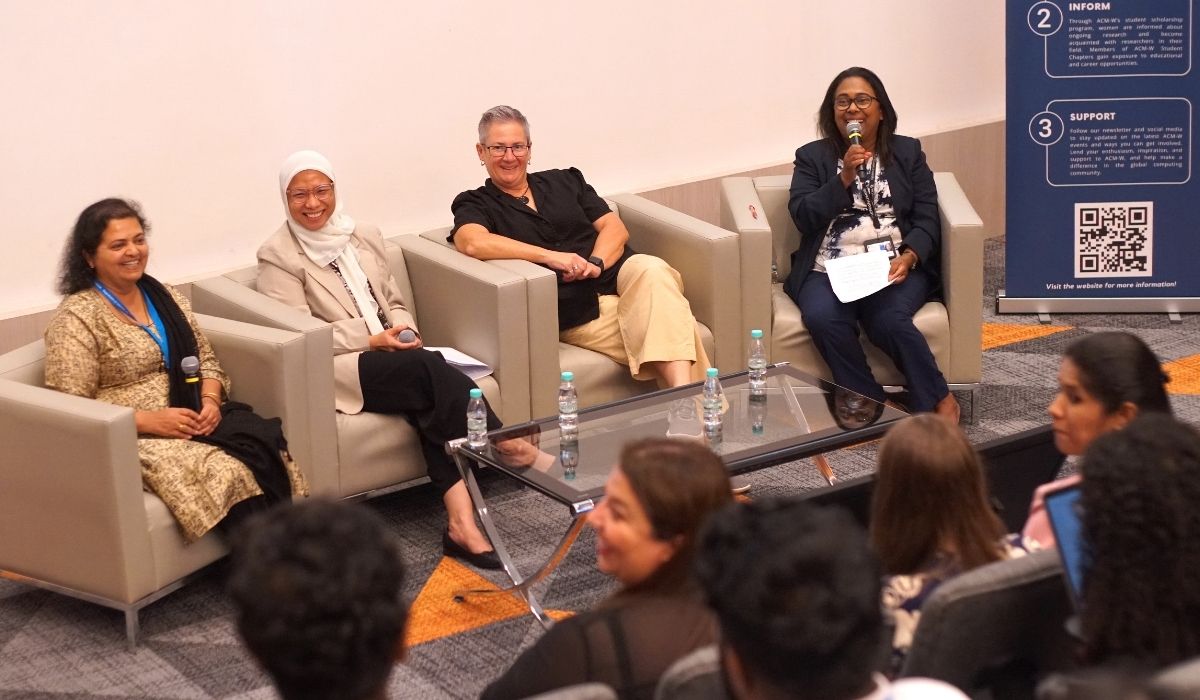 From left to right: Dr Arati Dixit (Senior Scientist at Applied Research Associates, North Carolina, USA and Chair of ACM-W Regional Activities Committee), Dr Susi Susilawati (Senior Lecturer at Monash University Malaysia), Dr Judy Bowen (Professor in Software Engineering and Computer Science, from the University of Waikato, New Zealand), and the moderator, Dr Anuja Dharmaratne (Associate Professor in the Department of Human-Centred Computing, Monash University).
In the afternoon, participants attended parallel workshops focused on proposal writing and publishing strategies, with the first day concluding with poster sessions and project demonstrations.
The second day began with the second keynote, Is the Grass Really Greener? Comparing Academic and Industry Career Paths, delivered by Dr Chun Yong Chong from the Software Engineering Laboratory–Leibniz, Huawei Hong Kong. Reflecting on his transition from academia to industry, Dr Chong outlined key differences in culture and priorities. “In academia, impact often unfolds over years. In industry, impact can be immediate, but it is measured differently,” he shared. Encouraging flexibility in career planning, he reminded participants that we cannot always predict our future, but that we can prepare to adapt.
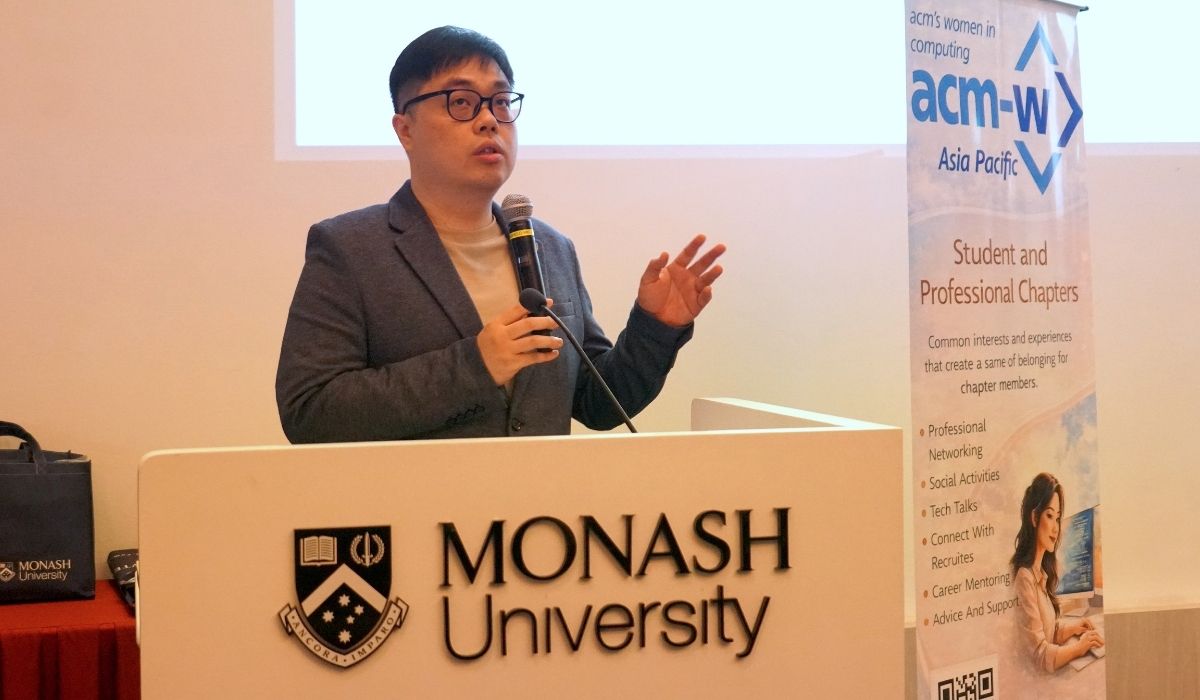 Dr Chun Yong Chong from the Software Engineering Laboratory–Leibniz, Huawei Hong Kong talking during the keynote on Is the Grass Really Greener? Comparing Academic and Industry Career Paths.
The remainder of the program featured workshops on deep learning and high-performance computing, CV and interview mastery, industrial grant applications, and well-being strategies for computing students.
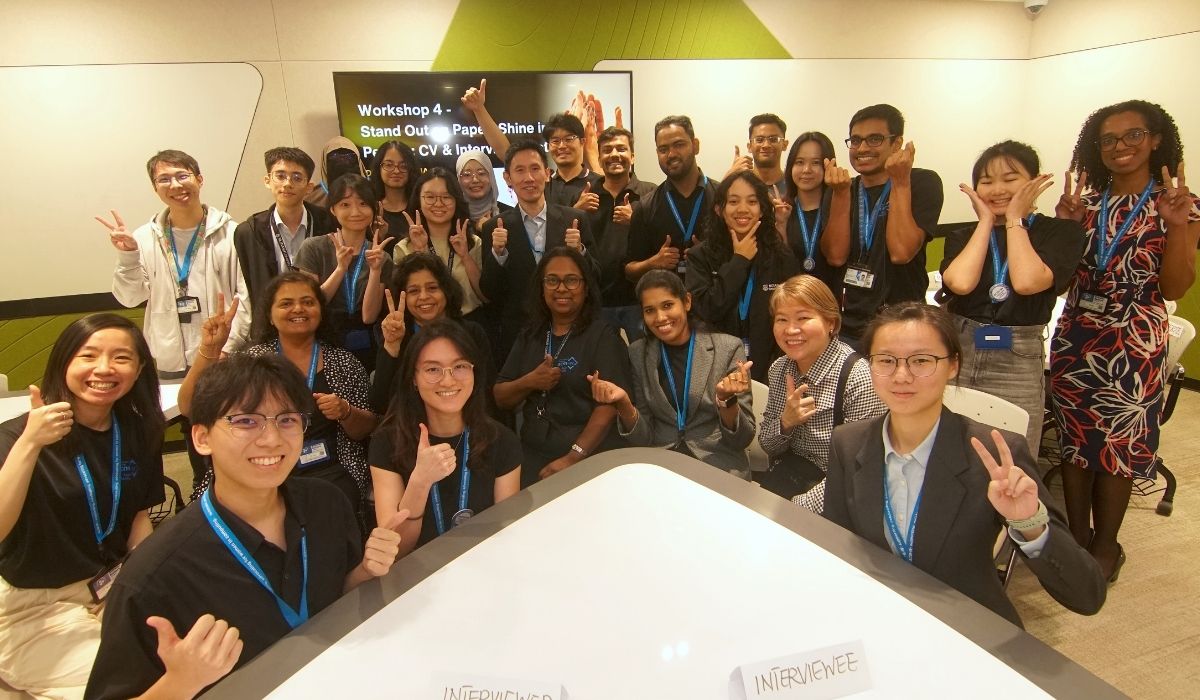 The attendees and speakers posing a group photo during one of the workshops, specifically during Workshop 4 — Stand Out on Paper, Shine in Person: CV & Interview Mastery, presented by Dr Mark Chia (Founder of Mobius Group, Malaysia) [Dr Mark Chia is the person standing in the middle with two thumbs up and wearing a suit with a light blue shirt].
The Scholar Cohort 2026 program reflected the university’s dedication to supporting women in computing. By having conversations on ethics, innovation and career exploration, the event empowered participants to contribute meaningfully to a future in computing that remains firmly focused on people.