
Shageenderan Sapai
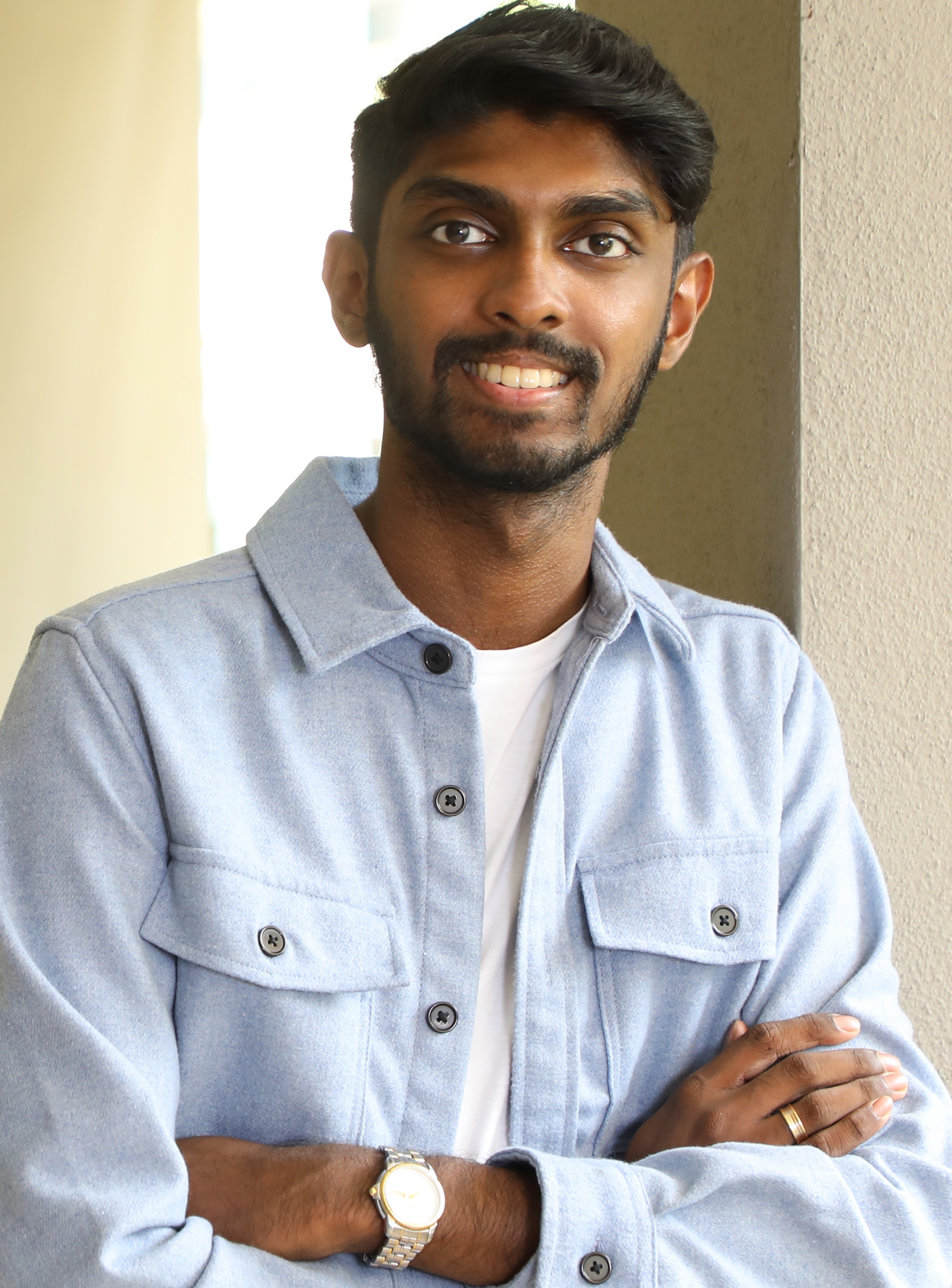
Name: Shageenderan Sapai
Nationality: Malaysia
Current Role: Artificial Intelligence Developer at Userdata Sdn Bhd
If previously or currently employed, what is your position and company? Can you tell us about your role and what you do?
Monash University Malaysia, Teaching Support (Tutor)
07/2021 – Ongoing
As part of my scholarship requirements, I provide teaching support for School of IT units in Monash University Malaysia. Currently I have tutored two different year 3 IT units and am expected to tutor more in the future.
TESS International, Data Scientist
02/2021 – 05/2021
Worked as a full-time data scientist for a financial security solution provider. My responsibilities were to combine AI solutions with search engines in order to screen for high-risk (i.e., blacklisted, politically exposed persons etc.) users for banks/financial institutions. Furthermore, I had to enable AI models using limited training data.
BeacoHealth, Artificial Intelligence Software Engineer
04/2020 – 08/2020
Worked as a part-time freelance developer responsible for developing the foundation for an AI solution. I worked independently to develop a human blob segmenter and tracker for thermal video footage using Deep CNNs and popular tracking algorithms
Skandinaviska Enskilda Banken AB (SEB), Web & Mainframe Developer
02/2019 – 07/2019
Worked with two different technologies during this internship. As a mainframe developer, I worked with a database conversion team and was responsible for writing COBOL scripts to run data quality checks. As a front-end developer I helped migrate an existing application from Angular to React and helped develop a web application in Angular.
If applicable, please tell us about your postgraduate research (e.g. the issue and applications you’re working towards)
Soft-robots are a specific subset of robots constructed out of soft, compliant materials that afford them greater flexibility and adaptability in their movements. This enables them to be used in various niche applications such as search and rescue missions, narrow-space exploration, minimally invasive surgery and adaptive grasping and manipulation of other soft entities. However, soft bodies are plagued
with complicated dynamics as they conform to their surrounding structure and thus, it is analytically challenging to fully describe the non-linearity of soft robots. To mitigate the complexities involved in modelling soft-robots analytically, recent works have shown a trend of adopting artificial intelligence (AI) methods to capture their highly non-linear behaviours. Nevertheless, the performance of AI methods relies heavily on the availability of large amounts of data. However, data acquisition in soft-robotics can be significantly strenuous and expensive. To alleviate this burden, my research focusses on generative models - which are AI models that attempt to
generate realistic synthetic data. We then aim to show how synthetic data can reduce the barrier to entry for using AI models in soft-robotics.
Why did you choose to pursue your postgraduate degree at Monash University Malaysia? Did it meet your expectations?
Monash is a widely recognized university placing in the top 1% globally for Computer Science making it an esteemed venue to pursue my PhD. Furthermore, having completed my undergraduate studies at Monash, I am familiar with the support and
resources they are able to provide which I have found more than sufficient. I also have managed to establish a strong research network during my time as an undergraduate. I was (and am) a part of the Monash Soft Robotics team which is a collaborative effort between the schools of IT and Engineering for advancing the understanding of deep learning efforts in soft robotic automation and control. I
believe by working in this collaborative and inclusive ecosystem, I will be able to make a significant impact in the field. So far, Monash has exceeded my expectations especially with the resources they are able to provide. This is especially clear with the new state-of-the-art HPC platform that they are launching soon. I am also blown away by the incredibly open, friendly, and inclusive environment at Monash which has allowed me to interact and collaborate with people from various backgrounds.
While at Monash, what type of opportunities did you participate in? (E.g. student
exchange, clubs and societies, field trips, conferences, competitions, etc.)
During my undergraduate years, I went on a student exchange to the Monash Australian Campus (Clayton) for 1 semester, which allowed me to learn new cultures and experiences. Furthermore, in my third year I was accepted to do the industry- based learning programme under Monash. It is a competitive programme (only select students are allowed to participate) where for 1 semester students undergo an internship and gain working-experience under a sponsoring company. Besides this, I was also a part of the School of ITs’ first apprenticeship scheme. I was also selected to be a member of the EILP society in Monash University Malaysia; a private club for high achieving Engineering and IT students that aims to build leadership and communicative skills in its members. Beyond this, while at Monash I also participated and won in various national and uni-level programming competitions. Currently, I am the postgraduate student representative for the School of IT.
What did you enjoy most about your student life at Monash?
The environment of inclusivity and openness, not just for collaborative research projects but also in building relationships. I never feel like I do not belong, and you can always find many people whom are willing to help/guide you when you need it
What is your biggest career goal, or what is the difference you’d like to make?
I would like to develop state-of-the-art timeseries generative models for use invarious fields. Such models can be used for dataset generation, video generation, speech reconstruction and many more. I want to be able to reduce the need to rely on expensive and exhaustive data collection methods.