
ROBOT Malaysia Executive Member Meeting
"Global Science, Local Relevance: Together for DGBI"
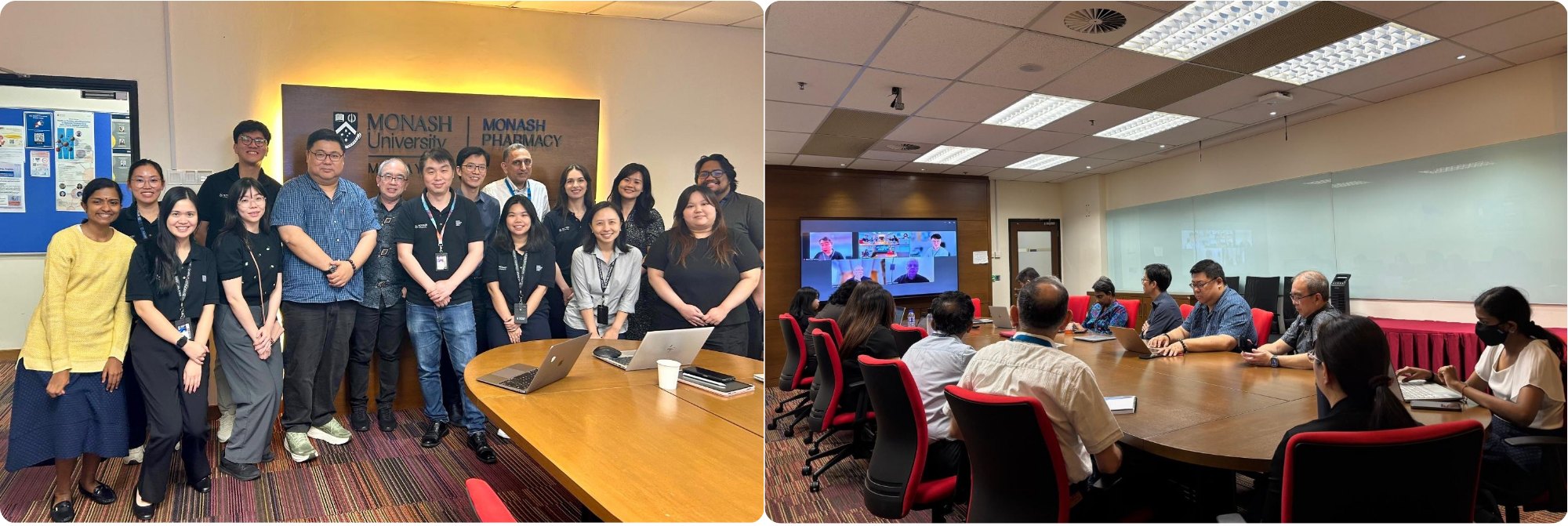
We proudly hosted the ROBOT (ROme foundation BiOmarker and phenotyping projecT) Malaysia Executive Member Meeting, uniting researchers and clinicians from across Malaysia and beyond to advance research into Disorders of Gut–Brain Interaction (DGBI). Despite joining the ROBOT network only recently, Malaysia has quickly become one of the top contributors in data and sample collection, reflecting the dedication of clinical teams and the strength of collaboration.
ROBOT Malaysia DGBI Flagship Project is a multi-centre collaboration between UMMC, HUSM, HUKM, and the (Future) Monash Microbiome Research Centre. Recruitment takes place at UMMC, HUSM, and HUKM (yet to commence), while Monash provides expertise in sample handling and data analysis. Current findings from UMMC and HUSM have already revealed striking differences in DGBI clinical profiles, mental health, and quality of life between urban and sub-urban/rural populations, underscoring the scientific value of diverse recruitment.
Adding a regional perspective, Dr Kewin, Asia’s ROBOT Ambassador, brought together colleagues from across Asia to share experiences and explore opportunities for cross-border collaboration, reinforcing Malaysia’s role in strengthening global DGBI research. The meeting also highlighted the critical role of teamwork. Clinicians play an indispensable role in recruitment, as patients are more willing to participate when approached by their trusted doctors, while the microbiome centre ensures rigour through sample processing and data analysis. Together, these efforts make the project possible. Several challenges were acknowledged, including non-standardised recruitment and sample handling, participant reluctance to provide multiple sample types, questionnaire fatigue, and the long-term sustainability of funding. Addressing these will be vital to ensure robust data collection and continuity.
The day closed with optimism. ROBOT Malaysia has already demonstrated how multi-centre recruitment, clinician engagement, and cross-border collaboration can transform science. By uniting diverse populations, strengthening regional partnerships, and integrating clinical expertise with microbiome research, the project is building evidence that is more representative, inclusive, and impactful. Sustaining this momentum through long-term funding will be key to accelerating discoveries in DGBI, deepening our understanding of the gut–brain axis, and guiding better prevention, diagnosis, and treatment worldwide.