
Precision Public Health Asia 2025 Conference
GPH Leadership Take the Stage at Precision Public Health Asia 2025, Calling for a More Political Approach to Precision Health
Published: 24 August 2026
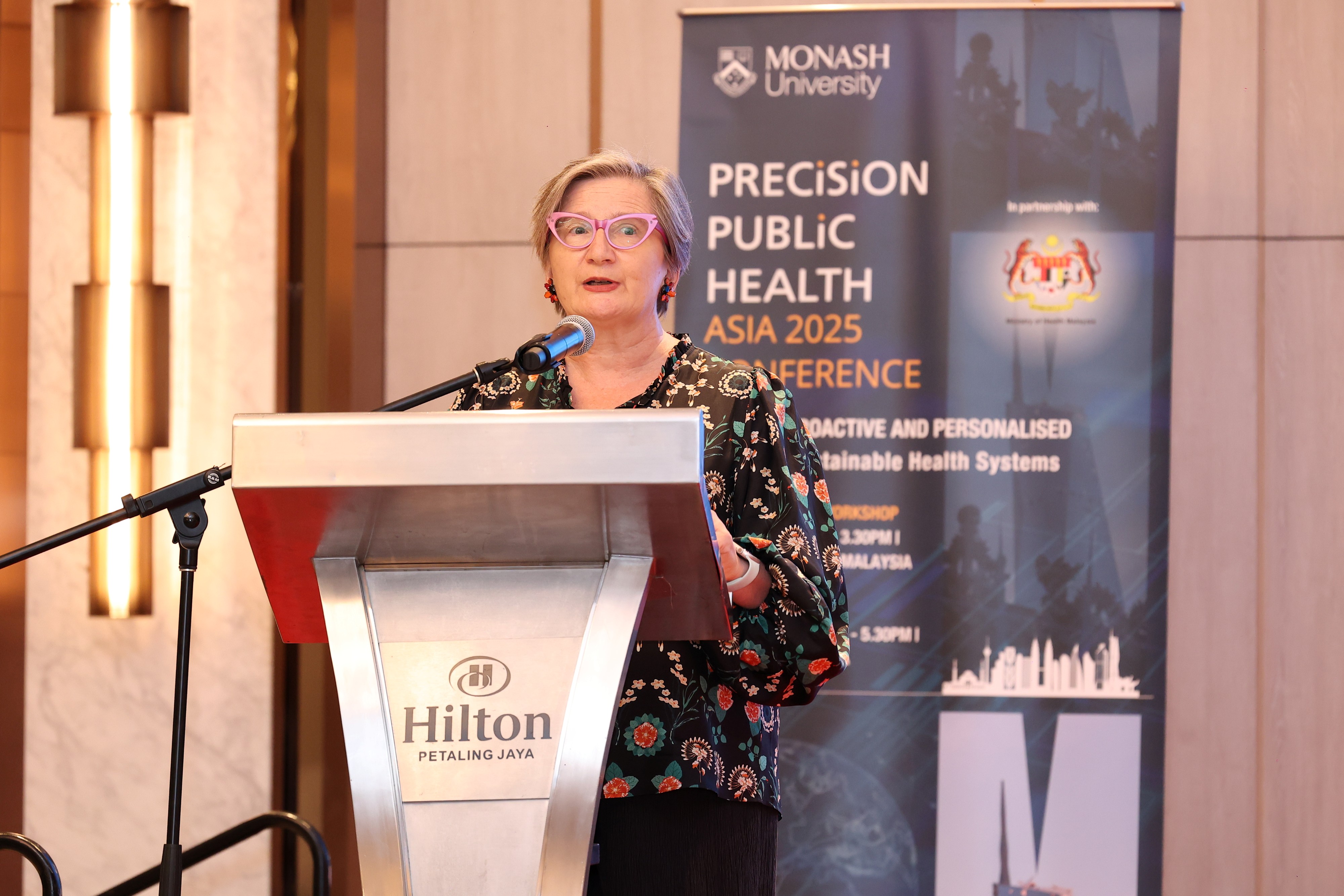
From 15–17 July 2025, the Jeffrey Cheah School of Medicine and Health Sciences hosted the Precision Public Health Asia (PPHA) 2025 Conference, a biannual international gathering held across Monash University Malaysia and Hilton Petaling Jaya under the theme "Precise, Proactive, and Personalised — Towards Sustainable Health Systems." The conference, officiated with a keynote address by Malaysia's Minister of Health YB Datuk Seri Haji Dr Dzulkefly Bin Ahmad, brought together policymakers, industry leaders, academics, and researchers from across the region to shape the future of precision public health.
GPH was represented on stage across both conference days. On 16 July, Prof. Kent Buse joined Dr Murallitharan Munisamy (National Cancer Society Malaysia) and Prof. Jose M. Valderas (National University of Singapore) as a panellist for Concurrent 3: "Digging Deep: Picking Precisely at the Root of the Problem," a session on understanding and addressing the social determinants of health to reduce disparities and improve community outcomes. The session was moderated by Prof. Sarah Hawkes, Head of GPH. The following day, Prof. Hawkes took the stage herself as a speaker in Plenary 3: "Putting the 'Boom' Back in Public Health," exploring how real-world data and modern AI could revitalise public health in the way neural networks transformed daily life after decades in the wilderness.
Ahead of the conference, Prof. Buse, together with Precision Public Health Asia Society leaders Jeremy Lim and Clive Tan and Monash Malaysia President Prof. Dato' Dr Adeeba Kamarulzaman, published a co-authored commentary, "Precision Must Get Political," setting the tone for the sessions to come. Drawing on H.G. Wells' The Time Machine as a cautionary tale, the piece argued that precision public health risks becoming a purely technocratic fix to what is fundamentally a political problem, of who gets what, when, and why, unless it is paired with attention to power, equity, and community voice. The authors set out five pillars for a genuinely "political" precision public health: pro-equity governance that puts affected communities at the table, transparent and participatory data governance, partnership with health-justice movements, a shift from fixing individuals to fixing upstream systems, and deliberate storytelling that reframes disease as a product of structural forces rather than personal failing.
Together, the panel sessions and the accompanying commentary positioned GPH at the centre of one of the conference's central debates: not whether precision tools can identify who is at risk, but whether the systems around those tools are built to act on what they find.