Monash Anatomy Pathology E-Learning Laboratory

Our facilities
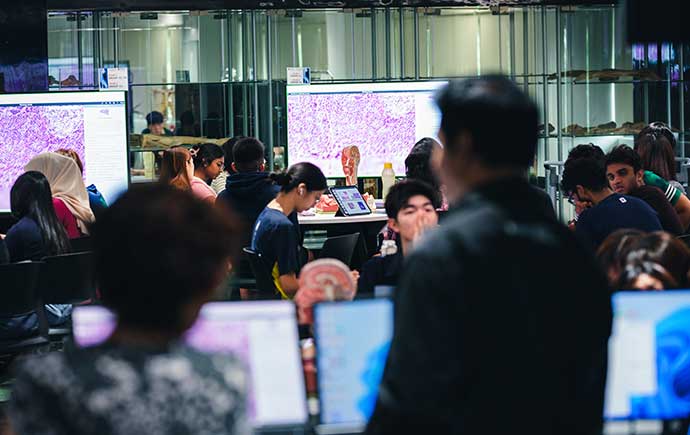
The Medical Anatomy and Pathology E-Learning Laboratory (MAPEL Lab) is a regional hub for excellence in digital anatomy and pathology education. The lab advances teaching and learning through innovative e-learning platforms, ensuring high-quality, accessible education for the next generation of health professionals.
 | “Teaching is the highest form of understanding.” ~ Aristotle |
Located on Level 3, Building 4 of the Jeffrey Cheah School of Medicine and Health Sciences (JCSMHS) at Monash University Malaysia, the Medical Anatomy and Pathology E-Learning (MAPEL) Laboratory is an innovative teaching and learning facility designed to support collaborative education in a technology-enhanced environment.
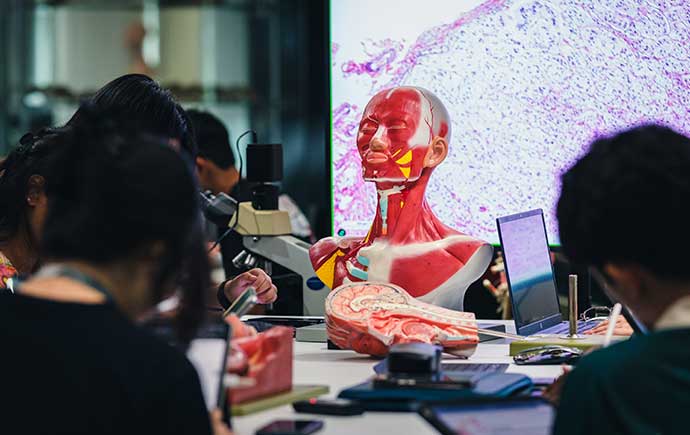
The Lab hosts a rich collection of anatomy and pathology learning materials, including specimens, models, and interactive multimedia. Through cutting-edge digital resources, it provides a dynamic platform for today’s learners—encouraging active engagement with anatomy and pathology as well as other foundational and clinical medical sciences since 2007.
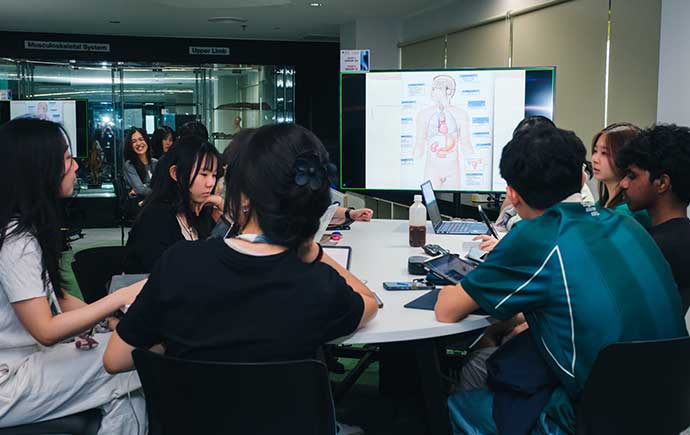
To enhance learning outcomes, the School continuously innovates and develops strategies that foster collaborative learning and peer teaching among large student cohorts. This approach promotes hands-on engagement, teamwork, and the integration of theoretical knowledge with applied skills—helping students develop the competencies and confidence needed for future practice in the allied health sciences.
Objective
The Lab aims to facilitate practical learning experiences in basic and clinical medical sciences through an innovative and technology-enhanced learning environment.
Educational Approach
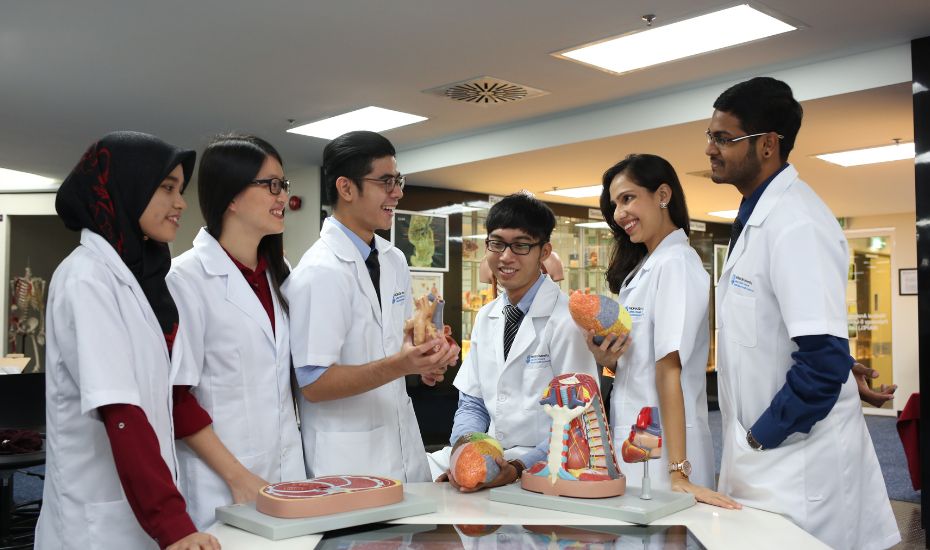
Activity-based learning forms the core pedagogical approach at the Lab, proven effective in promoting deep understanding. Students engage with digital technologies and resources—such as anatomy models, prosected cadaveric specimens, e-books, and interactive software—to develop essential skills in surface, radiological, procedural, clinical, and applied anatomy.
This multimodal learning approach also nurtures soft skills such as communication and teamwork. Additionally, the use of the Audience Response System (“clickers”) enables real-time interaction, enhancing engagement and feedback during practical sessions with large groups.