
How Southeast Asian Businesses Champion their ESG Impact - Conference
30 November & 1 December 2023
Monash University in Australia and Malaysia joined forces to organise a conference titled 'How Southeast Asian businesses champion their ESG impact'. Associate Professor Christo Karuna, the Conference Chair and Founder Director of the International Consortium for Values-based governance (ICVG) at the Department of Accounting, Monash University, opened the event by shedding light on the pivotal role diverse stakeholders play in addressing critical business challenges. He emphasised the importance of aligning values amongst the stakeholders to attain important ESG objectives according to the institutional context. He stressed the need to bridge the gap between academia and practice on ESG issues, one of the key objectives of the conference.
Associate Professor Manjeevan Singh Seera, Deputy Head of the School of Business (Research) at Monash University Malaysia, in his opening remarks, provided the audience with a deeper understanding of the global significance of ESG, particularly in Southeast Asia's dynamic and diverse landscape. He highlighted the intersection of dynamic economies and diverse cultures facing environmental and social challenges.
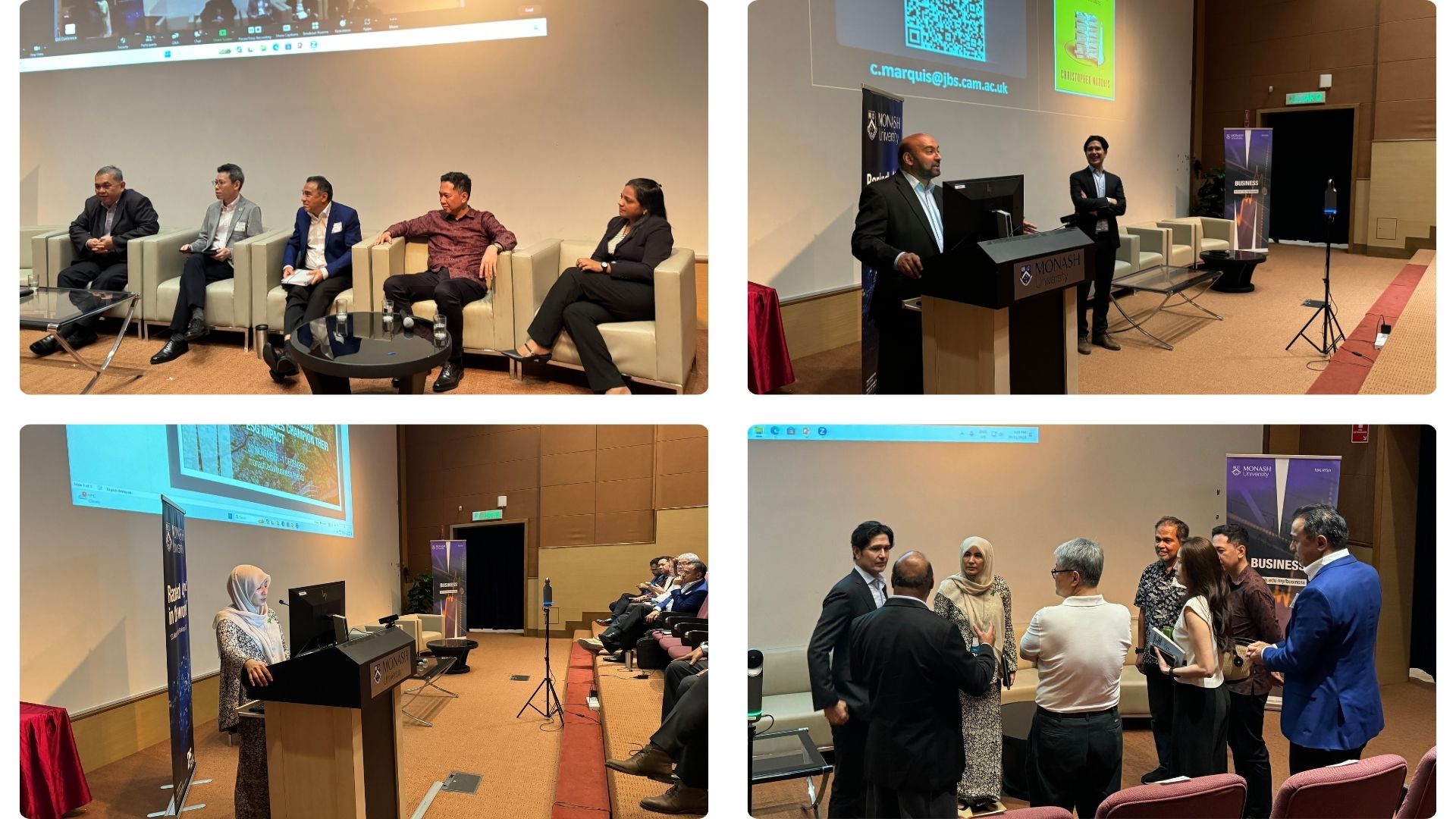
The first keynote speaker, Professor Christopher Marquis from the University of Cambridge, focused on driving sustainability through organisations, emphasising an organisational transformation perspective on ESG. Professor Marquis highlighted real-world examples demonstrating how ESG frameworks can drive transformative change within businesses. Using cases like Patagonia's sustainable design approach and the Business Development Bank in Canada, he emphasised the effectiveness of integrating ESG considerations into decision-making processes. These examples underscored the potential for significant carbon emission reductions and showcased the broad applicability of ESG tools beyond specific industries.
The discussion extended to the global impact of the European Union's Corporate Sustainability Reporting Directive (CSRD). Professor Marquis outlined how the CSRD's comprehensive sustainability guidelines and mandatory reporting would influence companies worldwide, emphasising the need for businesses to adapt and enhance their ESG practices. The directive's focus on both financial and societal/environmental materiality and its legal accountability mechanisms make it a potential game-changer in elevating global sustainability standards.
Beyond external pressures, Professor Marquis stressed the importance of internal transformation. He urged companies not to view ESG as mere compliance but as a catalyst for authentic engagement with sustainability challenges, fostering innovation and creating lasting positive impacts. The evolution of corporate governance, exemplified by structures like Benefit Corporations, reflects a broader global movement toward embedding purpose into corporate DNA. In conclusion, embracing ESG is positioned not just as a socially responsible choice but as a strategy for future-proofing businesses, aligning internal practices, attracting talent, and staying ahead of evolving consumer expectations.
Nurul Izzah Anwar, who served as the Co-Head of the Secretariat of the Advisory Committee to Finance Minister (ACFIN), Government of Malaysia, delivered the second keynote speech to set the tone for practical aspects of ESG issues in the context of Malaysia / SE Asia. She began by acknowledging the challenges faced by Southeast Asian nations in implementing robust ESG programs. She emphasised the difficulty in defining and determining what constitutes "better" ESG standards, given the diverse historical responsibilities, present capabilities, and future trajectories of countries in the region. Highlighting specific environmental challenges, Nurul Izzah discussed the impact of climate change in Malaysia and Southeast Asia. She connected these challenges to various sectors, including agriculture and supply chains, emphasising the need for adaptation measures. The speaker stressed the importance of considering the unique circumstances of Southeast Asian countries in global discussions about climate change responsibilities.
Nurul Izzah highlighted the importance of local initiatives in addressing ESG concerns, citing examples from South Korea and Thailand. She discussed the necessity of international finance in supporting the transition to clean energy, focusing on attracting clean energy investments and addressing financial and fiscal constraints. The speaker underscored the need for a national discussion that goes beyond defensive approaches to ESG and ensures an inclusive transition that benefits everyone.
The third keynote speaker, Hon. Professor Tim Gocher (OBE), Founder and CEO of Dolma Impact Fund. joined the event remotely via Zoom. Professor Gocher shared his insights based on Kathmandu, which he has frequently visited over many years. As a fund manager with a unique focus on Nepal, he provided a distinctive perspective on a country grappling with the effects of climate change and serving as the largest foreign direct investor in the region.
Professor Gocher presented two case studies. Firstly, he delved into the potential effects of technology, particularly artificial intelligence (AI), on inequality globally. Highlighting examples of companies like Fuse Machines and Cloud Factory operating in Nepal and Kenya, he emphasised the employment opportunities driven by AI and cloud technologies. These companies demonstrated how technology could create jobs and address educational gaps, contributing to a more equitable global landscape. The second case study focused on the urgent need to decarbonise the Himalayan region. Professor Gocher highlighted the alarming rate of glacier melt in the Everest region and its potentially catastrophic consequences for the densely populated areas downstream. He discussed the challenges in financing renewable energy projects in Nepal, estimating a significant funding gap that requires innovative solutions.
To address these challenges, Professor Gocher proposed the issuance of international green bonds for Nepal's renewable energy sector. He outlined the complexities involved, including the need for an investment-grade credit rating, foreign exchange considerations, and mitigating sovereign credit risks. The proposed solution involved leveraging instruments like political risk insurance from MIGA, a liquidity facility, and addressing foreign exchange challenges through initiatives like the Bridgetown initiative. In conclusion, Professor Gocher emphasised the pivotal role of private sector capital in addressing existential threats such as technology-driven inequality and climate change. He urged for a collaborative approach, bringing together private sector investment, donor capital, and innovative financial instruments to create sustainable solutions for pressing global challenges.
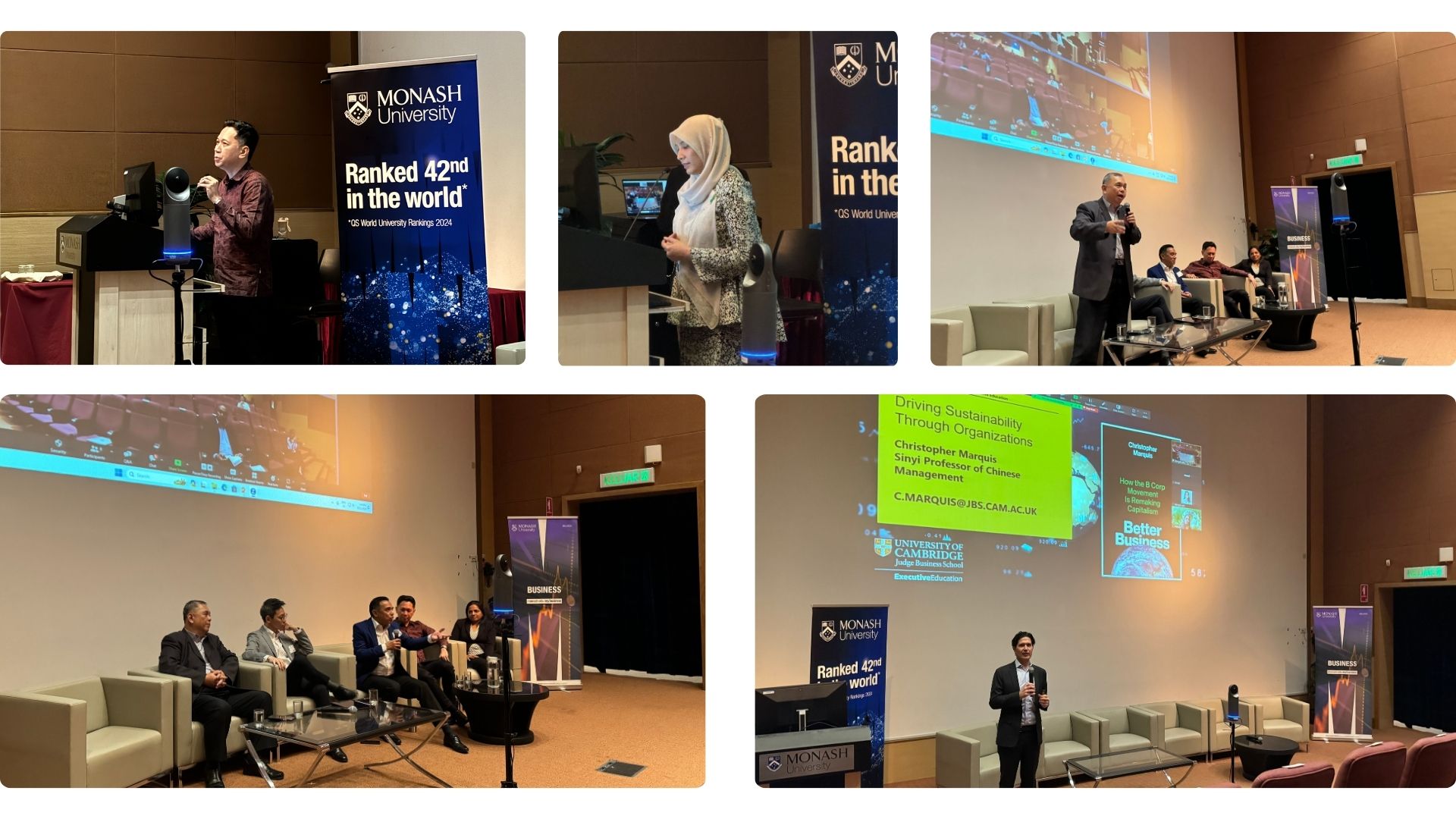
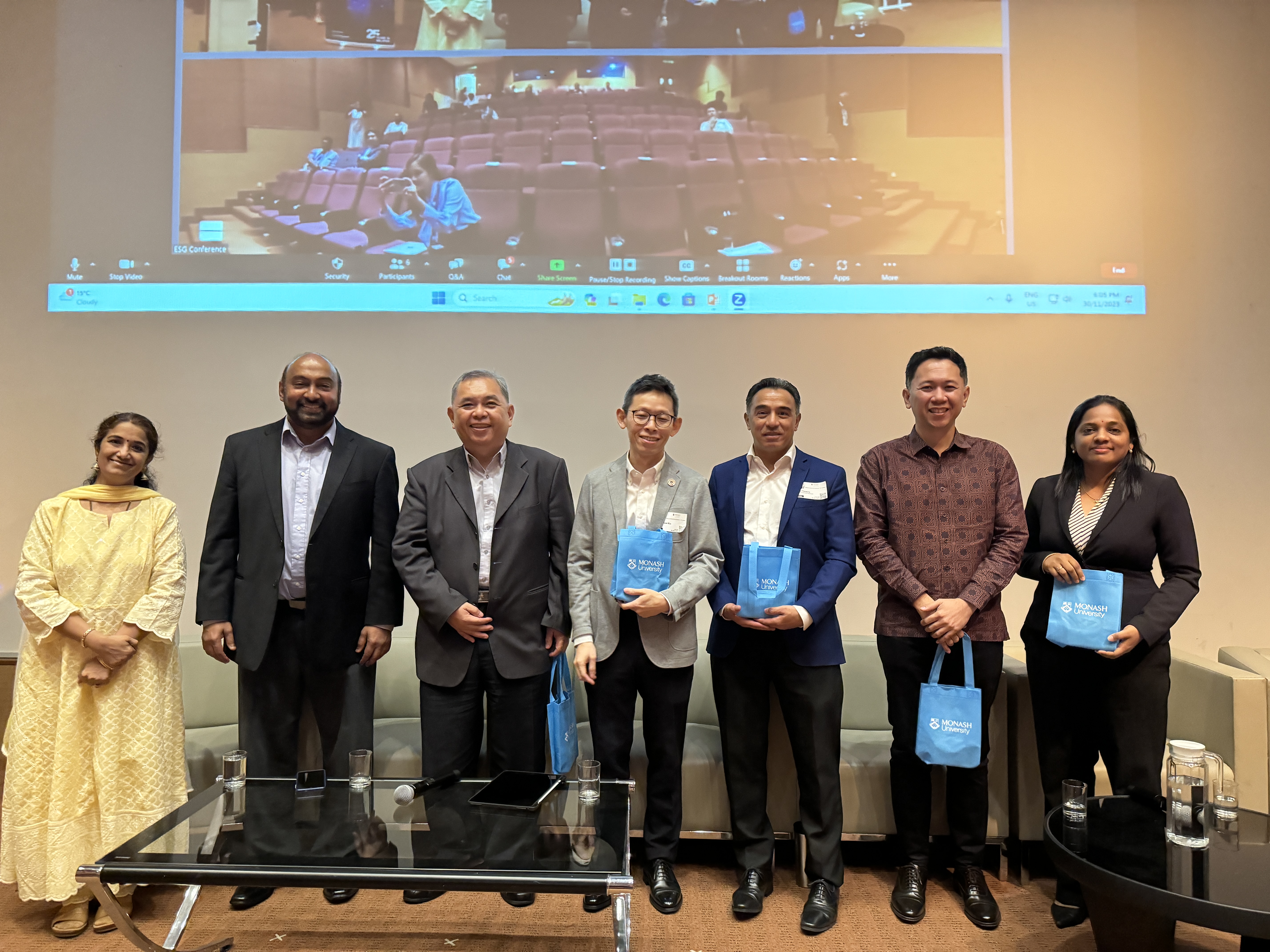
As part of the conference, there was a panel session with senior representatives from business and civic society organisations including Ms Selvamalar S. (Primus Wellness), Nik Shahrizal (PWC Malaysia), Steven Lee (ESG Association Malaysia), Dr Gary Theseira (Climate Governance Malaysia), Jia Yaw Kiu (Malaysian CSO-SDG Alliance), and moderated by Dr Jayalakshmy Ramachandran (from the University of Nottingham, Malaysia). Steven Lee from ESG Malaysia opened with insights on the challenges of ESG compliance for SMEs, emphasizing the need for individualized reporting and to minimize the complexity via too much information and too many frameworks. He also highlighted the importance of hiring workers capable of dealing with ESG. highlighted the challenges of social entrepreneurship, which includes development of supply chains, motivating consumers and entrepreneurs to take up good causes. She inspired attendees with her perseverance and grit. Dr. Gary Theseira from Climate Governance Malaysia discussed the necessity for boardroom drivers and leadership for ESG, especially on embracing purpose and the circular economy. gave a thought-provoking Asian perspective, requesting the audience to reflect on the social construction of sustainability and stressed the importance of partnerships and collaborations between business, civic society and government organisations to generate effective solutions. Nik Shahrizal from PwC provided impactful perspectives on regulatory issues and also discussed sustainability in the context of educational needs and career opportunities. He also highlighted the significant shortage of talent in the sustainability field, and that graduates with distinct knowledge in this area have a competitive edge in the job market.
The conference chair, Associate Professor Christo Karuna, in his closing remarks, aptly summarised the key insights generated at the conference presentations advocating for ESG to be adopted in the Southeast Asian region based on the unique aspects of the localised context. Another key takeaway is that it is not optimal for developed nations to pressure developing and emerging economies to adopt their approach to ESG due to the contextual nature of ESG. Similarly, developed economies realistically are able to attain the sustainable development goals (SDGs) based on different time frames to developing and emerging economies, which may prioritise other (e.g., economic welfare) aspects over ESG matters. Associate Professor Karuna advocated for an ESG framework where economic value is synonymous with social value. This, according to him, should be couched within a robust values-based accountability framework.
As the echoes of insightful discussions and visionary proposals resonate in the aftermath of the ESG conference, it is evident that Southeast Asia stands at a crossroads of transformation and responsibility in the sustainability arena. The confluence of perspectives from academia, industry, and governmental bodies has illuminated the multifaceted nature of ESG challenges and opportunities. The two-day event also boasted insightful paper presentations and engaging panel discussions, comprehensively exploring ESG barriers, opportunities, and impacts in Southeast Asia.