
Lighting the Path to Sustainable Impact: ESG 2.0 Report
28 January 2025
Building on the success of the inaugural symposium in 2023, the SME ESG Start Symposium 2025 returned this year to elevate awareness and foster meaningful discourse on ESG and sustainable business practices among Malaysian businesses, particularly SMEs. Held on 21 January 2025 at Monash University Malaysia, the symposium brought together over 300 executives, sustainability practitioners, SME leaders, industry experts, academics and policymakers to explore strategies for navigating the evolving demands of adoption of ESG practices among SMEs .
In partnership with UN Global Compact Malaysia & Brunei (UNGCMYB) and led by Alliance Bank, this symposium marked a significant milestone with the launch of a 13-month study on ESG awareness and adoption among Malaysian SMEs. The day featured interactive panel discussions, thought-provoking talks and insightful presentations designed to empower participants with actionable strategies and tools.
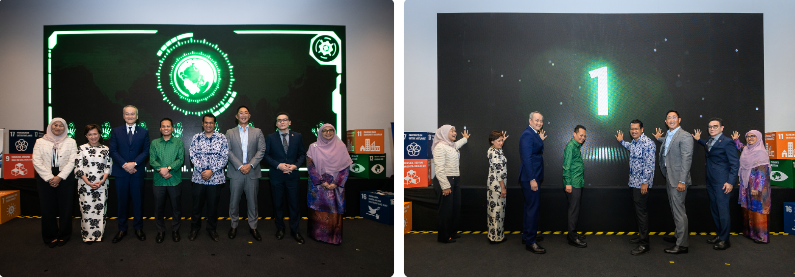
Launch of the ESG 2.0 Report
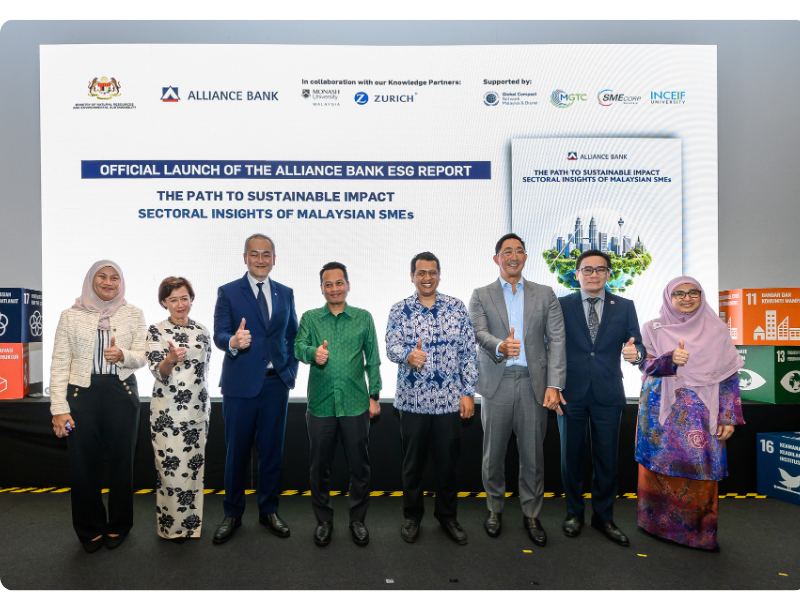
At the heart of the symposium was the unveiling of the ESG 2.0 report, “The Path to Sustainable Impact: Sectoral Insights of Malaysian SMEs”, a publication showcasing the findings of an industry-academia-NGO collaborative study. Guided the School of Business at Monash University Malaysia as the knowledge partner, the report provides a Malaysia centric report with sector specific insights on ESG practices in small and medium enterprises (SMEs)
The ESG 2.0 report provides insight into the transformative journey of Malaysian SMEs, highlighting the significant progress in their awareness and adoption of ESG principles. By providing targeted insights, the report aims to shape policies and drive sustainable practices in Malaysia’s business ecosystem.
Key highlights and findings:
The report launch was made possible by the collaboration of a range of esteemed partners; led by Alliance Bank Malaysia, with Monash University and Zurich Malaysia as knowledge partners and UN Global Compact Network Malaysia & Brunei (UNGCMYB), Malaysian Green Technology and Climate Change Corporation (MGTC), SME Corporation Malaysia (SME Corp), and INCEIF University as supporting partners.
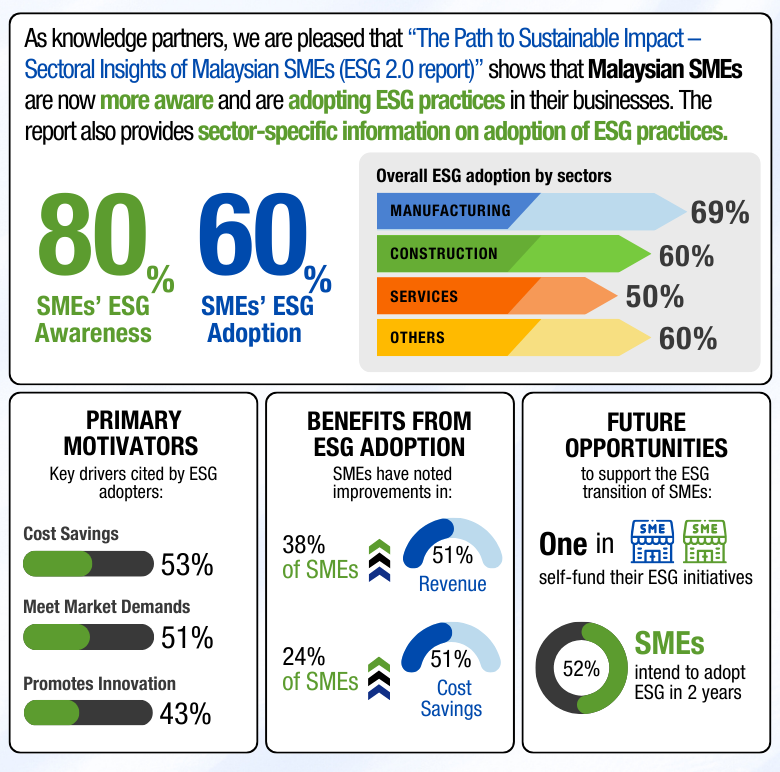
- Increased ESG Adoption: 60% of SMEs now adopt ESG practices, a significant increase from 28% in ESG 1.0, with the manufacturing (69%) and construction (60%) sectors leading the way. In an interesting shift from the previous survey, 37% of ESG adopters said there is too much information on ESG now, resulting in confusion on the sustainability standards and frameworks to follow (ESG 1.0: 13%);
- Primary Motivators: 53% and 51% of ESG adopters cite cost savings and market demand as key drivers respectively, with “innovation” now cited as Top 3 reason as a pathway to profitability;
- Benefits from ESG adoption: 38% of SMEs that incorporate ESG achieved more than 51% of increased revenue while 24% of SMEs that incorporate ESG achieved more than 51% cost savings;
- Future Opportunities: Currently, 1 in 2 SMEs (48%) are self-funding their ESG initiatives, and amongst the non-adopters, 52% plan to implement ESG practices within 2 years, out of which 13% intend to adopt in less than a year; presenting an opportunity for various industry stakeholders to support their transition.
This report also aligns with Monash University’s Impact 2030 vision, which emphasizes tackling society’s most pressing challenges through cutting-edge research with real-world application. By empowering SMEs to collaborate to adopt sustainable practices and to influence policy at the highest levels, this initiative embodies the university’s commitment to drive innovation that makes a difference locally and globally, underscoring its role as an anchor institution and contributor to sustainable development of the communities in which it operates.
Access the full ESG 2.0 Report at: www.alliancebank.com.my/esg-sme-survey-2025
Symposium Highlights:
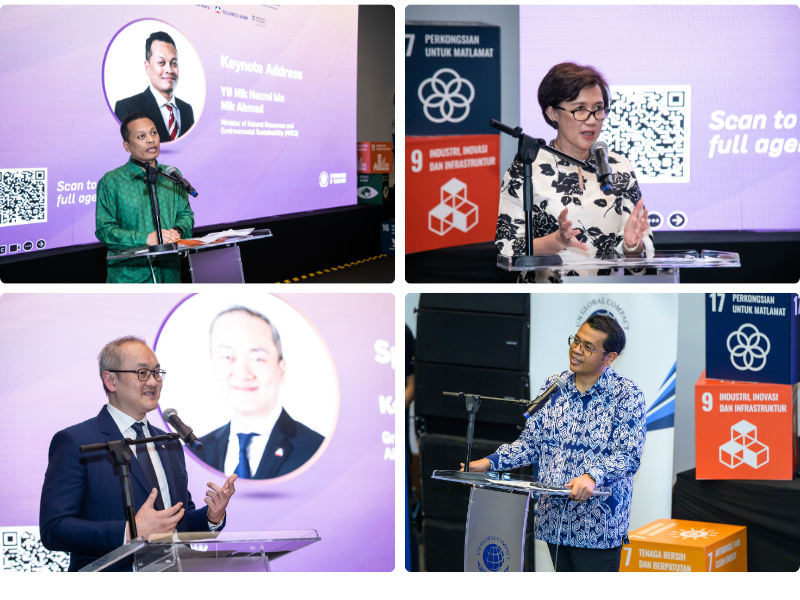
The Symposium hosted engaging discussions and thought-provoking presentations on the state of sustainability for SMEs in Malaysia.
📌 A keynote address by YB Nik Nazmi bin Nik Ahmad shared Malaysia’s progress toward a sustainable economy and SMEs' pivotal role in driving change.
📌 A panel discussion titled “SME ESG State of Play and Moving Forward Faster” with 5 industry leaders and ESG experts.
📌 Fireside Chat and presentations on fostering resilience and inclusivity in supply chains, ESG adoption strategies from UNGCMYB to support SMEs and insights from Associate Professor Karren Khaw on ESG integration into enterprise risk-taking.
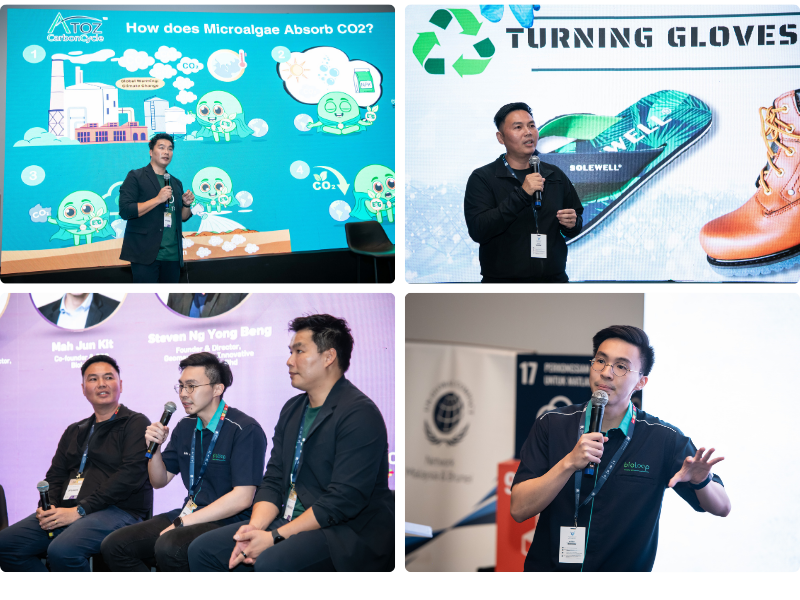
📌 SME success stories through SPARK Talks curated by UNGCMYB, where companies like Atoz CarbonCycle Platform, BioLoop, and Geomax Rubber Innovative Products Sdn Bhd, were featured for their approach to ESG integration.
Panel discussion on the State of ESG in Malaysia
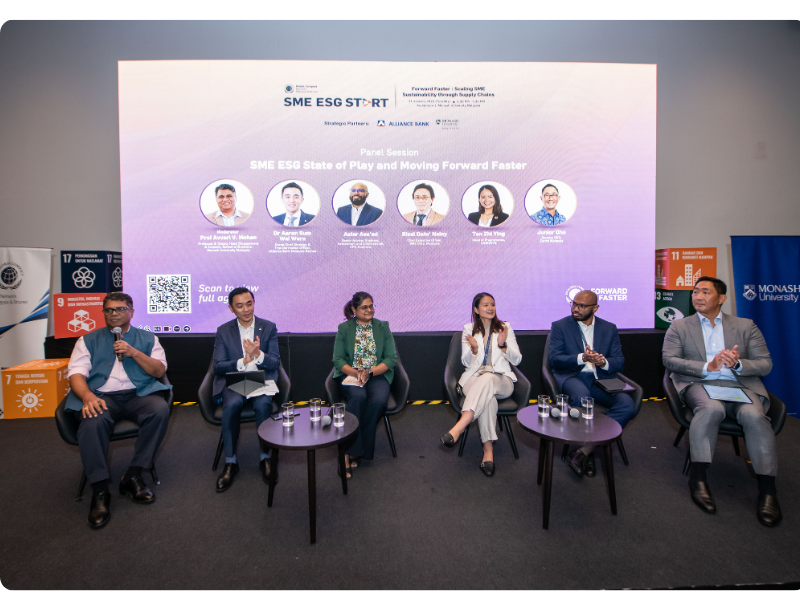
Following the unveiling of the ESG 2.0 report, Professor Mohan V Avvari from the School of Business, moderated a panel session on SME ESG State of Play and Moving Forward Faster”, dissecting the findings of the report with key leaders from industry, government agencies and an international professional body.
Panel members:
- Dr Aaron Sum Wei Wern, Group Chief Strategy & Transformation Officer, Alliance Bank
- Junior Cho, Country CEO, Zurich Malaysia
- Kausalya Gopal, Director of Economics and Policy Division, SME Corporation Malaysia
- Azfar Asa’ad, Senior Advisor – Business, Investment and International | Policy, Standards & External Affairs, CPA Australia (in Malaysia)
- Tan Zhi Ying, Head of Programmes, (UNGCMYB)
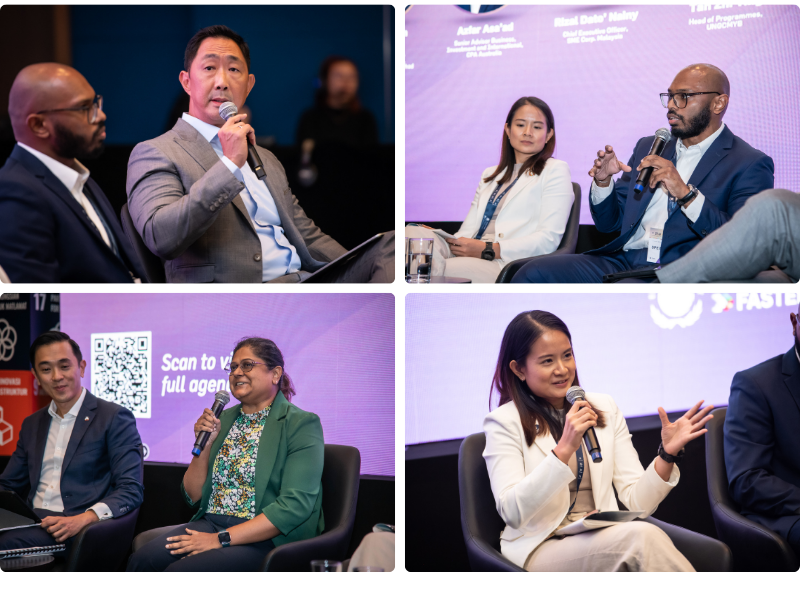 Panel Discussion highlights: Transparency, Accountability, and Collaboration
The panelists unanimously acknowledged the report’s key finding: ESG awareness and adoption among SMEs have surged over the past 13 months, reflecting a growing recognition of the business value in sustainability.
- Dr. Aaron Sum attributed this momentum to the collective efforts of stakeholders—including government bodies, corporates, and media—who have worked together to amplify ESG awareness. He highlighted practical resources such as SME Corp’s ESG Quick Guide, Capital Markets Malaysia’s Simplified ESG Disclosure Guide and MITI’s i-ESG Framework, along with events like the SME ESG Symposium 2023, have made ESG concepts more accessible and actionable for SMEs. He emphasized that SMEs can adopt ESG through incremental innovations without incurring significant capital expenditures.
- Junior Cho discussed the impact of regulations, particularly in driving ESG adoption within the manufacturing sector. He underscored the importance of ESG for risk management and long-term business resilience.
- Azfar Asa’ad observed that many SMEs are already practicing aspects of ESG, particularly in the social domain, such as prioritizing staff welfare, without realizing it. He advocated for greater awareness to help SMEs align these practices with formal ESG frameworks.
- Kausalya Gopal cautioned against blindly adopting ESG models from other countries. Instead, she stressed the need to tailor ESG practices to the unique circumstances of each organization.
- Tan Zhi Ying emphasized the role of collaboration in advancing ESG adoption. She highlighted the tools and resources her organization provides to help SMEs better understand and integrate ESG principles into their operations.
All panelists agreed on the importance of transparency and accountability in ESG reporting. They highlighted how clear reporting not only builds stakeholder trust but also helps SMEs identify opportunities for improvement.
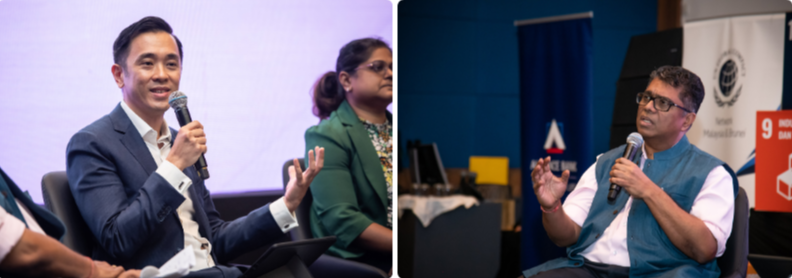
Dr. Aaron Sum provided concrete examples of how incremental innovations, such as optimizing resource use or improving waste management, can have a significant environmental impact without requiring large investments.
In concluding the panel discussion, Professor Mohan stressed the importance for SMEs to work with different stakeholders like UNCGMYB, Monash University, government entities like SME Corp & MGTC and financial institutions like the Alliance Bank who all have different programs and incentives to support SMEs in their ESG journey.
Academic Presentation on ESG Best Practices
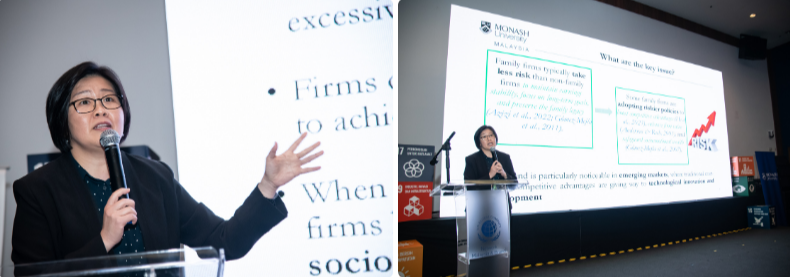
Associate Professor Karren Khaw wrapped up the symposium with a presentation on “Enterprise Risk Taking Behavior:I ntegration of ESG Practices Matters”, sharing insights on how ESG integration mitigates excessive risk-taking by enhancing stakeholder engagement, strengthening compliance, and improving governance structures and internal controls. She emphasised the critical role of ESG in balancing shareholder and societal interests, driving long-term value creation, and promoting responsible risk-taking behaviour among firms.
A Catalyst for Sustainable Change
The SME ESG Start Symposium 2025 and the insights from the ESG Report 2.0 reflect a shared vision for a more sustainable future. This partnership highlights the critical role of ESG in shaping a sustainable future for Malaysian SMEs, bringing together diverse perspectives to inspire action and collaboration.
 Monash University Malaysia continues to play a pivotal role in driving knowledge-sharing and fostering collaboration, making the symposium a cornerstone for impactful ESG integration in Malaysia’s business ecosystem.
We would like to thank our esteemed partners for their invaluable support and collaboration in making this event a success. And a special thanks to our distinguished guests for commemorating the event:
- YB Nik Nazmi bin Nik Ahmad, Minister of Natural Resources and Environmental Sustainability
- Professor Dato’ Dr Adeeba Kamarulzaman, President and Pro Vice-Chancellor, Monash University Malaysia
- Kellee Kam, Chief Executive Officer, Alliance Bank Malaysia Berhad
- Faroze Nadar, Executive Director, UN Global Compact Network Malaysia & Brunei (UNCG MYB)
- Junior Cho, Country CEO & Head of Zurich Malaysia
- Shamsul Azman, CEO, Zurich General Takaful Malaysia Berhad
- Dr Marjan Muhammad, Deputy President Research, INCEIF University
- Elina Binti Jani, CEO of Greentech Ideaslab, Malaysian Green Technology and Climate Change Corporation (MGTC)