
Monash Forum Examines Emerging AI Challenges in Anti-Corruption

8 December 2025 - In commemoration of International Anti-Corruption Day on 9 December 2025, the School of Business at Monash University Malaysia hosted an insightful forum on how artificial intelligence is reshaping corruption detection, prevention and regulatory enforcement. Organised by the Centre for Commercial Law and Regulatory Studies, Malaysia Hub (CLARS-MH), and in collaboration with the Malaysian Anti-Corruption Academy (MACA) and the Malaysian Anti-Corruption Commission (MACC), the forum drew over 50 in-person participants at Monash University Malaysia and more than 200 online attendees, reflecting strong interest in the intersection of AI and governance.
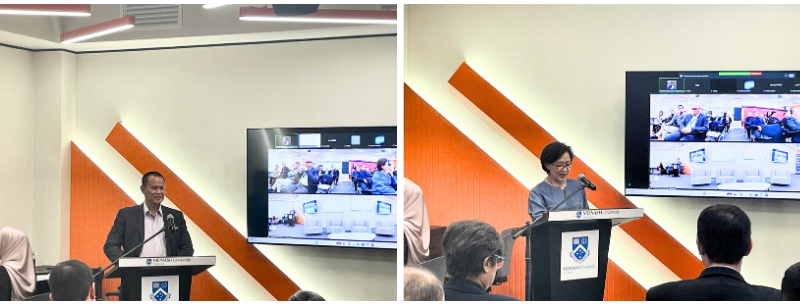
Professor Emeritus Dato’ Dr Adeeba Kamarulzaman, President and Pro Vice-Chancellor of Monash University Malaysia, delivered opening remarks together with Dato’ Mohd Hafaz Nazar, Senior Director of MACA. Both leaders highlighted the strategic importance of strengthening Malaysia’s digital capabilities to address emerging corruption risks. Associate Professor Adnan Trakic, Head of the Department of Business Law and Taxation at the School of Business and Director of CLARS-MH, concluded the forum by emphasising the need for sustained collaboration between academia and enforcement agencies to build national capacity for ethical AI governance.
The panel featured distinguished experts who provided multidisciplinary insights.
* Mr Wan Zulkifli Wan Jusoh, Director of Forensic Technology at MACC, outlined how the commission is integrating AI into investigative workflows. He stressed that AI enhances but does not replace human judgment in corruption detection.
* Sathish Ramachandran, Partner at Deol and Gill and Chair of the Personal Data Protection Committee at the Malaysian Bar, examined Malaysia’s regulatory trajectory as the country moves toward introducing its own AI Act.
* Dr Chithra Latha Ramalingam, Senior Lecturer at Monash Business School, explored the philosophical dimensions of AI governance. She introduced the concept of phronesis, or practical wisdom, a uniquely human capacity that AI cannot replicate.
Together, the panel highlighted a growing wisdom gap in the deployment of AI tools. While algorithms are capable of detecting patterns, only humans possess narrative intelligence. This includes the ability to connect disparate signals, such as a whistleblower’s whisper and unexplained personal wealth, into a coherent corruption narrative.
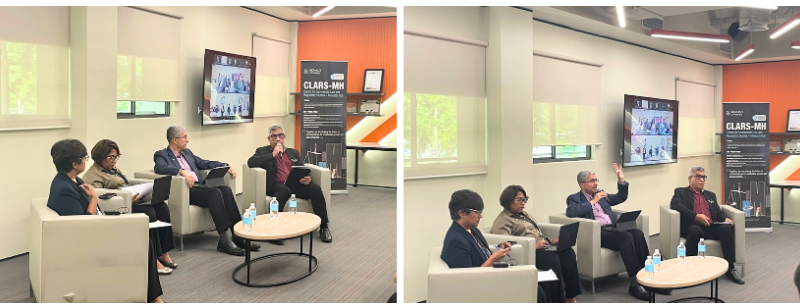
Professor Meera Sivasothy, who moderated the discussions, guided the audience through complex questions on data sovereignty and evidential integrity. The conversation covered issues such as the black box nature of AI systems and whether Malaysia can safeguard corruption-related data stored on foreign servers.
The forum concluded with a powerful question: In the fight against corruption, should trust rest with AI or with humans? The discussions affirmed that AI can strengthen vigilance, but ethical discernment remains firmly in human hands.
An MoU between MACA, MACC and Monash University Malaysia is scheduled for signing in early 2026, formalising the partnership and supporting further research and capacity-building in AI governance and anti-corruption initiatives.
The Centre for Commercial Law and Regulatory Studies – Malaysia Hub (CLARS-MH) advances research, education and policy engagement in commercial law and regulatory governance. More information about CLARS-MH, click here.