Stepping Forward: Exploring Exoskeleton Technology for Safer Ageing
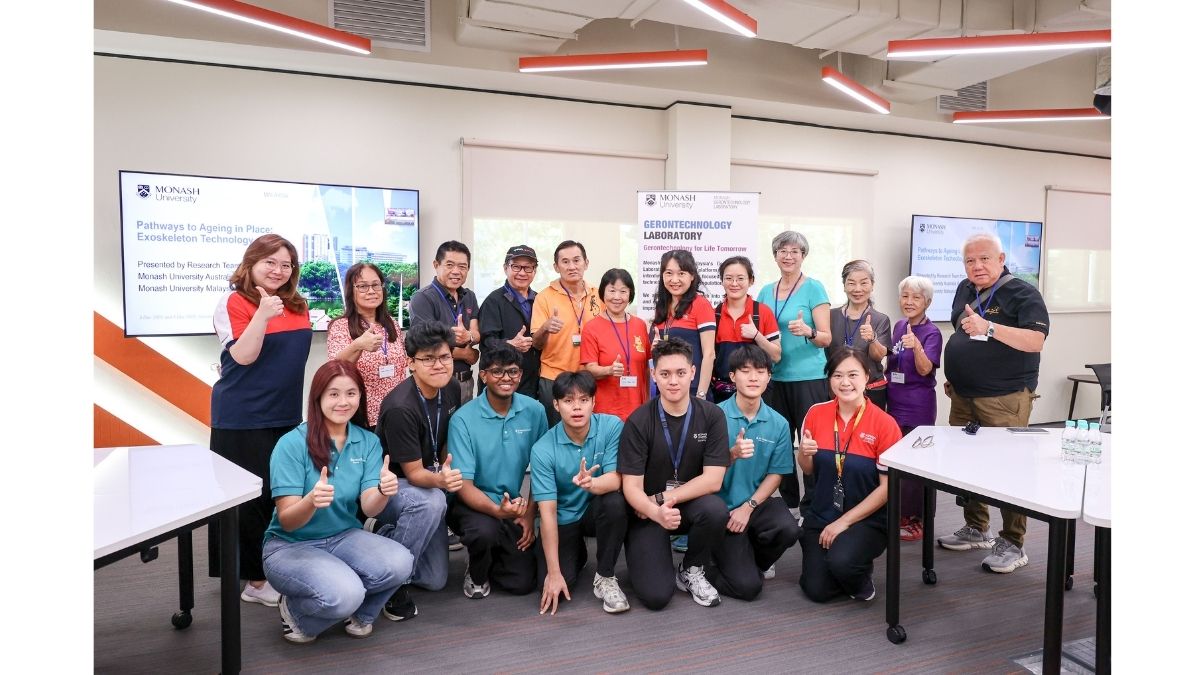
Monash University Malaysia recently hosted an Exoskeleton Workshop at the Gerontechnology Laboratory, held on 10 and 11 February 2026 at Monash University Malaysia, bringing together researchers, students, and community participants to explore how wearable assistive technology can support mobility, independence and healthy ageing.
Representing the School of Business, Monash University Malaysia were Professor Dr. Teh Pei Lee, Dr. Keiko Ng Su-Ann, Dr. Kimberly Soh, and Dr. Chong Shiau Yun, whose research and leadership continue to advance interdisciplinary innovation at the intersection of ageing, technology, and community wellbeing. The workshop also involved collaboration with Monash University Australia, including Professor Juliana Sutanto and Dr. Jun Zhang from the Faculty of Information Technology, reflecting a cross campus research partnership in advancing assistive technologies for ageing societies.
The workshop forms part of ongoing research initiatives focused on developing practical, human-centred solutions that empower older adults to remain active and confident in their daily lives. The workshops were supported by funding from the Monash Assistive Technology & Society (MATS) Seed Scheme Funding, which aims to catalyse interdisciplinary research and innovation in assistive technologies. By combining research innovation with hands-on engagement, the session demonstrated how technology can meaningfully address real-world ageing challenges.
Building Understanding Through Community Engagement
The workshop began with an introduction to gerontechnology, an interdisciplinary field that integrates ageing research with technological innovation. Participants learned how assistive devices such as wearable exoskeletons are designed to reduce physical strain, enhance stability and support safe movement.
As part of the research protocol, participants first completed a pre-survey to capture baseline information on mobility assessment, physical challenges in daily activities and perceptions toward assistive technology. These responses provided researchers with an initial understanding of participants’ experiences prior to engaging in the exercises.
Researchers and facilitators also encouraged open discussions, allowing participants to share personal experiences related to mobility and ageing while gaining insight into emerging technological solutions.
Experiencing Mobility Exercises With and Without the Exoskeleton
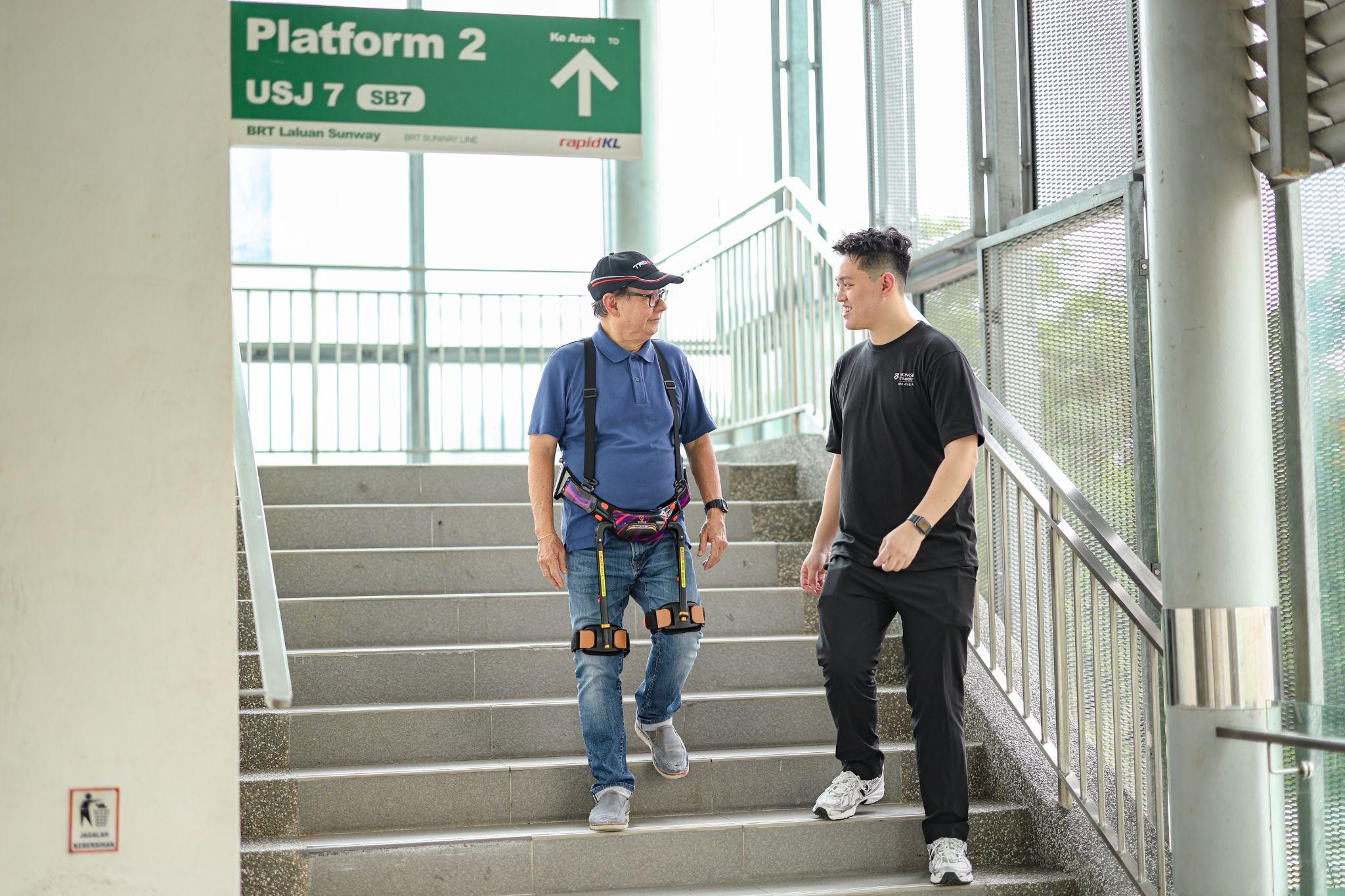
A key component of the workshop involved guided mobility activities that allowed participants to experience how wearable assistive technology can support movement in everyday situations.
Through these hands-on sessions, participants explored how the exoskeleton functions during common mobility tasks, gaining practical insight into its potential to enhance stability, reduce physical strain and support confidence in movement.
This experiential approach transformed the workshop into an engaging learning environment, allowing both participants and researchers to reflect on the role of assistive technology in promoting safer and more independent ageing.
Capturing Insights Through Post-Workshop Interviews
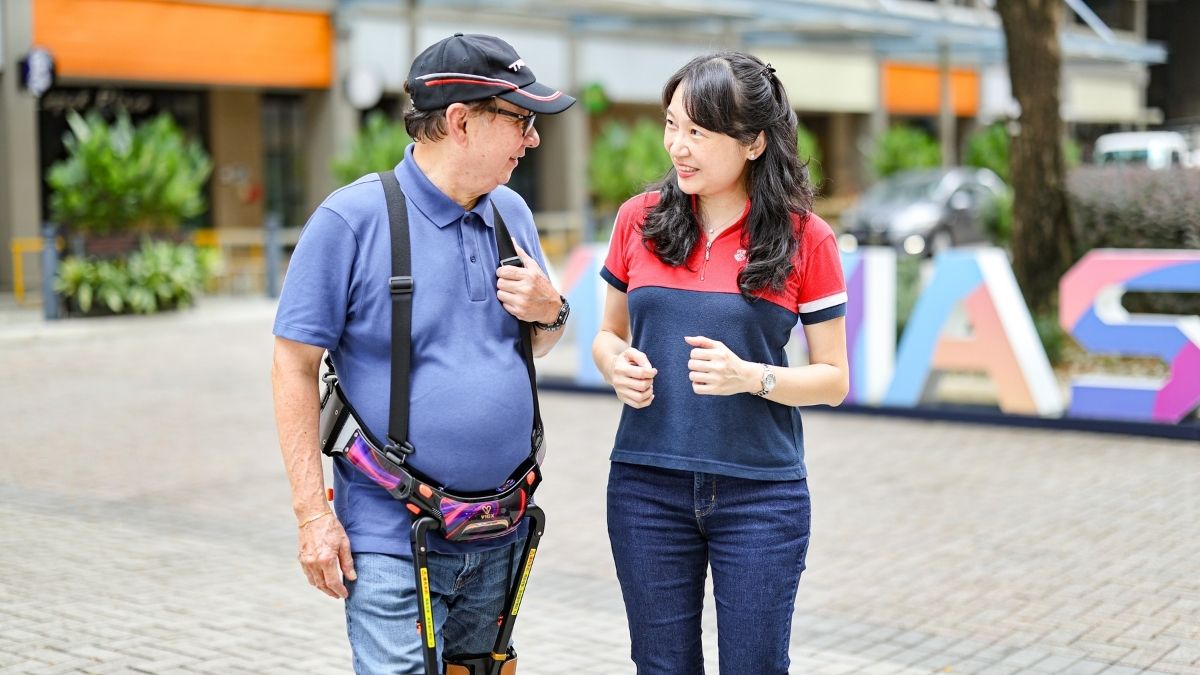
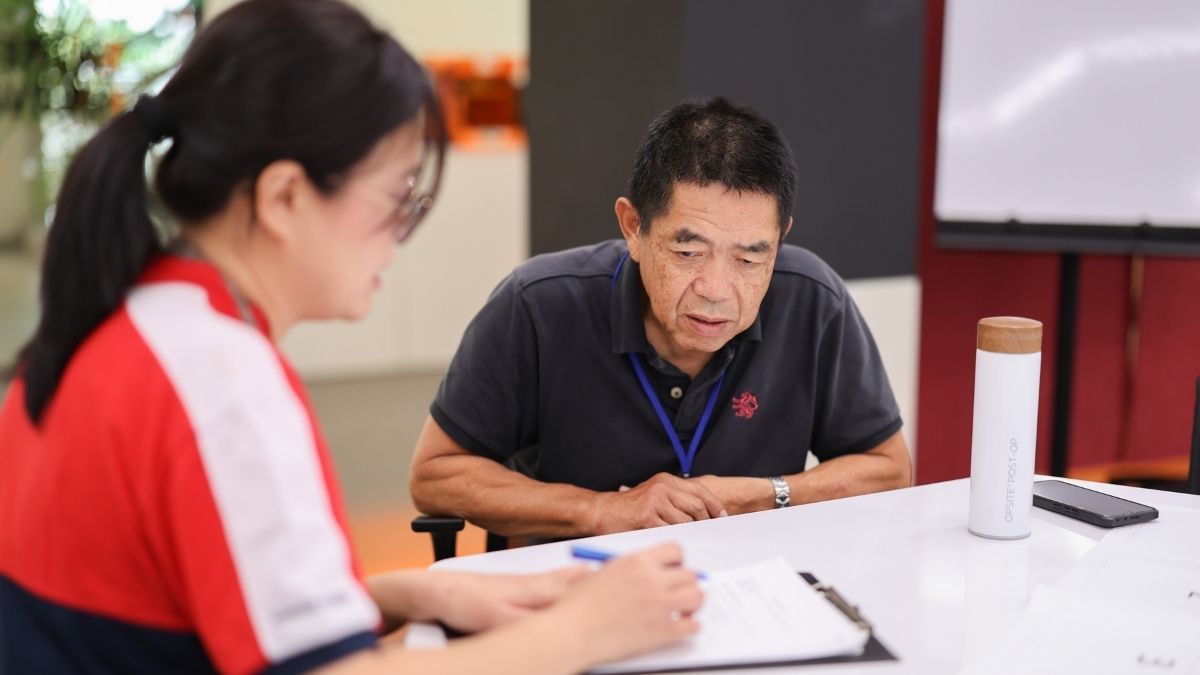
Following the mobility sessions, participants were invited to share their reflections on their experiences using the exoskeleton. These conversations provided valuable perspectives on comfort, usability and overall confidence when engaging with assistive technology.
The insights gathered contribute to a deeper understanding of how wearable technologies can be refined to better support the needs of older adults. By incorporating participant perspectives, the initiative reinforces a human centred approach to innovation, where user experiences inform ongoing research and development.
Human-Centred Innovation in Practice
Throughout the session, researchers worked closely with participants to ensure safety, comfort, and personalised guidance. The workshop emphasised a co-design approach, where user feedback plays a central role in improving technological solutions.
By engaging older adults directly in testing and evaluation, the initiative reinforces Monash University Malaysia’s commitment to inclusive innovation that prioritises dignity, independence, and wellbeing, and reflects the university’s broader Thriving Communities focus on research and engagement that supports resilient, inclusive and sustainable societies.
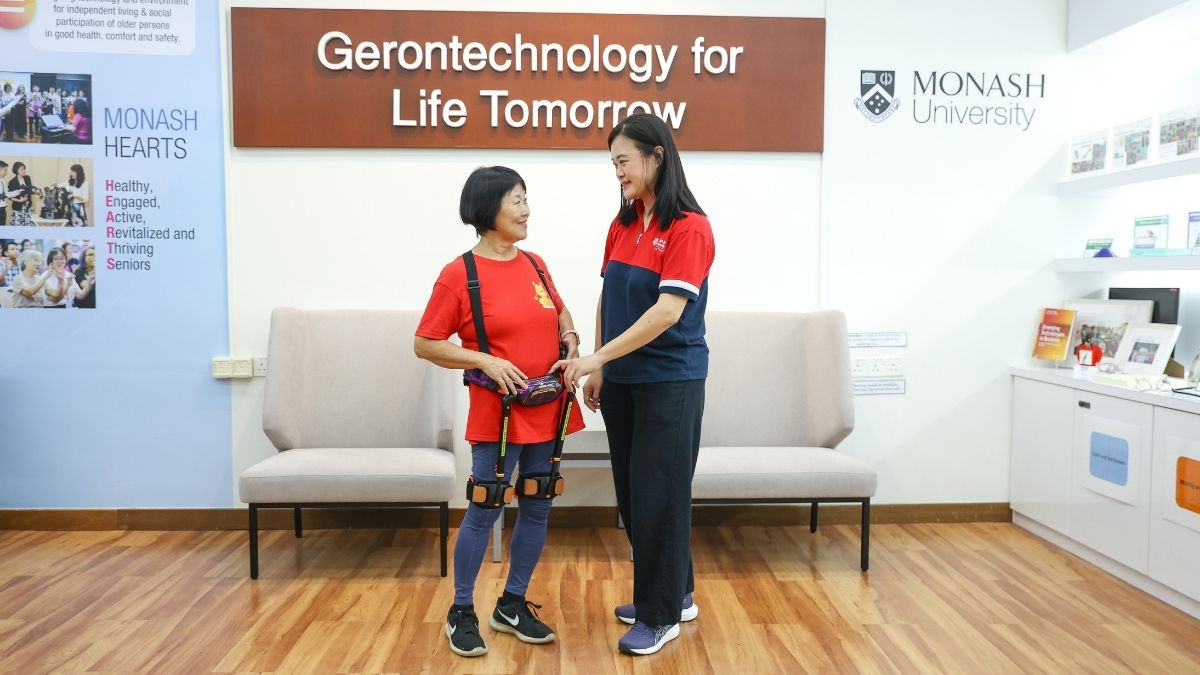
Researchers provided hands-on assistance to participants during exoskeleton fitting and familiarisation, demonstrating a human-centred approach to innovation.
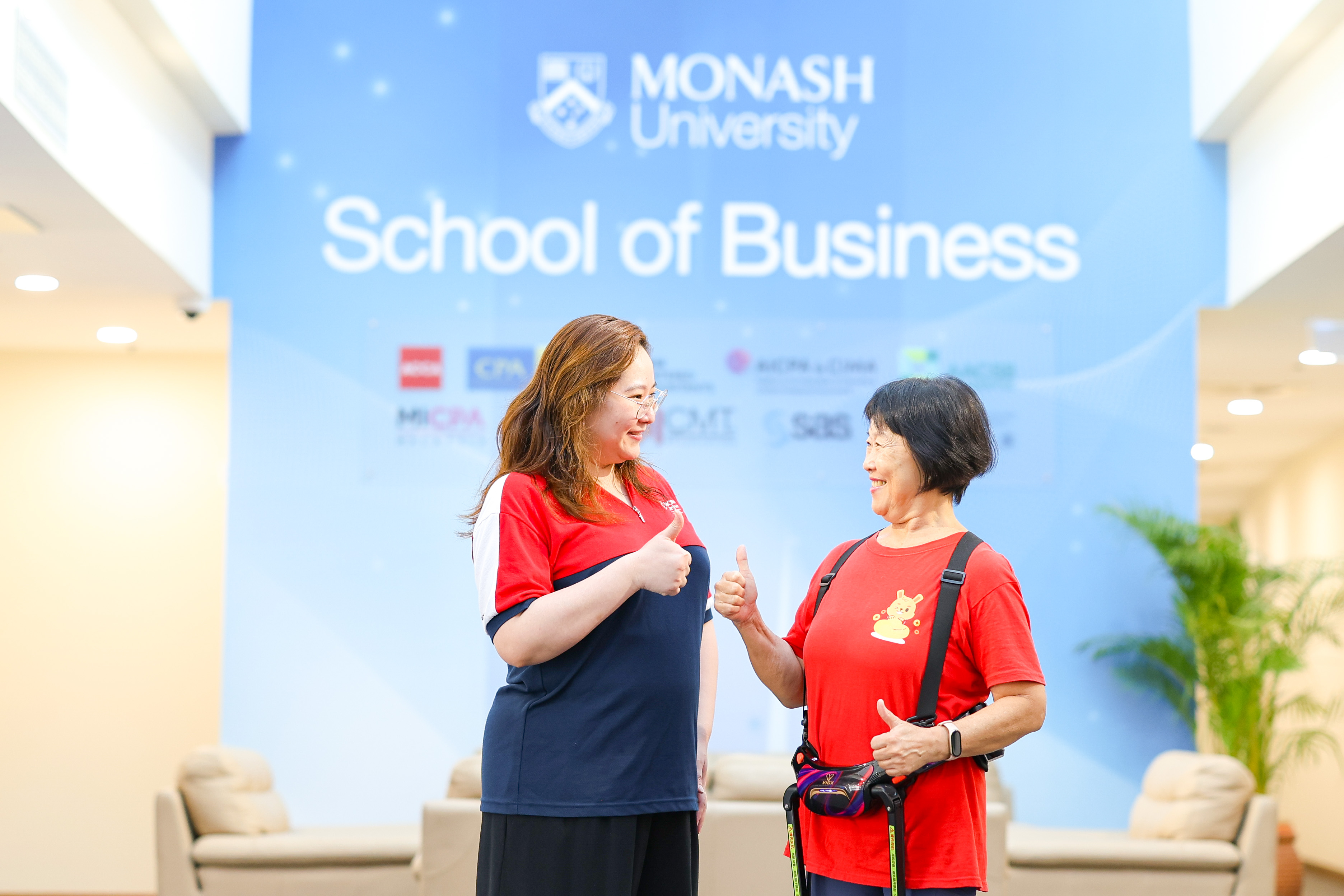
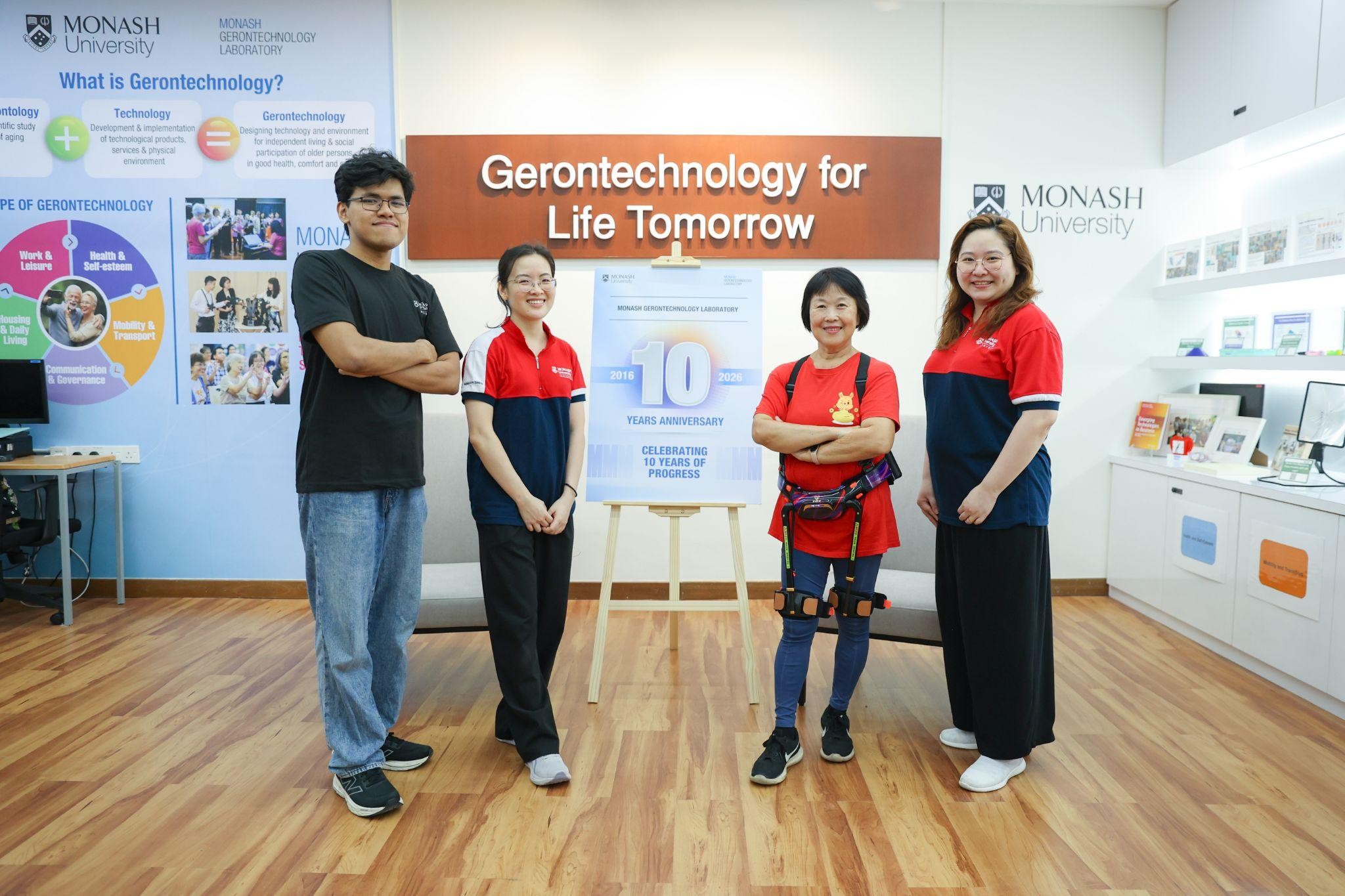
Researchers and participants shared a positive moment following the workshop, reflecting the collaboration and mutual learning between academia and the community.
Advancing a Safer Way to Age
As societies continue to age, innovative yet practical solutions are increasingly important in supporting independence and quality of life. The Exoskeleton Workshop represents an important step toward translating research into meaningful community impact.
Through continued collaboration and engagement, Monash University Malaysia aims to advance technologies that enable safer ageing while fostering stronger connections between research, education, and society.
Participants and researchers working together during stair exercises, highlighting hands-on learning and human-centred innovation in ageing research.