
Driving Sustainability Among SMEs Through Strategic Partnerships
December 2024
As the global business environment increases its emphasis on responsible business, Malaysia’s small and medium-sized enterprises (SME) are seeking to make this meaningful shift.
Monash University’s School of Business is committed to supporting this growing interest as more local SMEs seek to adopt sustainable business and Environmental, Social and Governance (ESG) practices.
“We’re delighted to see sustainability gaining traction and are supporting SMEs through many activities that harness the power of research excellence, faculty expertise and strategic partnerships with external organisations,” said Professor Avvari V. Mohan, Deputy Head (Engagement & Impact) at the School of Business.
The multidisciplinary Sustainable Business research cluster formed by the School brings together Monash faculty members for collaborative research on topics such as energy justice, green consumption and sustainability finance.
At the same time, engagement and impact activities are varied and include symposiums, workshops, formal partnerships and collaborative programs which benefit students, businesses and professionals alike.
Mentoring young professionals to innovate for sustainability
A standout initiative is the SDG Innovation Accelerator Program developed in partnership with the UN Global Compact Network Malaysia & Brunei (UNGCMYB), where young Malaysian professionals from SMEs work together to address real-world sustainability challenges in their organisations.
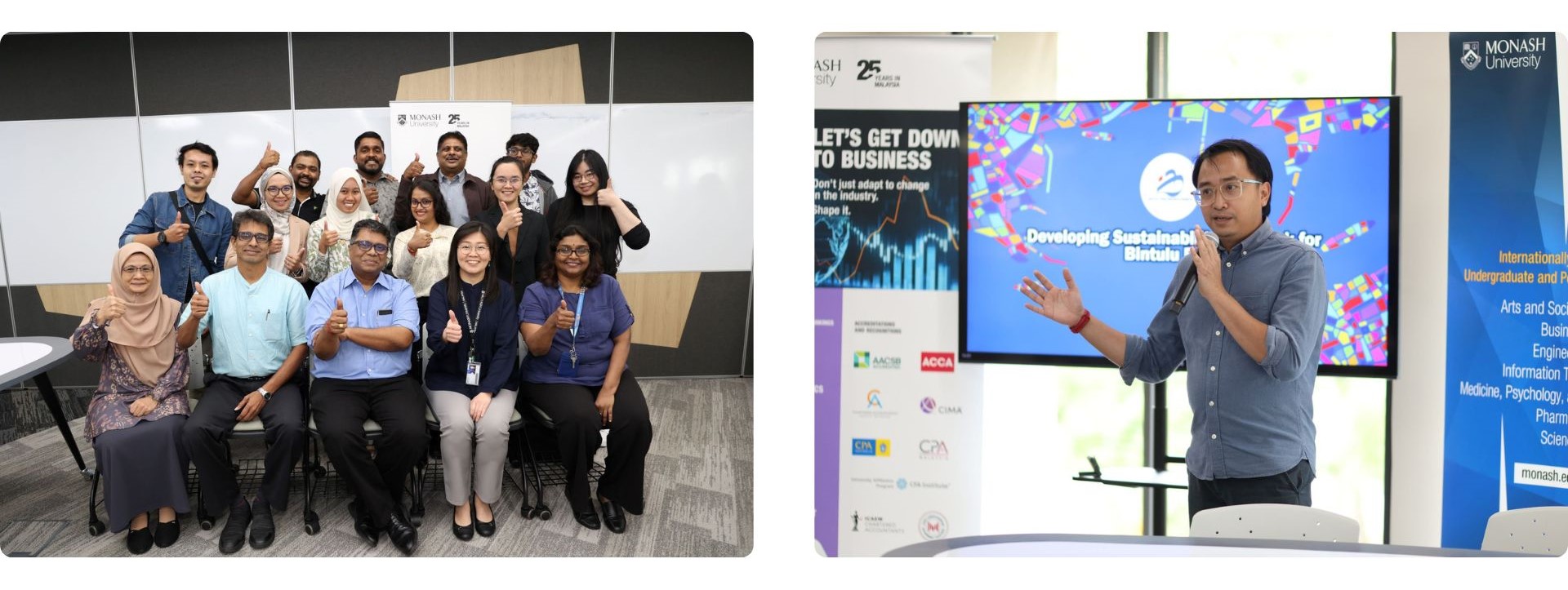
Senior lecturer Dr Puspavathy Rassiah said through the nine-month program, executives are given the opportunity to identify, develop and test solutions that match their firms’ strategic goals and the UN Sustainable Development Goals (SDGs).
“Centred around design thinking, sustainable business models and innovative technologies, this program grows sustainability-related skills in young professionals and at the same time, contributes to global objectives,” she explained.
 In 2024, six Malaysian companies from various industries participated in the program.
“The accelerator program fosters an environment of collaboration and innovation, and we look forward to seeing these young professionals make great strides integrating sustainability and responsible business practices in their organisations,” Dr Puspa said.
Strengthening ESG awareness and adoption amongst SMEs
Another notable partnership is an MoU signed with Alliance Bank Malaysia Berhad, aimed at empowering local businesses to integrate ESG practices.
Launched with the SME ESG Symposium 2023, this partnership is now in the form of a research study that aims to provide an in-depth understanding of sustainability-related challenges and opportunities faced by SMEs in Malaysia.
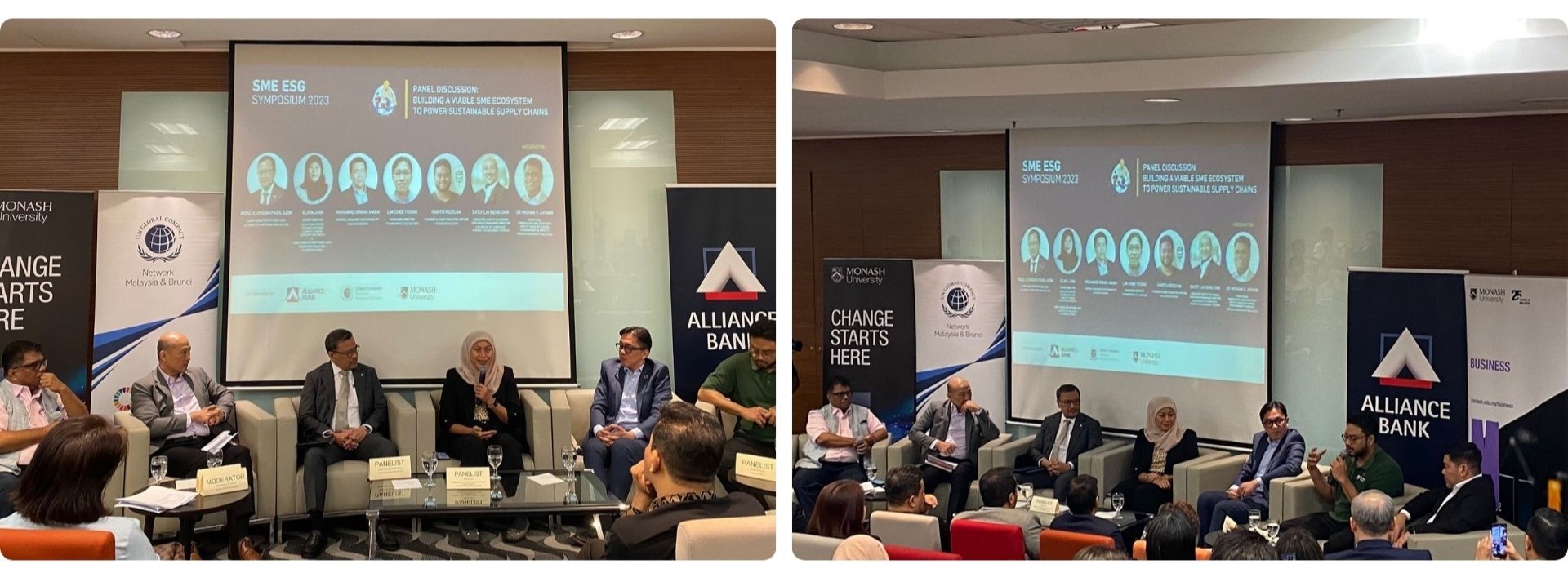
Department Head of Finance, Associate Professor Karren Khaw, shared that findings will be used to develop sectoral playbooks that serve as guiding documents for SMEs in their sustainability journey.
“These playbooks will help SMEs identify, assess and manage ESG risks while capitalising on opportunities in their sectors. SMEs will also be able to stay updated on trends and benchmark their performance against other players,” she added.
Co-designing assessments based on real-world challenges
Aside from events and activities, Professor Mohan shared how the School of Business strategically invites local SMEs to share their challenges as a basis for Monash students’ assignments.
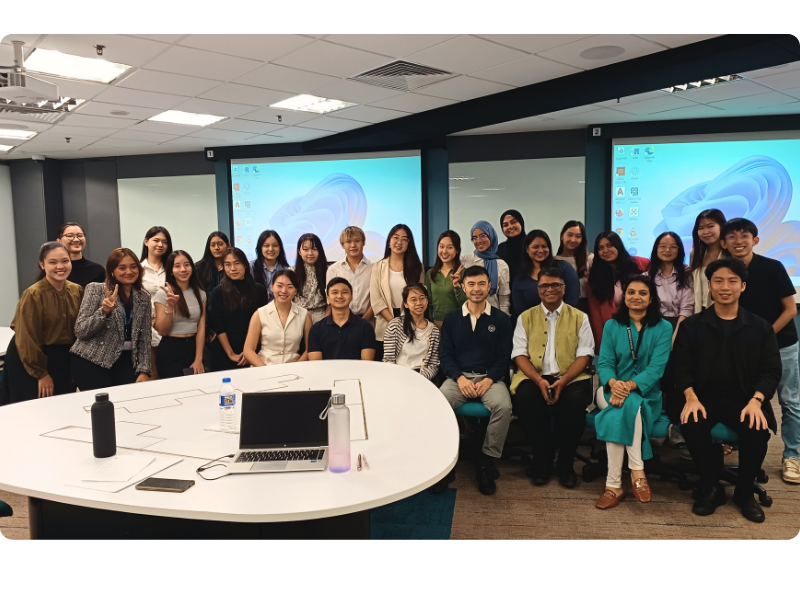
“Our Authentic Assessments platform is a great space for synergy. Co-designing assignments with businesses allows for a mutual exchange of expertise, where students gain industry experience, and the SMEs benefit from fresh perspectives and research-backed solutions,” he said.
In 2024, Nibou Industries (M) Sdn Bhd, nutrioG by RW Nutriogreen Sdn Bhd and @B&B Labs were among the SMEs supported.
It’s a win-win arrangement for everyone, enthused marketing lecturer, Dr Ankita Misra.
Firstly, students gain hands-on experience that enhances skills and employability.
“But more than just the students, our faculty benefit from industry insights, the institution strengthens its ties with the business community and SMEs gain innovative, cost-effective solutions, access to talent and growth opportunities,” she said.
Dr Sarabjit Kaur echoed the sentiment and noted that these assessments provide students with a window into the real-world challenges of SMEs, which can vary from larger corporations.
“These [assignments] may also encourage entrepreneurial interest among the students, and show them how capable they are. For example, the CEO of @B&B Labs opined that our students’ pitches were of better quality than some professional agencies,” the marketing lecturer said.
Advancing the sustainability agenda for a better Malaysia
From roundtable events to case studies, mentorship programs to co-designed assessments, the School of Business is committed to supporting SMEs in their sustainability journeys.
“As Academia,we play a pivotal role in driving sustainable transformation, serving as a vital link between diverse stakeholders. By fostering knowledge exchange, inspiring innovation, and promoting responsible business practices among SMEs, we significantly contribute to building a more sustainable and equitable future,” Dr Puspa concluded.
Looking ahead, Associate Professor Khaw said the School hopes to develop an SME Impact Lab that collaborates with industry partners, policymakers and NGOs to further advance the sustainability agenda.
“SMEs are increasingly recognising the long-term benefits of doing business responsibly and sustainably. This lab will serve as an innovative hub where academic insights, industry expertise, and policy frameworks converge to empower SMEs to adopt sustainable practices,” she shared.
“At Monash, we remain committed to demonstrating the tangible societal and economic impacts of research through innovative solutions that serve businesses and communities.”