
Is Humane Justice Possible?

22 July 2025
Held on 17 July, a hybrid seminar titled The Capital Punishment Debate: Comparative Perspectives from Malaysia, Singapore, and the United Kingdom was co-organised by the Centre for Law and Society Research – Malaysia Hub (CLARS-MH), School of Business at Monash University Malaysia, the Legal Affairs Division of the Prime Minister’s Department, Malaysia, and Eleos Justice. The event brought together legal experts, academics, and practitioners to explore capital punishment reforms in Southeast Asia and beyond.

Federal Court Judge and Monash Adjunct Professor, Justice Datuk Vazeer Alam Mydin Meera, moderated the session, which featured Professor Michael Hor (University of Hong Kong), Dr. Thaatchaayini Kananatu (Monash University Malaysia), Dr. Nasrul Ismail (University of Bristol), and Mr. Abdul Rashid Ismail (Partner, Messrs. Rashid Zulkifli; DPhil Candidate, University of Oxford). Each speaker offered a distinct perspective on the role of capital punishment in their respective jurisdictions, contributing to a thought-provoking comparative dialogue.
 Professor Michael Hor explored the tensions in Singapore’s use of the death penalty, particularly in drug-related cases. While the government continues to defend it as a deterrent, public opinion is increasingly divided. He pointed out that Singapore’s policies appear increasingly out of step with regional trends, including Malaysia’s recent abolition of the mandatory death penalty, clemency measures in Indonesia, and the relaxation of cannabis laws in Thailand. His analysis questioned the limited exemptions available to drug couriers and highlighted racial disparities and restrictive sentencing practices, underscoring the need for more equitable and humane legal frameworks.
Dr. Thaatchaayini Kananatu turned the spotlight on Malaysia, tracing the country's evolving approach to capital punishment. She explained how early policies were shaped by national security concerns and global influences such as the US-led war on drugs. Over time, domestic movements helped reframe the issue as one of human rights, focusing on fair trials, judicial discretion, and the sanctity of life. This shift in narrative laid the groundwork for the passing of the Abolition of Mandatory Death Penalty Act 2023, which eliminated automatic sentencing for 12 offences and enabled over 1,000 prisoners to seek sentence reviews—signalling a major policy shift toward rehabilitation and proportionality.
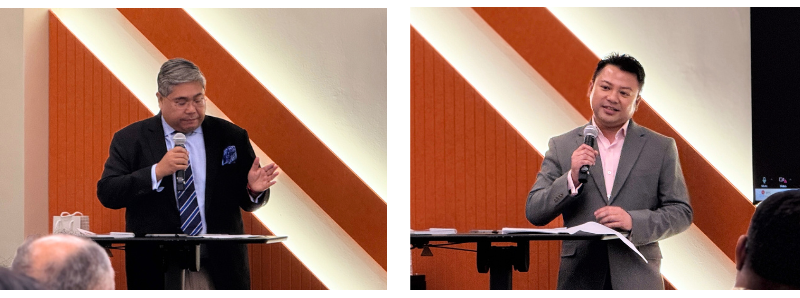
Bringing in the UK’s historical experience, Dr. Nasrul Ismail discussed how Britain abolished the death penalty in 1969 following public backlash against wrongful executions and years of advocacy by civil society. He stressed the importance of reassessing colonial-era legal systems that continue to shape modern penal policies in countries like Malaysia and Singapore. Dr. Nasrul called for evidence-based reforms that reflect contemporary values and prioritise human dignity, justice, and inclusivity.
Adding a legal practitioner's perspective, Mr. Abdul Rashid Ismail shared Malaysia’s journey from colonial punishment models to its current wave of reforms. Since independence, 469 executions have taken place in Malaysia, including 229 related to drug offences. With the introduction of the 2023 law, over 1,000 prisoners have applied for resentencing. Abdul Rashid emphasised that this transformation reflects growing momentum toward a more rehabilitative and just system, supported by collaborative efforts between government agencies, legal practitioners, civil society, and international partners.
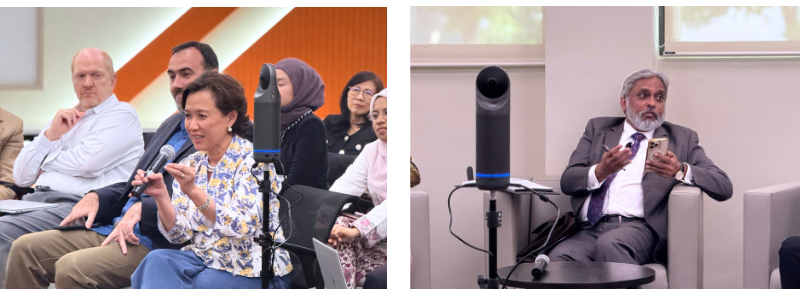
The seminar also included closing reflections from Ms. Sara Kowal, Director of Eleos Justice and Vice-Chair of the Capital Punishment Justice Project, who joined virtually to highlight the importance of sustained, cross-border advocacy. In the Q&A session, Chief Executive Officer of Monash University Malaysia and Pro Vice-Chancellor and President (Malaysia), Monash University Australia, Professor Dato' Dr Adeeba Kamarulzaman, actively engaged with the panel, raising pertinent questions on reform, judicial discretion, and the role of public discourse in shaping policy.
This timely seminar reaffirmed the role of universities as conveners of critical debate and catalysts for policy reform. As Malaysia begins to chart a new course, the discussion also placed a spotlight on Singapore’s increasingly isolated stance in the region. The event underscored that meaningful, rights-based reform is achievable—provided it is informed by research, inclusive dialogue, and a commitment to justice.