
Monash Leads Community Co-Design for Better Stroke Recovery
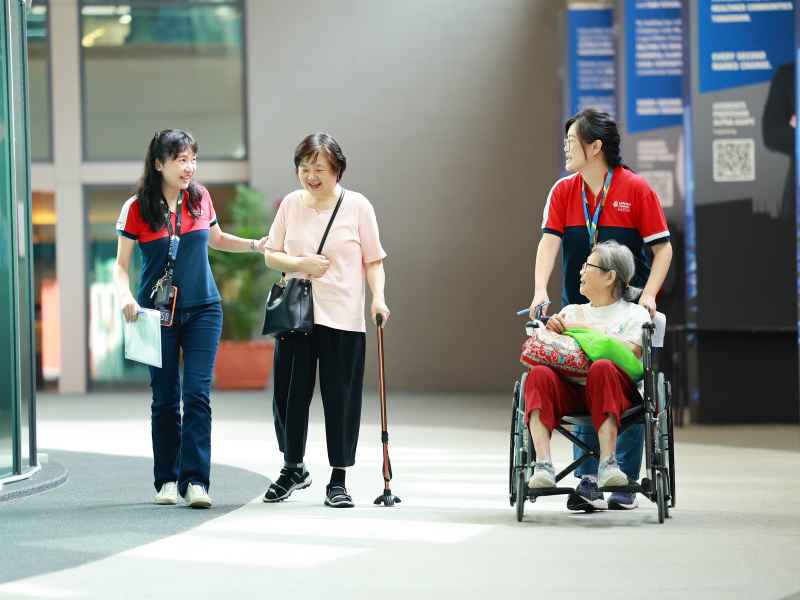
Stroke recovery does not end when a patient leaves the hospital. For many survivors and their families, returning home marks the beginning of a complex journey involving rehabilitation, caregiving, mobility, emotional wellbeing and access to community support.
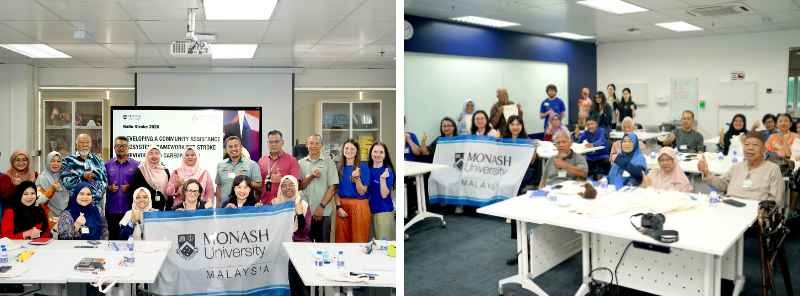
Monash University Malaysia recently conducted the HalloStroke 2026 co-design workshops across two locations in Malaysia. The workshops commenced at the School of Business, Sunway campus on 30 June and 1 July 2026, before continuing at the Monash Segamat Medical Precinct, Jeffrey Cheah School of Medicine and Health Sciences (JCSMHS), on 14 and 15 July 2026.
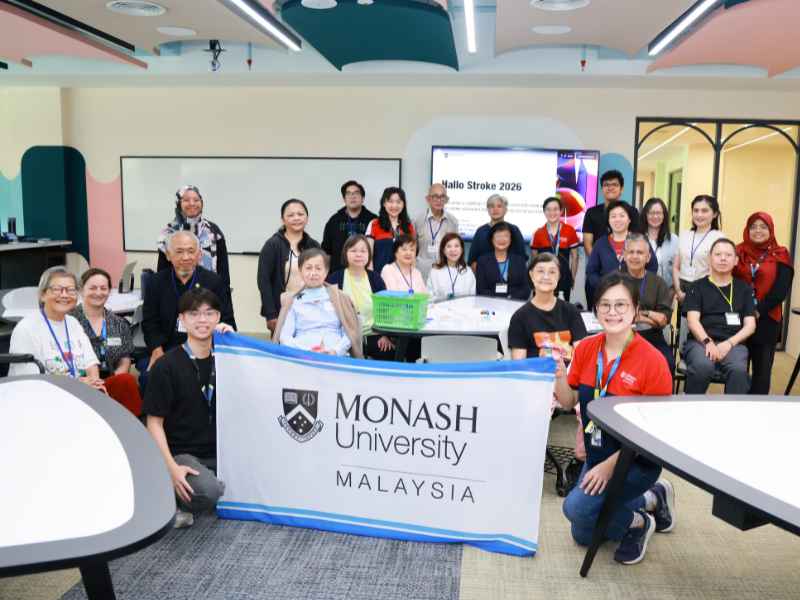
Collectively, the workshops brought together 98 participants (25 stroke survivors, 24 caregivers and 49 stakeholders), ensuring that lived experiences and professional perspectives from both urban and regional communities shaped the project.
Funded by Monash University’s The Incubator Scheme, HalloStroke is an international collaborative research initiative involving more than 20 researchers from Australia, Malaysia, Indonesia and Vietnam. The project aims to co-design an online community assistance ecosystem that connects stroke survivors and their families with relevant healthcare, rehabilitation, welfare and community services.
The initiative addresses a critical gap in long-term stroke recovery: the transition from hospital-based treatment to home and community-based care. While this transition is a crucial stage of recovery, it often presents significant challenges for stroke survivors and their families, including fragmented information, demanding care responsibilities, mobility barriers, emotional strain and difficulties identifying appropriate medical, rehabilitation, welfare and social support services.
Through a human-centred and participatory research approach, HalloStroke seeks to develop practical digital solutions that connect families with relevant resources and strengthen coordination across the broader care ecosystem. To support this, participants mapped their daily routines, caregiving responsibilities, mobility needs, information gaps, and support challenges, providing valuable insights into the realities of post-stroke recovery beyond clinical settings.
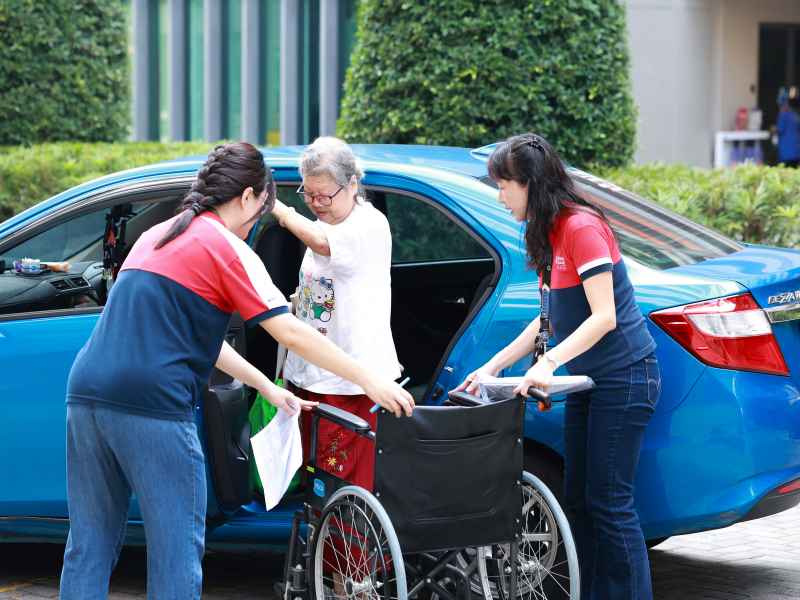
To support inclusive participation at Sunway, the research team arranged door-to-door transportation through Teman Malaysia, JomMakcik and GrabAssist, together with wheelchair-accessible campus logistics.
The stakeholder workshops brought together healthcare providers, government agencies, community organisations, local neighbourhood groups, and industry partners from across Malaysia, fostering cross-sector collaboration to strengthen post-stroke support. Participating organisations included:
Sunway
- National Stroke Association of Malaysia
- Sunway Medical Centre
- Assunta Hospital
- Pertubuhan Amal Uncle Kentang
- Pillar Health
- The Malaysian Chinese Medical Association
- Persatuan Kebajikan USIAMAS Malaysia
Segamat
- Pejabat Kesihatan Daerah Segamat
- Pejabat Kebajikan Masyarakat Daerah Segamat
- Hospital Segamat
- Pejabat Daerah Segamat
- PAWE Bandar Segamat
Building on these collaborative discussions, participants assessed the accessibility, usability, sustainability and system-level integration of the proposed ecosystem. The anonymised findings will be further refined through interviews and daily WhatsApp reflections to develop a community-informed framework for future digital health solutions and policy discussions on stroke recovery and caregiving.
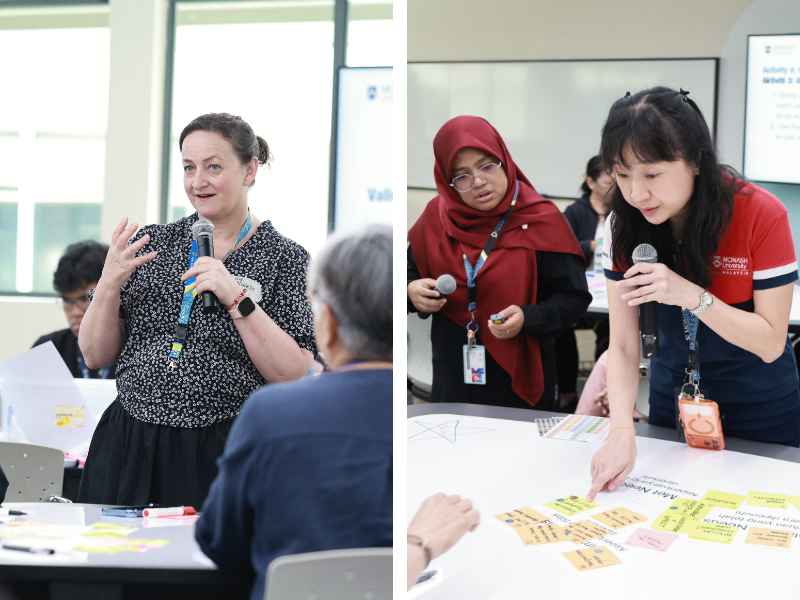
The HalloStroke 2026 initiative is led by a multidisciplinary team including Professor Narelle Warren and Professor Juliana Sutanto from Monash University Australia; Professor Teh Pei Lee from the School of Business, Monash University Malaysia; and Dr Siti Maisarah Mattap from the Jeffrey Cheah School of Medicine and Health Sciences, Monash University Malaysia.
The research team sincerely thanks all stroke survivors, caregivers, community partners and professional stakeholders who contributed their time, experiences and expertise. We also acknowledge Monash University's South East Asia Community Observatory (SEACO) in Segamat, Johor, for their valuable guidance and input.
Individuals and organisations interested in participating in HalloStroke Malaysia may contact Professor Teh Pei Lee at teh.pei.lee@monash.edu or Dr Siti Maisarah Mattap at siti.maisarah@monash.edu.