
Blueprint for Reform
Through impactful legal research and policy reform in commercial law, CLARS-MH is driving transformative change
For the law to remain relevant, it must evolve with the times.
The Centre for Commercial Law and Regulatory Studies – Malaysia Hub (CLARS-MH) seeks to do just that by championing law reform initiatives in Malaysia through education, research and engagement.
Established in 2025, CLARS-MH is a strategic partnership between Monash University and the Legal Affairs Division of the Prime Minister’s Office in Malaysia.
The centre is located at the Monash School of Business and serves as a hub for specialised training, knowledge exchange, recruitment of PhD candidates and robust engagement amongst key stakeholders in commercial law and regulatory studies.
Reforming contract law in Malaysia
“Kickstarting this strategic partnership is our flagship research project: to review and reform the Contracts Act 1950,” explained Associate Professor Adnan Trakic, CLARS-MH Director and Head of Business Law and Taxation at the School of Business.
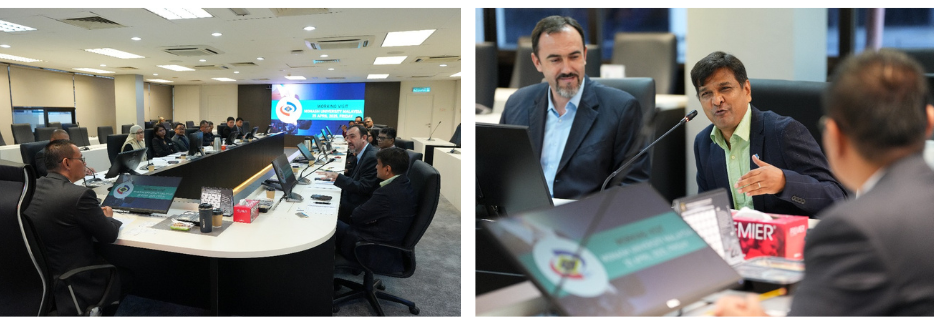 “More than 70 years old, this Act is the foundation of Malaysia’s contractual framework but has seen minimal reform since its introduction,” he continued.
“We will be benchmarking against international best practices and hope to see an updated, relevant and more intuitive law governing Malaysia’s contractual practices in the future.”
This research project is led by the Committee for the Review and Reform of Contract Law (CRRCL) formed by The Honourable Minister in the Prime Minister’s Department (Legal Affairs), YB Dato' Sri Azalina binti Othman Said.
CRCCL is chaired by The Honourable Justice Dato' Seri Vazeer Alam bin Mydin Meera, Judge of the Federal Court of Malaysia. Justice Vazeer is a CLARS-MH advisor and adjunct professor at the Monash School of Business.
“The Contracts Act 1950 has served Malaysia well for decades, but the commercial landscape has evolved significantly. Businesses today operate in a far more complex, digital and globalised environment. Reform is therefore not about discarding our foundations, but about modernising the framework to ensure clarity, fairness and certainty,” Justice Vazeer commented.
He further explained that a reformed Contracts Act will strengthen investor confidence, reduce transactional uncertainty, and better protect parties in contemporary commercial dealings.
“Ultimately, this reform is about creating a contract law regime that supports innovation, promotes responsible business practices, and enhances Malaysia’s competitiveness in the regional and global economy,” Justice Vazeer concluded.
Alongside Justice Vazeer as CLARS-MH Advisor is Philip Koh, a practising lawyer and senior partner at Mah-Kamariyah & Philip Koh. He is also an adjunct professor at the School of Business.
From a technical perspective, Prof Adnan said the project aims to modernise the Act by refining language, clarifying definitions, and removing outdated illustrations.
“We expect to present comprehensive legislative proposals this year (2026), which we see as a definitive step towards clearer, fairer and future-ready contract law for Malaysia,” he added.
Sparking conversations that matter
In addition to the reform of the Contracts Act, CLARS-MH also seeks to ignite meaningful conversation surrounding business and law through workshops, talks and roundtable discussions.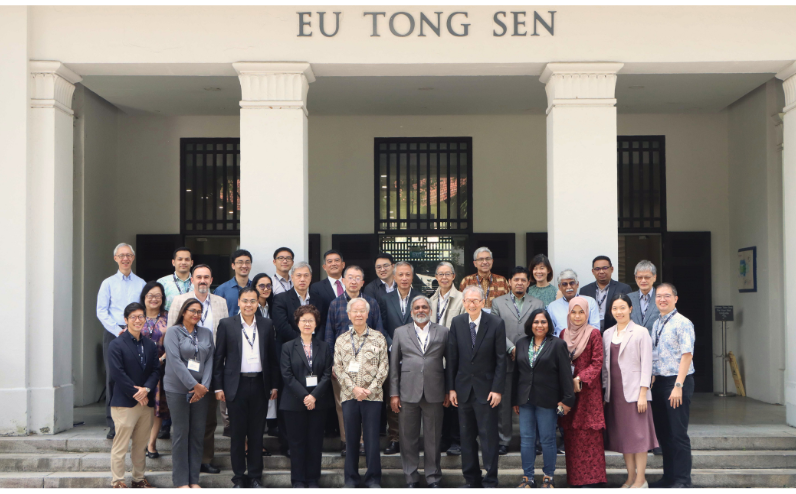
Dr. Ridoan Karim, CLARS-MH Deputy Director and School of Business senior lecturer, opined that business and law must evolve concurrently to build a sustainable, resilient and thriving society.
He explained that this is paramount in today’s digital age as technology disrupts the traditional business models that many older legal frameworks were built around.
“At CLARS-MH, we spark thoughtful dialogue on selected topics, such as capital punishment, unconscionable dealing and competition laws.
We believe it is important for current and emerging business leaders to understand the legal landscape so they can make better financial decisions,” Dr. Ridoan said.
Transforming business and law in the region
A priority of CLARS-MH is to build business leaders who shape policy reform not just in Malaysia, but the ASEAN region.
Prof. Adnan said by connecting experts and practitioners, the Centre seeks to bridge the gap between academic knowledge and real-world application for policymakers, legal practitioners, business leaders and students.
“From the halls of power to business meetings and academic roundtables, we need to be equipped with practical skills and insights to effect real transformation,” he added.
CLARS-MH works actively with the Malaysian Judiciary, Malaysian Bar Council as well as leading universities in the region such as UKM and the National University of Singapore.
“Monash is recognised for its expertise in commercial law. This is our opportunity to showcase how education can lead the way for strategic collaboration, knowledge advancement and transformative change,” Prof. Adnan finished.