
Monash University Malaysia Leads Multi-Stakeholder Dialogue on Accelerating Circularity in Malaysia’s Retail Sector
Monash University Malaysia Leads Multi-Stakeholder Dialogue on Accelerating Circularity in Malaysia’s Retail Sector
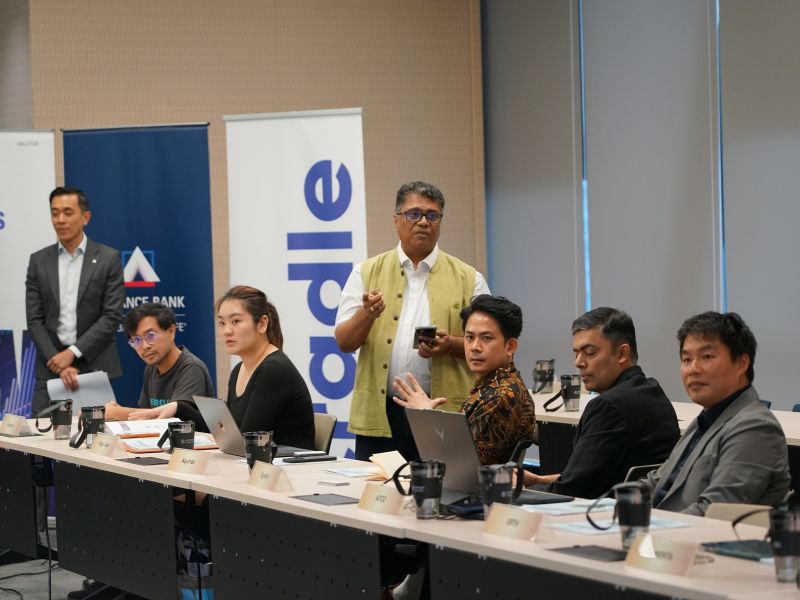 Prof. Avvari V. Mohan speaking to stakeholders seated around the table during the Accelerating Circularity in Malaysia roundtable.
The School of Business, Monash University Malaysia, in collaboration with Alliance Bank Malaysia Berhad and Cradle Fund, recently convened a multi-stakeholder roundtable titled “Accelerating Circularity in Malaysia” under the collaborative Innovation Impact Lab initiative.
The roundtable brought together retail mall operators, industry associations, SMEs, circular economy solution providers, financing organisations, ecosystem partners and academics to explore practical pathways for advancing circular economy practices within Malaysia’s retail sector.
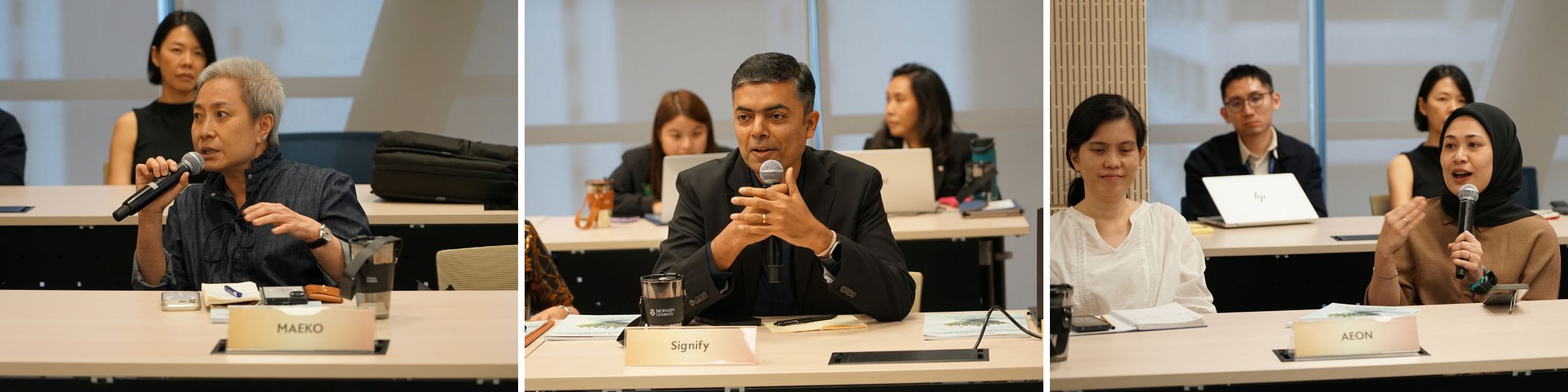 Stakeholders from MAEKO Food Waste Composting, Signify Malaysia Sdn Bhd, and AEON Malaysia contribute to the roundtable discussion.
The Innovation Impact Lab is a collaborative initiative between Alliance Bank Malaysia, Monash University Malaysia and Cradle Fund that seeks to accelerate sustainable, technology-driven solutions to real-world circular economy challenges. The Lab connects businesses, researchers, solution providers and ecosystem partners to co-create interventions, validate innovations and identify opportunities for pilot implementation and scale.
With Malaysia transitioning from a linear “take-make-use-waste” model towards a more circular economy, the retail mall sector presents significant opportunities for intervention. Malls manage diverse waste streams, including packaging, food waste, recyclables and operational waste, while emerging regulatory requirements are creating greater impetus for improved recycling and waste management practices.
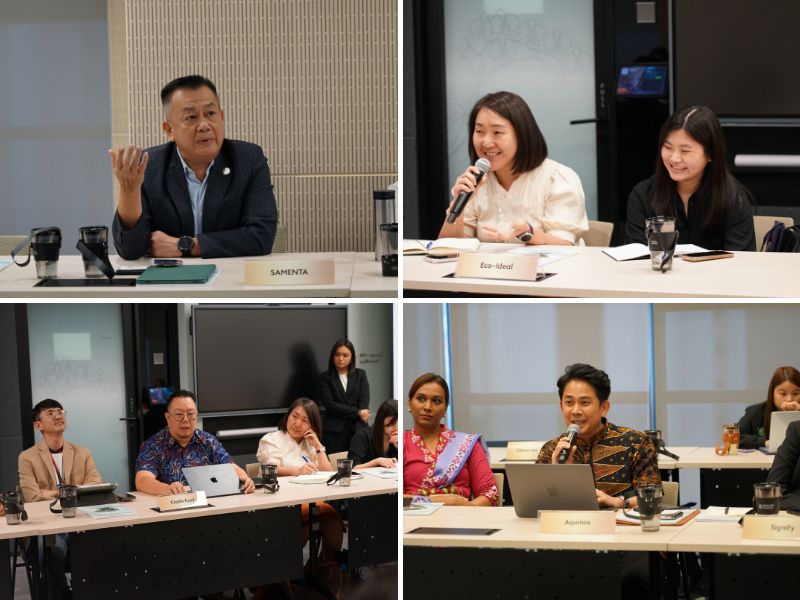 Representatives from SAMENTA, Eco-Ideal Consulting Sdn Bhd, Cradle Fund Sdn Bhd, Aquinas Environmental Group.
The roundtable provided a platform for participants to identify key challenges and explore potential solutions across waste reduction, recycling optimisation, waste valorisation, technology and innovation, and cross-sector collaboration. Discussions also focused on identifying practical opportunities for pilot projects that could be tested, validated and potentially scaled across the sector.
Three key insights emerged from the discussions:
- Circular solutions need to deliver business value. For practices to be sustainable, solutions should help reduce costs, recover value from waste, or be supported by a sustainable commercial model.
- Solutions need to work within real operational conditions. Practical considerations such as available space, storage capacity, collection logistics and the day-to-day realities of mall operations need to be factored into the design from the outset.
- Behaviour and practices are central to circularity. Alongside new recycling solutions, embedding better practices such as training and upskilling employees, tenants and operational partners is essential to improving waste management practices.
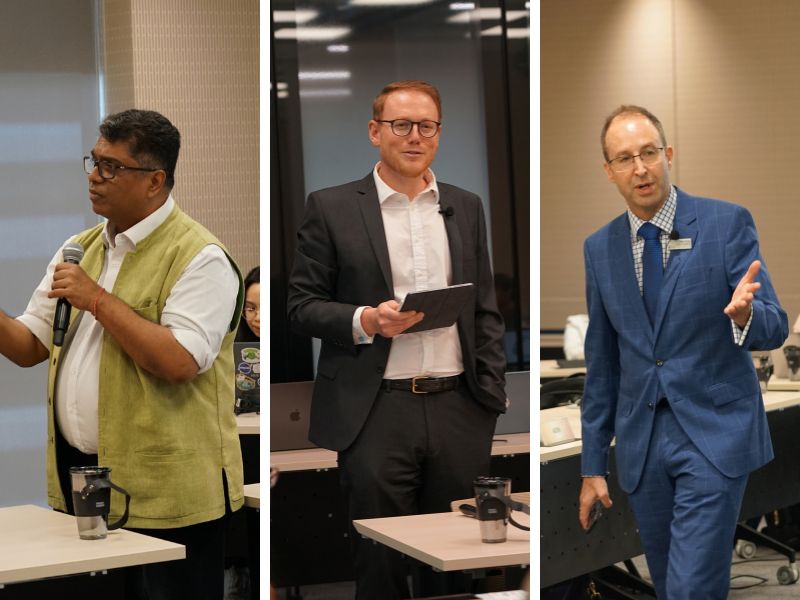 Professor Avvari V. Mohan, Martin Geissdoerfer and Glen Croy during the roundtable sessions.
Participants included representatives from IPC, AEON and Jaya, the Malaysian Retail Association and SAMENTA, SMEs, circular solution providers such as Signify, financing organisations Alliance Bank Malaysia and Cradle Fund, and academics from Monash University Malaysia and Monash University Australia, including Professor Avvari V. Mohan, Glen Croy and Dr Martin Geissdoerfer.
The discussions at the roundtable have led to clearer problem statements, with potential pilot opportunities identified and emphasises the importance of stronger collaboration between businesses, researchers, solution providers and ecosystem partners. The insights generated may also inform future roadmaps, knowledge outputs and academia-industry engagement.
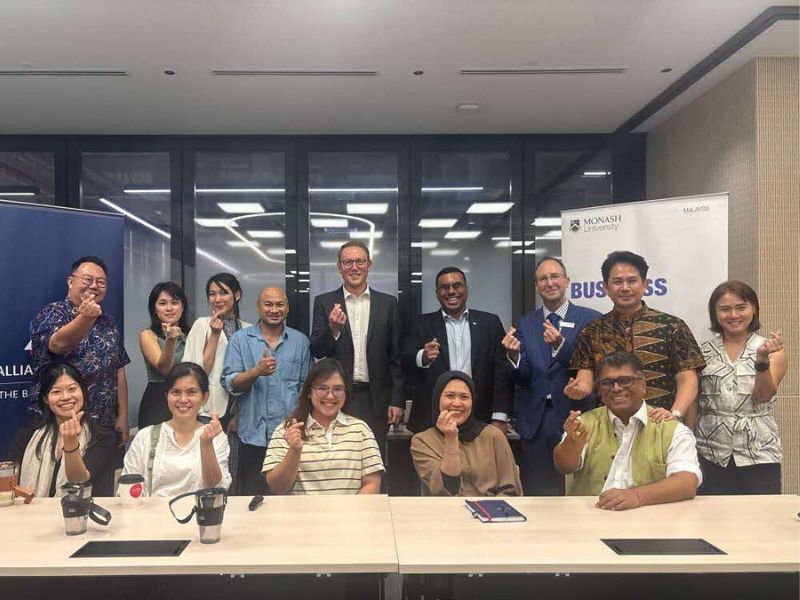 Stakeholder representatives smiling for the camera along with Prof. Avvari V. Mohan, Glen Croy, and Martin Geissdoerfer.
The initiative reflects the Innovation Impact Lab’s broader aim of turning circular economy challenges into practical opportunities for innovation, collaboration and sustainable growth.