
Actinomycetota in the Antibiotic Era: Remaining Relevant?
Do you love that fresh, earthy smell that fills the air after a light rain? Have you ever wondered what creates that scent? It’s caused by a compound called geosmin, produced by Streptomyces—the largest genus of Actinomycetota (formerly known as Actinobacteria).
Let's get to know the fascinating world of Actinomycetota. These Gram-positive microorganisms, distinguished by their high guanine-cytosine (GC) content, are found in soil, freshwater, and marine environments. The name "ray fungi" was given because the first discovered species exhibited fungus-like branching filaments (white appearance surrounding the colonies in Fig.1a), aiding their survival in complex ecosystems. However, Actinomycetota is now recognized to include a wide variety of forms beyond this initial description (Fig. 1b)
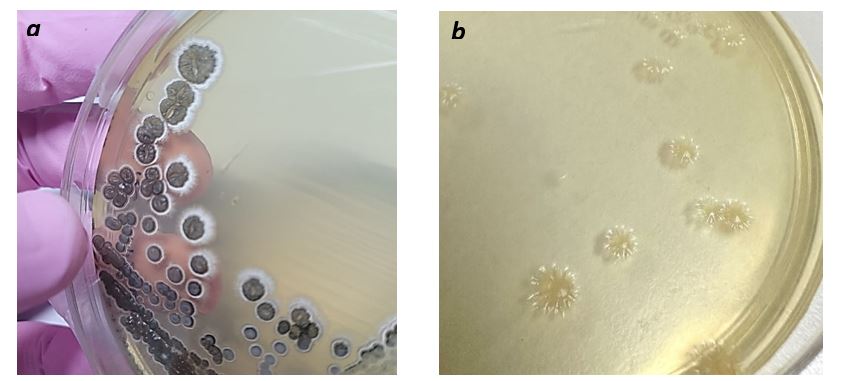
Figure. 1: (a) Streptomyces sp. KSF 165 and (b) KSF 103 are both potential novel strains isolated from a primary forest in Pahang by Dr. Adzzie Azman
Renowned for their ability to produce a wide range of bioactive secondary metabolites, which yielded over 5000 distinct antibiotics, Actinomycetota is the primary source of antibiotics. However, with the serious global threat of antimicrobial resistance cases, which is estimated to increase to 10,000,000 per year by 2050, greatly exceeding deaths from cancer, some questioned, is Actinomycetota still relevant in finding new therapeutic solutions?
The answer is “YES! Identifying new active structural substances from Streptomyces species may become difficult due to the re-isolation of the same molecule. But don’t worry! The chances of identifying the novel compounds remain high, especially in those Actinomycetota species isolated from extreme environments and non-Streptomyces species. Other than that, repurposing or re-structuring the existing compounds is one way to discover new therapeutics outside the scope of the original use,” said Dr. Adzzie Azman, a microbiologist who is actively doing research in drug discovery from Actinomycetota.
Adzzie’s current work focuses on a few bioactive compounds isolated from the genus Streptomyces, one of which is a rare C-benzylated flavanone found in Streptomyces sp. KSF103 has potent antibacterial activity against methicillin-resistant Staphylococcus aureus (MRSA). Interestingly, this compound is the first reported from a Streptomyces species. While there has been no recurring identification or isolation of this rare C-benzylated from any other microorganisms in the present literature, the intricacies of this compound are yet to be fully unraveled.
Understanding its current inhibitory and killing mechanisms where this rare C-benzylated flavanone acts as a protein inhibitor in bacterial cell division (Fig. 2), leading to filamentation and cell death (Fig. 3), one of the research focuses is on the potential of this compound as anti-acne against bacteria and fungi causing acne infection. Intending to develop topical anti-acne and anti-inflammation caused by the infection, the team is also working with researchers from Korea.
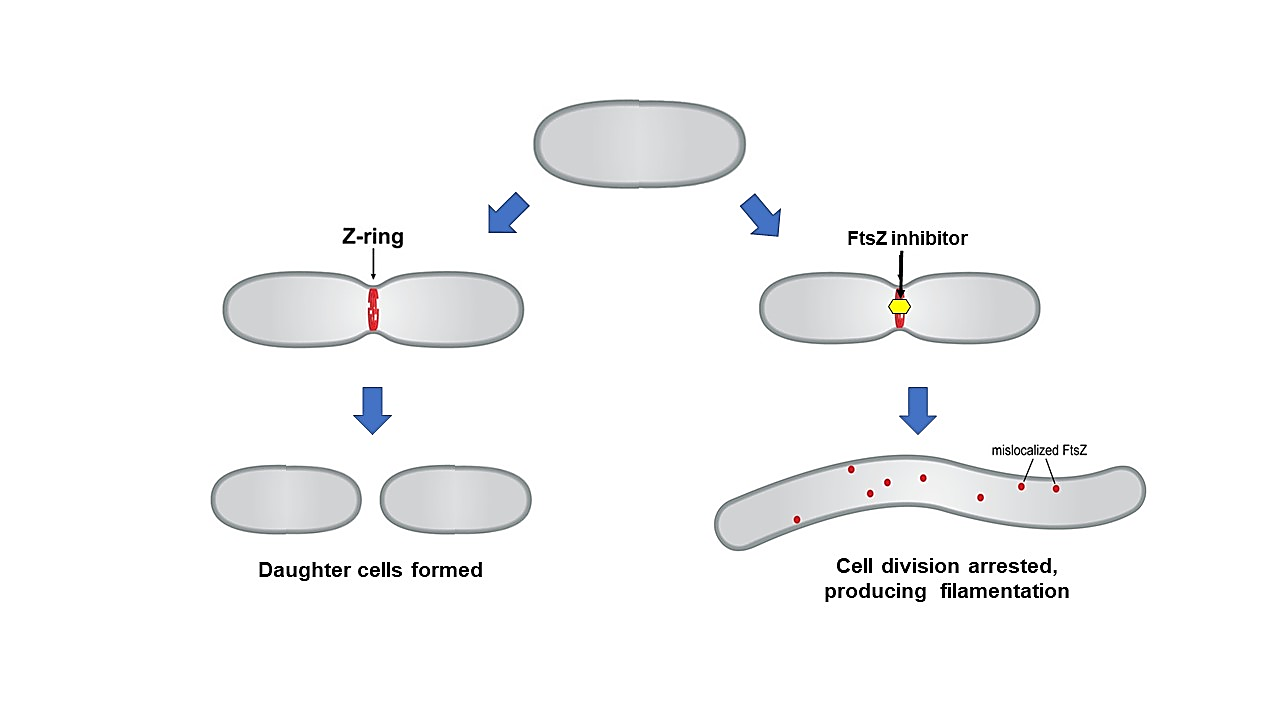 Figure 2: The mechanisms of the rare C-benzylated flavanone in inhibiting and killing the bacterial cells
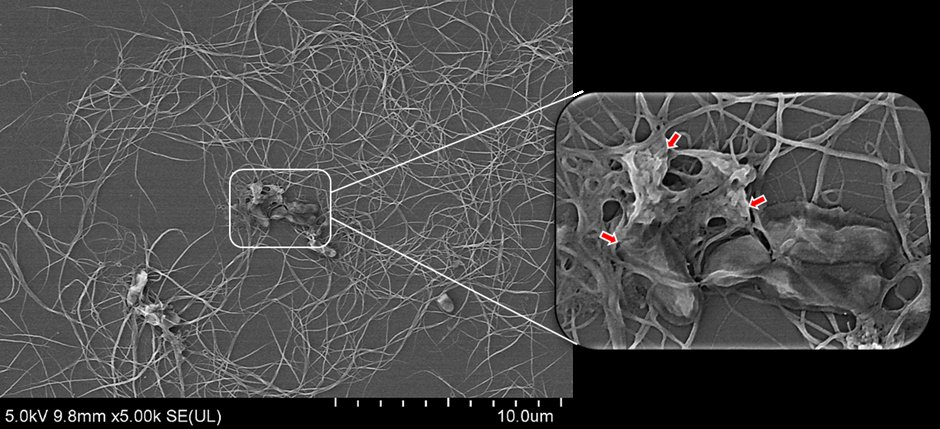 Figure 3: The scanning electron microscope (SEM) image of Cutibacterium acnes, where the appearance of filamentation and shrinkage of the cells in the treated samples (publication under review)
On the other hand, together with researchers from the Institute for Medical Research, National Institutes of Health (NIH) Malaysia, and Cardiff Metropolitan University, they are investigating the compound as a potential antibiofilm agent against biofilm wound infection. The collaboration led to the agreement to establish the polymicrobial wound biofilm model (Duckworth Biofilm Device, DBD) in the School of Science study of chronic wound infection and the efficacy of topical antimicrobials.
With the aim of developing a novel compound, Dr. Adzzie is currently collaborating internally with the chemist from the School of Science, MUM, to modify the C-benzylated flavanone structure to enhance the antimicrobial activity and study the other potential inhibitory and killing mechanisms, especially in multidrug-resistant (MDR) and extensively drug-resistant (XDR) bacterial strains.
“Drug discovery isn’t an overnight work, it can take 10 years or even longer. I find inspiration in Professor Satoshi Ōmura, who started his groundbreaking work in 1974 with the isolation of Streptomyces avermitilis. He was awarded the Nobel Prize in Physiology or Medicine in 2015 (41 years of work!) for the development of avermectin, which in a chemically modified form, ivermectin, proved effective against river blindness and elephantiasis. His story reminds me that with dedication and perseverance, nothing is impossible. That’s why I believe it’s important to start now—because every great achievement begins with that first step.” Adzzie Azman, 2024.
Contact: Dr. Adzzie Shazleen binti Azman
Phone: 03-55145603
Email: AdzzieShazleen.Azman@monash.edu