
Unveiling crime through chemistry
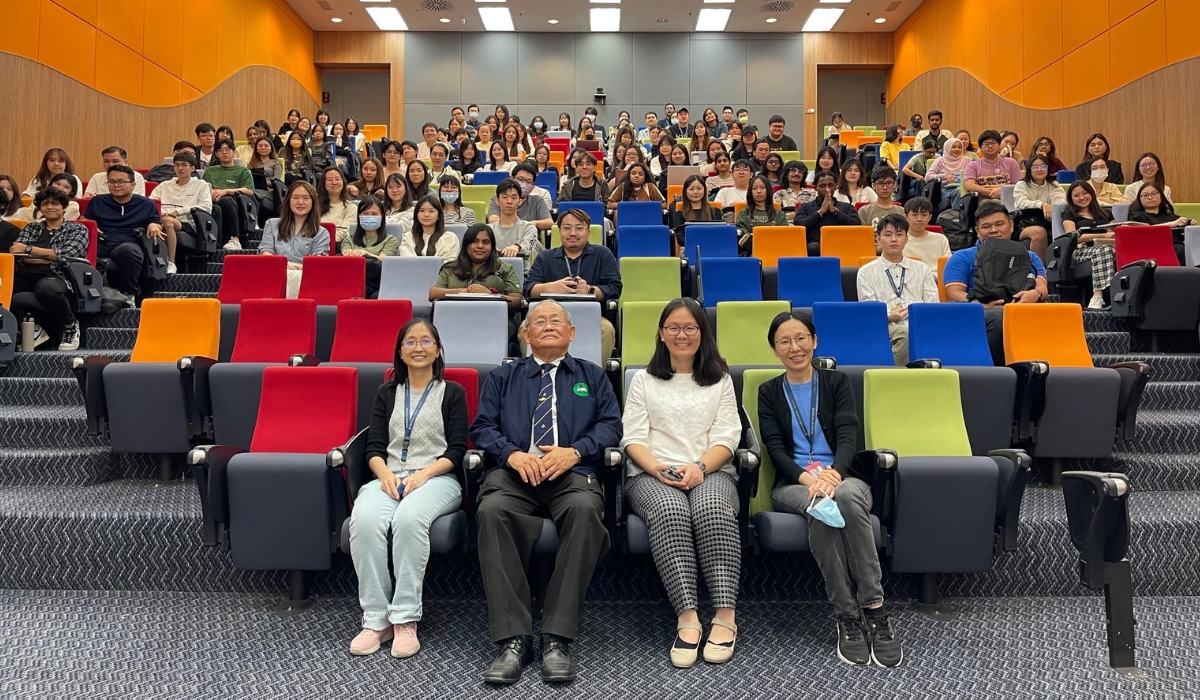 Dr Irene Ling (far left in the front row), DCP (R) Associate Professor Dato' Dr Yew Chong Hooi (second from left in the front row), Associate Professor Dr Siow Lee Fong (second from right in the front row), Dr Ang Chee Wei (far right in the front row), and the rest of the attendees from the School of Science.
The School of Science hosted a distinguished guest lecture featuring DCP (R) Associate Professor Dato' Dr Yew Chong Hooi, a renowned forensic scientist with over 38 years of experience in the Royal Malaysia Police. His talk, officially titled “The Role of Forensic Chemistry in Criminal Investigation”, showed insights into the critical role that forensic science plays in solving criminal cases.
Throughout the session, he discussed the importance of forensic chemistry in analysing evidence and emphasised the importance of preserving evidence integrity that involves chemistry, biology, and physics in forensic investigations. His extensive experience, including some of Malaysia’s most high-profile cases, provided attendees with real-world examples of criminal investigations' challenges and complexities.
“Criminal investigations today rely heavily on the correct handling and analysis of physical evidence,” said Dr Yew. He walked the audience through collecting, preserving, and analysing physical evidence, stressing that forensic science bridges the gap between science and the legal system. Various types of physical evidence, such as fingerprints, body fluids, hair, and soil, are analysed in forensic laboratories to establish connections between suspects and crime scenes.
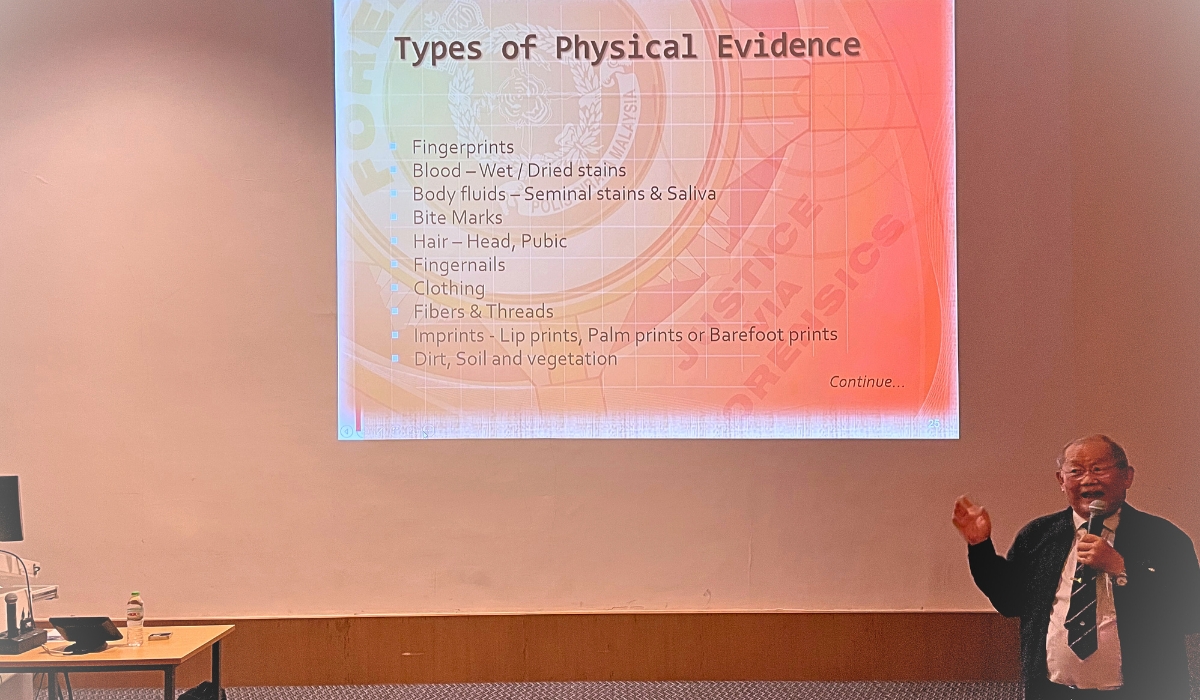 The different types of physical evidence present.
He also highlighted forensic chemistry's essential role in identifying trace evidence, such as gunshot residue, drugs, and poisons. According to Dr Yew, maintaining the integrity of this evidence is crucial, as it can often be the deciding factor in court cases. He shared an instance where a sample was improperly stored, leading to complications in a legal case, stressing the need for professionalism and thoroughness in forensic work.
One of the key themes Dr Yew touched on was the challenges forensic scientists face, particularly when dealing with high-profile cases. He discussed the difficulty of ensuring evidence is uncontaminated and emphasised that forensic scientists must always strive for honesty and professionalism to maintain the integrity of their findings. “Our responsibility as forensic experts extends beyond the laboratory,” he remarked. “The integrity of our work is tested in the courtroom, where our findings can either exonerate or convict individuals.”
The talk concluded with a Q&A session where students asked about the emotional factors in criminal motives, how forensic teams handle manipulated data, and what it takes to work in forensic science. Dr Yew’s candid responses and wealth of experience gave the audience practical insights and inspiration for those considering careers in this challenging but rewarding field.
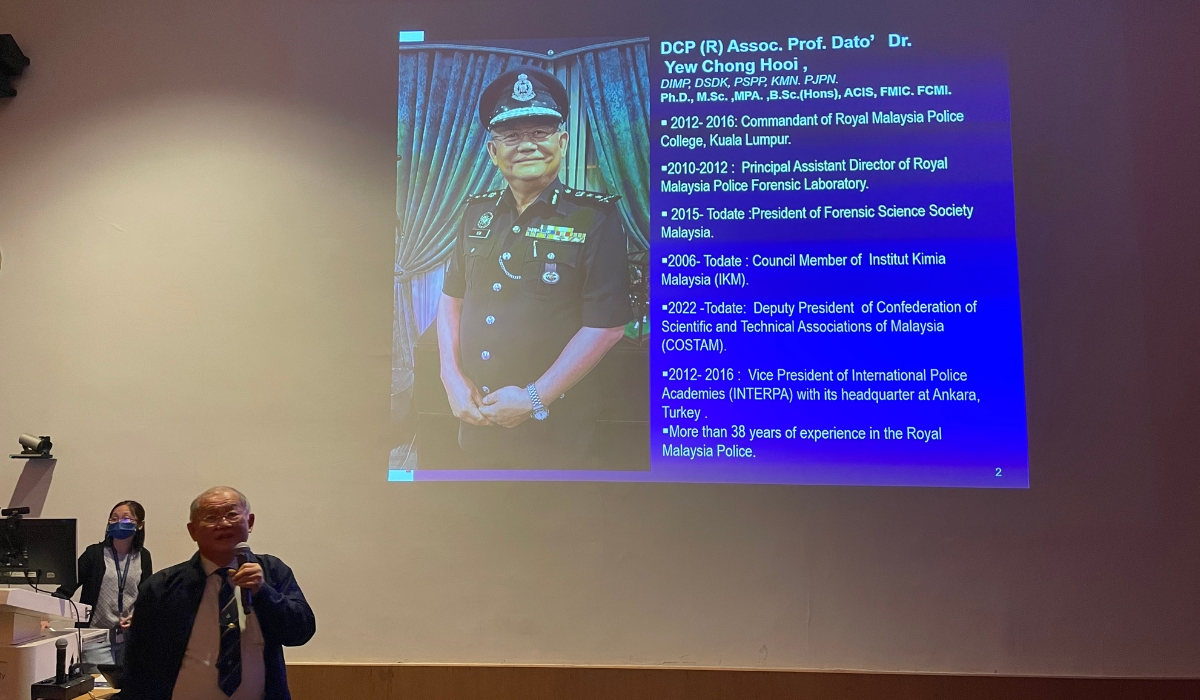 DCP (R) Associate Professor Dato' Dr Yew Chong Hooi presented his talk and showcased his wealth of experience in the field.
As a final note, Dr Yew reminded attendees of the critical role forensic scientists play in society, stating, "In forensic science, every piece of evidence tells a story, and it’s our job to uncover the truth."
With the rising importance of forensic science, talks like these play a crucial role in preparing students for the complex landscape of criminal investigations. Monash University Malaysia hopes to continue providing students with ample opportunities to engage with thought leaders and gain valuable insights into their future careers.