
The power of community - Relate Me
1 August 2022
Relate Me is a digital health program created to help build a sense of community and connection during the lockdowns.
Relate Me enabled users to connect and share with other community members through a user-friendly social messaging platform. The project was designed and coordinated by the South East Asia Community Observatory (SEACO) and the Medical School at Monash University Malaysia, which engaged and empowered community health volunteers in collaboration with the World Health Organization (WHO).
Relate Me was built on the findings of "corona" risk surveys conducted by Monash University Malaysia researchers. In early 2020, nearly 900 people aged 18 to 73 from rural or semi-rural Malay, Chinese and Indian communities in Johor state took part in a telephone survey. Almost half of the participants responded again when they were followed up in late 2020 to help researchers understand the prevalence, progression and causes of mental health risks during the pandemic.
The data revealed a striking link between the consequences of lockdowns and mental health risks, said lead researchers of the surveys, Professor Tin Tin Su, Director of SEACO and Professor Alexandre Schaefer, Sunway University.
Professor Tin Tin said, "The findings showed that loneliness and money worries were the strongest determinants of mental health stress. Loneliness was worse for people who were the most active in community life. Loneliness and concerns about household finances were more closely linked to mental health concerns than education status, overcrowded housing, age, gender, ethnicity, fears about COVID-19 or other factors. This is an important finding for policymakers to take into account when considering pandemic restrictions."
WHO Representative to Malaysia, Brunei Darussalam and Singapore, Dr Rabindra Abeyasinghe said, "We know that COVID-19 restrictions and social distancing made people feel disconnected from each other, and more likely to experience anxiety and depression. We also know stigma prevents people from acknowledging their mental health issues and seeking help. It was important to find alternative approaches to community engagement during movement control to support people in overcoming these stressful situations, especially through virtual community-based programs helping vulnerable groups like women, older adults, and people with less education through enhancing their connectedness to community members and extended family members."
The Relate Me team aimed to improve mental health distress due to lockdowns by leveraging existing community networks as well as new engagements built by SEACO.
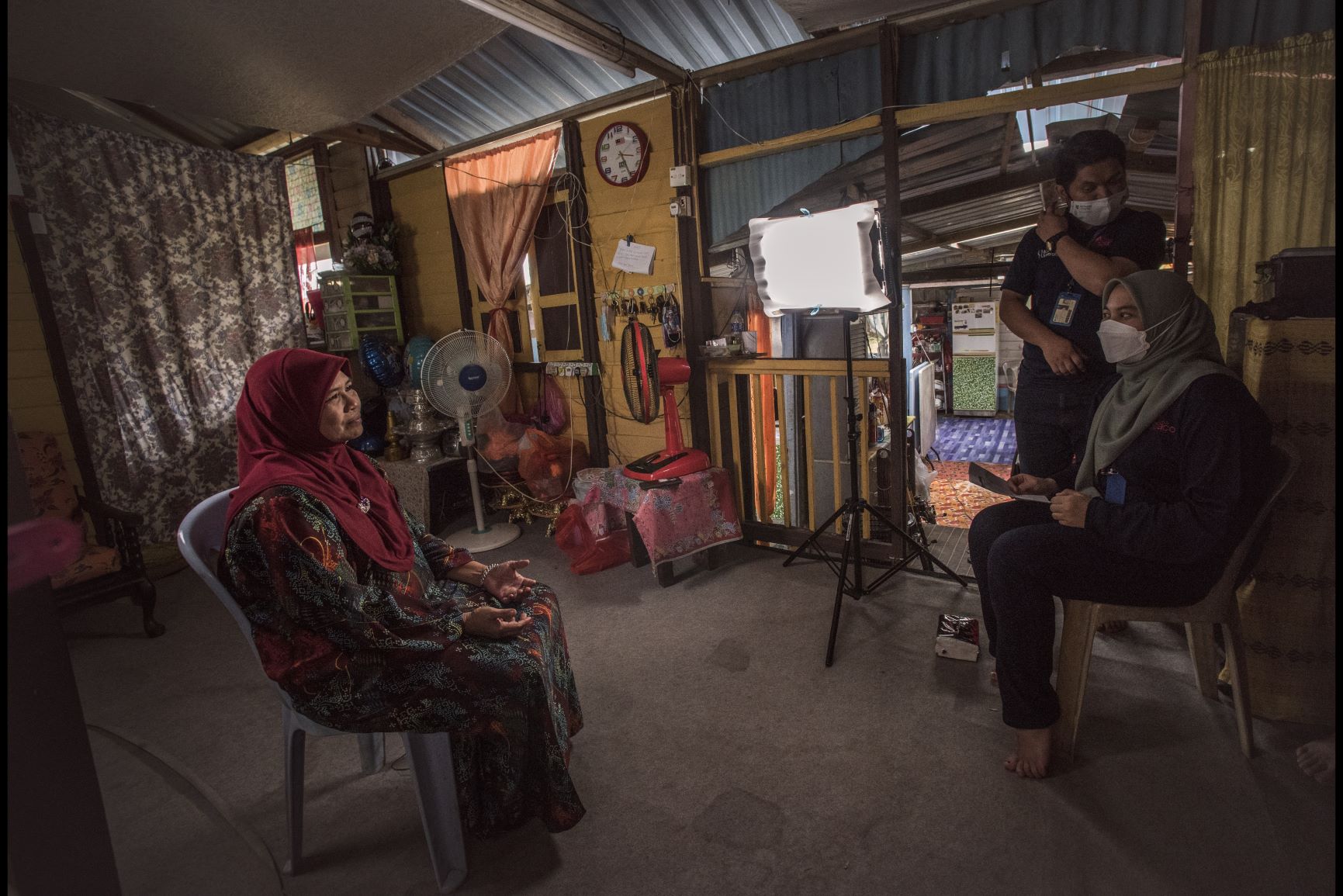
From the larger group of the survey participants, 15 people aged 20 to 60 participated in testing a two-week program run by locally elected community health workers that focused on individual coping and relationship-building skills. The program was run through individual and group chats so that participants could build relationships with the health workers and their peers simultaneously. WhatsApp was chosen because it does not require high-speed internet access and is the most widely used messaging app among Malaysians, including rural residents with low digital literacy, who could choose to record and send voice messages.
Dr Abeyasinghe said that for many people, a lack of social interaction during the COVID-19 pandemic had a profound effect on their mental health.
"This project is unique in that it uses technology to support the building of trust and community connections at an isolating and stressful time in people's lives."
Support from trusted community health care workers – trained as part of the project - was essential to its success, especially in reducing anxiety and fear and the longer-term sustainability, as they are members of their communities.
The research also suggests actions to take after restrictions are lifted.
"Relate Me has confirmed that relationships and a sense of community are pillars of mental health. The challenge for societies will be to develop community-based support once lockdowns have eased, to help restore and strengthen these links," said Dr Abeyasinghe.
Developed under the Community Engagement Research Initiative, funded through the Republic of Korea and JVC (Japan), Relate Me could serve as a foundation to build on a sustainable relational community engagement program for mental health.
Watch a video about Relate Me:
This story was originally posted on who.int