Illuminating the path to enlightenment
2 May 2023
Wesak Day is a Buddhist holiday that commemorates the birth, enlightenment, and passing of the Buddha, also known as Siddhartha Gautama. The holiday is usually observed on the full moon of the month of Vesakha, which falls between April and May.
The origins of Wesak Day can be traced back to ancient India, where the Buddha was born and lived. The holiday is believed to have started as a simple religious observance, with monks and devotees gathering to pay their respects to the Buddha on the anniversary of his birth. Over time, the holiday evolved into a more elaborate festival, with people across the Buddhist world celebrating the Buddha's life and teachings through various traditions and rituals.
Wesak Day is important in Malaysia, particularly for the country's large Buddhist community. The day is marked by various cultural and religious activities across the country. Buddhists in Malaysia often visit temples to offer prayers and make offerings to the Buddha. Many temples also organise special ceremonies, including chanting sessions, meditation practices, and Dharma talks.
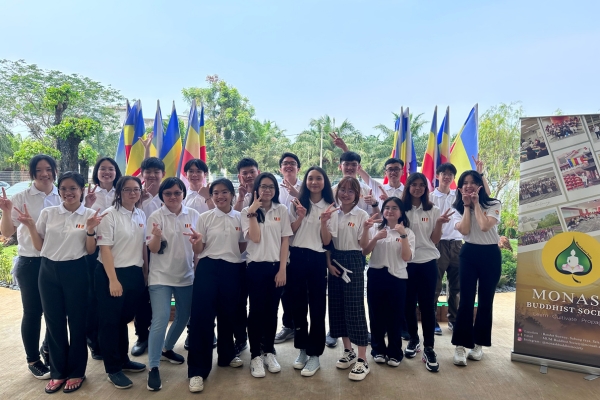
At Monash University Malaysia, the Wesak Day celebrations organised by the Buddhist Society provides an opportunity for students to learn about the history and significance of the holiday, as well as to participate in traditional Buddhist practices.
"Buddhism teaches us to love and respect all living beings, and that is why it was important for us to celebrate Wesak Day on campus," said the president of the Buddhist Society at Monash University Malaysia. "We wanted to provide an opportunity for Buddhist students to connect with their faith and culture, but also to educate non-Buddhist students about the significance of the holiday. It was a way to promote understanding and inclusivity on campus and to celebrate the diversity of our community."
On 2 May 2023, the Monash Buddhist Society commemorated Wesak Day by setting up a mini-exhibition to showcase the history of Wesak in Malaysia and around the world, providing a valuable learning opportunity for Buddhist students. Through the exhibition, students were able to explore the holiday's origins and how it has evolved over time, as well as discover the diverse traditions and practices associated with Wesak across different cultures.
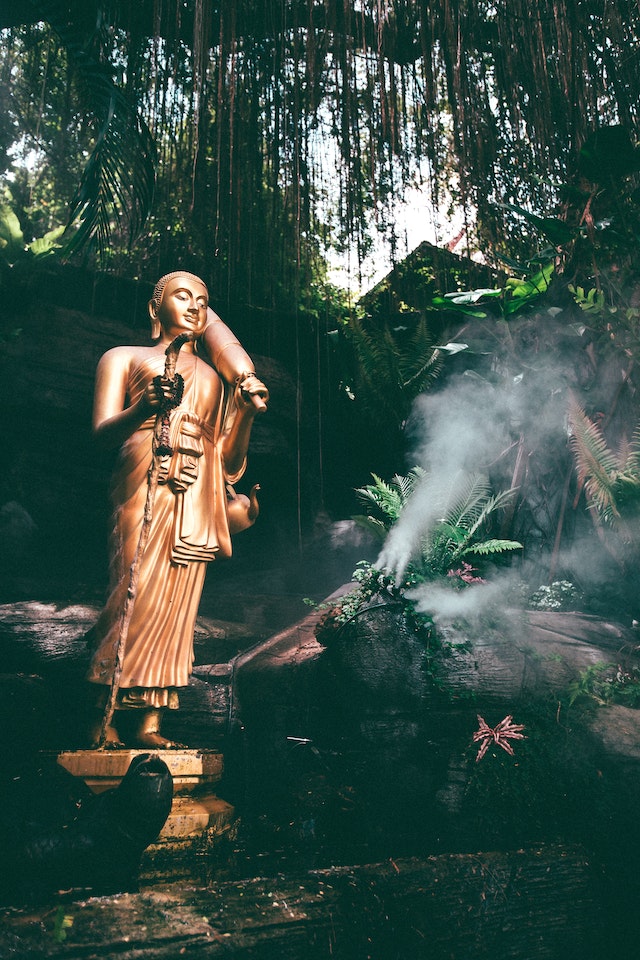
One of the significant activities of the Society was a traditional Buddhist practice called "Bathing Prince Siddhartha." The practice symbolises inner purification and renewal, and it involves pouring scented water over a statue of the Buddha. Buddhist students participated in this ritual, which served as a meaningful opportunity to connect with their faith and practice an important aspect of their religious tradition.
In addition to the earlier activities, the Buddhist Society held opening and closing prayer services that students could attend. Throughout the day, club members performed hymns that added to the festive atmosphere on campus. The celebrations drew an estimated 80 participants, with students attending the events at different times throughout the day.
Monash University Malaysia demonstrates its commitment to equity, diversity, and inclusivity through initiatives like the Wesak Day celebrations. The university recognises the importance of fostering a welcoming and inclusive environment for all students and staff, regardless of their cultural background or religious beliefs. By promoting cultural understanding and inclusivity, the university can help build a diverse and inclusive community that is essential for creating a positive learning environment.