
Lights, camera, action!

16 June 2022
Celebrities possess a certain star quality that makes them a hit with their fans. Does this quality transcend cultures, though? We speak to Dr Jonathan Driskell, Senior Lecturer in Film, Television and Screen Studies from Monash University Malaysia, for his take on the question.
Often, when we talk about celebrities, we lean towards Hollywood, with the Tom Cruises and Angelina Jolies at the forefront of our minds. Without a doubt, Hollywood movie stars are often who we identify with when we talk about stardom. The charisma, the million-watt smile, the confidence, the very aura of what stars are made of.
In recent years though, celebrities from other regions have been appearing on the radar of stardom, particularly Asian stars. Perhaps it's due to recent Korean hits such as Parasite and Squid Game, but more attention has lately been directed towards celebrities from places beyond Hollywood and Europe. The fact is also that many Asian cinematic works have enjoyed high-profile success in international film festivals like the Cannes Film Festival in the last decade or so, with some even winning the highest accolade, the Palme d'Or.
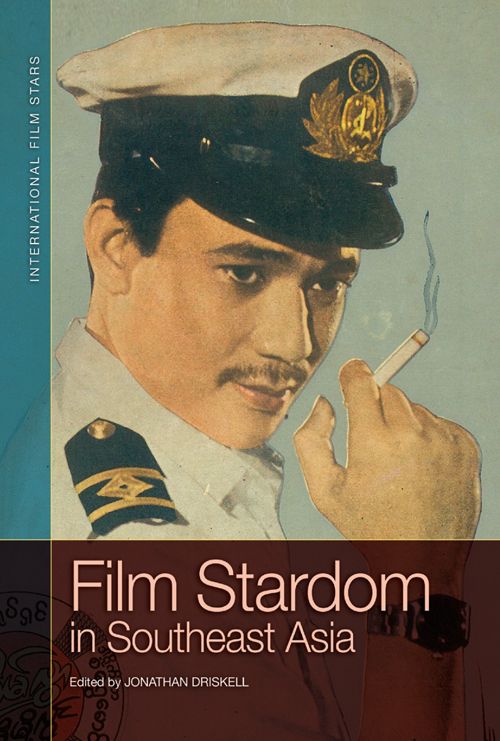
Dr Jonathan Driskell, a Senior Lecturer in Film, Television and Screen Studies in the School of Arts and Social Sciences, Monash University Malaysia, sought to explore the idea of Asian stardom, in particular those from Southeast Asia, in his book Film Stardom in Southeast Asia. The book - the first to address the important role played by film stars in Southeast Asian cinema - consists of eleven chapters contributed by academics who specialise in the region’s cinemas, each one providing detailed case studies of stars, such as the Philippine's Sharon Cuneta, Ananda Everingham from Thailand, Rhoma Irama from Indonesia, and Malaysia's very own P. Ramlee. Dr Driskell, who is the book's editor, wrote the chapter on P. Ramlee.
"The book looks at stardom in Southeast Asia, spanning from the mid-1950s to the present day, a roughly 65-year period. It encompasses cinemas from all across the region and looks at stars from a wide range of genres. One of the main aims of the book is to understand the contribution these stars have made to the cinemas they come from," explains Dr Driskell.
Dr Driskell has always been interested in cinema. For his master's degree, he focused on Hollywood stardom, while for his PhD, he researched French stars. Dr Driskell moved to Malaysia in 2011 and, having been exposed to the cinema of this region, decided to look at stardom in relation to Malaysia, Singapore and, in a broader sense, Southeast Asia. "I've been interested in stardom for a long time; how stardom can shed new light on Southeast Asian cinemas and what it can tell us about society in general."
And what does Film Stardom in South East Asia tell us?
"To some extent, Southeast Asian stars share traits similar to those from other countries, such as glamour, charisma and a recurring persona evident in film after film. What's also interesting is that, in many ways, there are a number of connections between these stars and what was going on in society at the time they were famous. For example, the chapter on Cambodian stardom talks about the former king Norodom Sihanouk, also a filmmaker and actor, and how there was a connection between royalty and stardom at that time. Or P. Ramlee and how he embodies local traditions, in a highly authentic way, creating a strong cultural connection with his audience. In this way, the book explores the role stars play in shaping Southeast Asian cinema, while also shedding light on other areas beyond film, such as popular culture, politics and history," says Dr Driskell.
To know more about the programs offered by the School of Arts and Social Sciences, visit www.monash.edu.my/sass.