
Episode 1: The Future of Higher Education


Monash University Malaysia recently launched its first podcast, Future Conversations, hosted by Professor Meera Sivasothy, a Professor of Practice in Digital Media and Communication from the School of Arts and Social Sciences. The inaugural episode delved into a topic of pressing relevance: the future of higher education. Featuring three distinguished guests, the conversation explored the challenges, opportunities, and evolving landscapes of education in a rapidly changing world.
Joining Professor Meera were Professor Tansy Jessop, Pro Vice-Chancellor for Education and Students at the University of Bristol; Associate Professor Tim Fawns from the Monash Education Academy, Monash University; and Vishy Narayanan, Asia-Pacific Digital and AI Leader at PricewaterhouseCoopers (PwC). Together, they unpacked themes ranging from the impact of technology to the evolving role of higher education in society.
Is Higher Education Still Relevant?
The episode began by addressing a provocative question: is there disillusionment with the growth of higher education? Professor Jessop noted the shift from elite to mass education, highlighting the expanded demographic diversity in universities. However, she questioned who exactly is disillusioned—the media, students, or parents—and suggested that funding models, particularly the transition from public to private funding, might contribute to these sentiments.
Fawns added that commentary on higher education is nothing new, but institutions must better articulate their value, acknowledge areas for improvement, and engage in collective conversations to build trust and purpose. Meanwhile, Narayanan offered an employer's perspective, praising higher education's role in developing skills but cautioning that the rate of technological and societal change often outpaces institutions' ability to adapt.
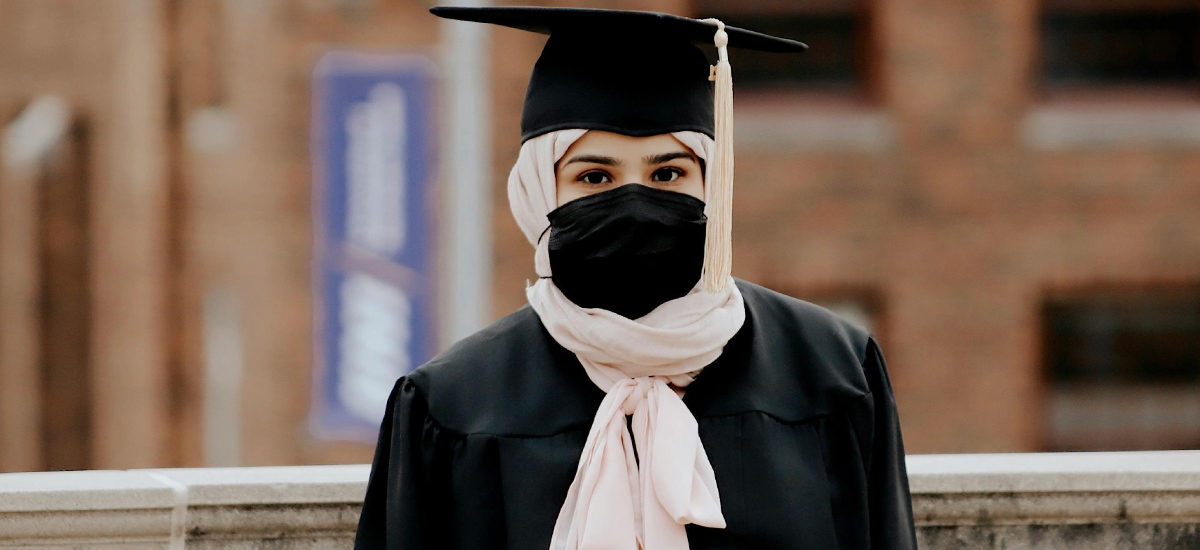
The COVID-19 pandemic has significantly impacted the global higher education system and landscape.
The COVID-19 pandemic forced universities worldwide to pivot to online learning, a feat described by Professor Jessop as evidence of higher education's adaptability. However, the transition wasn't without challenges. Increased flexibility, while appreciated, also introduced issues like student disengagement and loneliness.
For Fawns, the pandemic underscored the resilience of higher education, but it also revealed a complex interplay of societal and individual factors. "The university experience is a smaller proportion of many people's lives," he said, as many simultaneously juggle work, caring responsibilities, and complex challenges.
Narayanan noted a surge in self-paced and micro-credentialed learning during the pandemic, which has continued to shape both education and workplace training. However, he emphasised that experiential and social learning remain critical, particularly as graduates enter hybrid work environments.
A recurring theme in the discussion was the need for stronger collaboration between universities and industry. Professor Jessop described Bristol's efforts to integrate live industry briefs into coursework and establish entrepreneurial hubs that foster real-world learning. Similarly, Fawns highlighted the importance of a two-way dialogue, where industry and academia shape each other, rather than universities acting as mere pipelines to employment.
Narayanan pointed out the current lack of a "closed-loop system" that allows ongoing feedback between employers and educators. He argued that courses with clear applications, such as data analytics, would benefit immensely from closer industry ties to ensure graduates are workforce-ready.
Artificial intelligence dominated much of the conversation, with the guests debating its role in education and employment. Narayanan described AI as a disruptor rather than a destroyer, urging organisations and institutions to embrace its potential responsibly.
 Artificial intelligence can be an effective 'co-worker' rather than a replacement for human beings.
Professor Jessop stressed the importance of equity, cautioning against algorithmic biases and the uneven access to AI tools among students. She argued that AI should be viewed as a critical thinking tool, integrated thoughtfully into learning. Fawns echoed these sentiments, highlighting the nuanced ways students are already using AI and calling for a sophisticated discussion around its potential benefits and risks.
Despite technological advancements, the panellists agreed that "soft skills" like teamwork, adaptability, and emotional intelligence remain vital. Narayanan shared that at PwC, they are rethinking traditional roles to reward multidisciplinary skills, blending technical expertise with creativity and collaboration.
Professor Jessop pointed out that humanities and social sciences degrees, often undervalued, equip students with critical thinking and problem-solving skills essential for navigating uncertainty. Fawns reassured listeners that these disciplines remain crucial for fostering a well-rounded, adaptable workforce.
In closing, the guests shared advice for students and families about life beyond university. Fawns emphasised the importance of collective values and collaboration, urging graduates to develop resilience and navigate uncertainty with curiosity. Professor Jessop called for "pedagogies of hope" that inspire students to see opportunities amid challenges, while Narayanan reminded listeners that learning doesn't end at graduation—it evolves with societal and professional demands.
Tune into the podcast for deeper insights and the full spectrum of ideas discussed. This is one conversation you won't want to miss! Click here to watch the full podcast.
Monash University Malaysia's Future Conversations promises to be a vital platform for engaging with the big questions shaping our world. This first episode set a high bar, tackling the complexities of higher education with depth, nuance, and optimism.