
Mapping new frontiers in psychedelic medicine
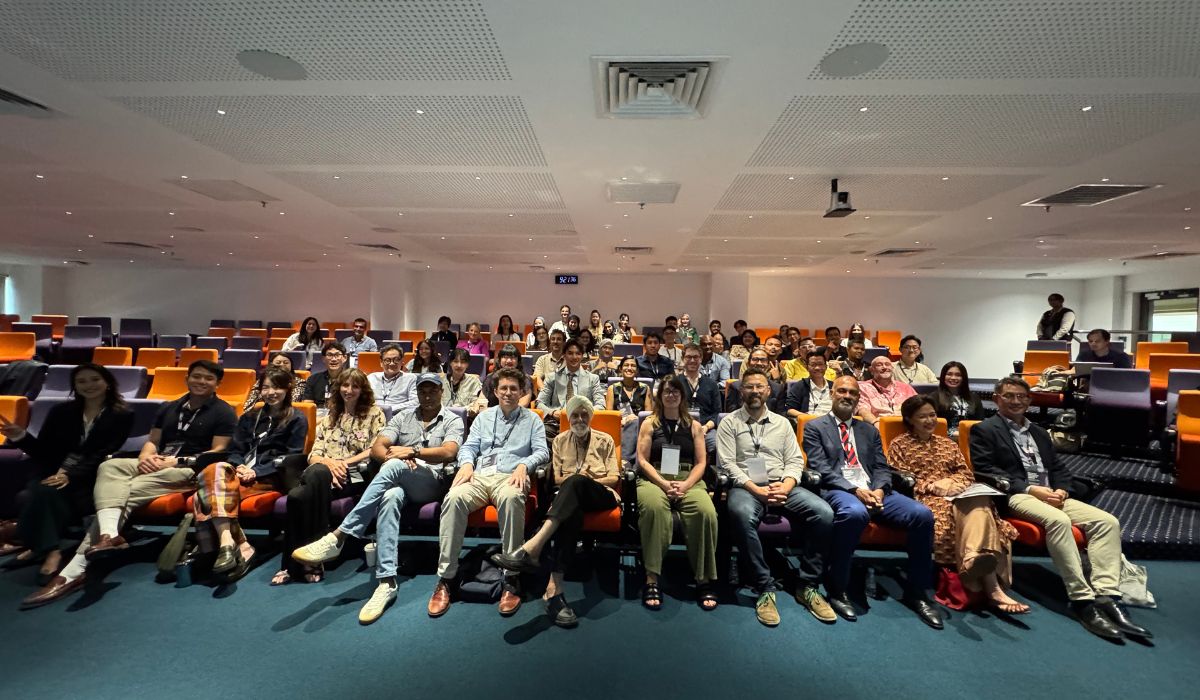 Group photo of speakers, panellists and attendees at the opening of the Asia-Pacific Symposium on Psychedelic Medicine
The two-day symposium, held from 30 to 31 October 2025, united researchers, clinicians, and policymakers to connect science, culture, and regulation in the Asia-Pacific. The symposium opened with remarks from Associate Professor Satoshi Ogawa from the School of Medicine and Health Sciences, Dr Paul Liknaitzky from Monash University and Professor Emeritus Dato’ Dr Adeeba Kamarulzaman, President and Pro Vice-Chancellor of Monash University Malaysia, setting the tone for two days of dialogue across disciplines and borders.
Associate Professor Ogawa shared the origins of the event, an idea that began through conversations about the growing global interest in psychedelics and the lack of initiatives in the Asia-Pacific region. What started as a modest proposal under the Monash Incubator Program expanded into an event that drew over 50 participants from the region. Dr Liknaitzky, who leads the Clinical Psychedelic Lab at Monash University, highlighted the rise in psychedelic research, noting more than 1,000 active clinical trials worldwide and Australia’s landmark decision to down-schedule 3,4-methylenedioxymethamphetamine (MDMA) and psilocybin (a chemical that occurs in certain mushroom varieties) for controlled therapeutic use in 2023.
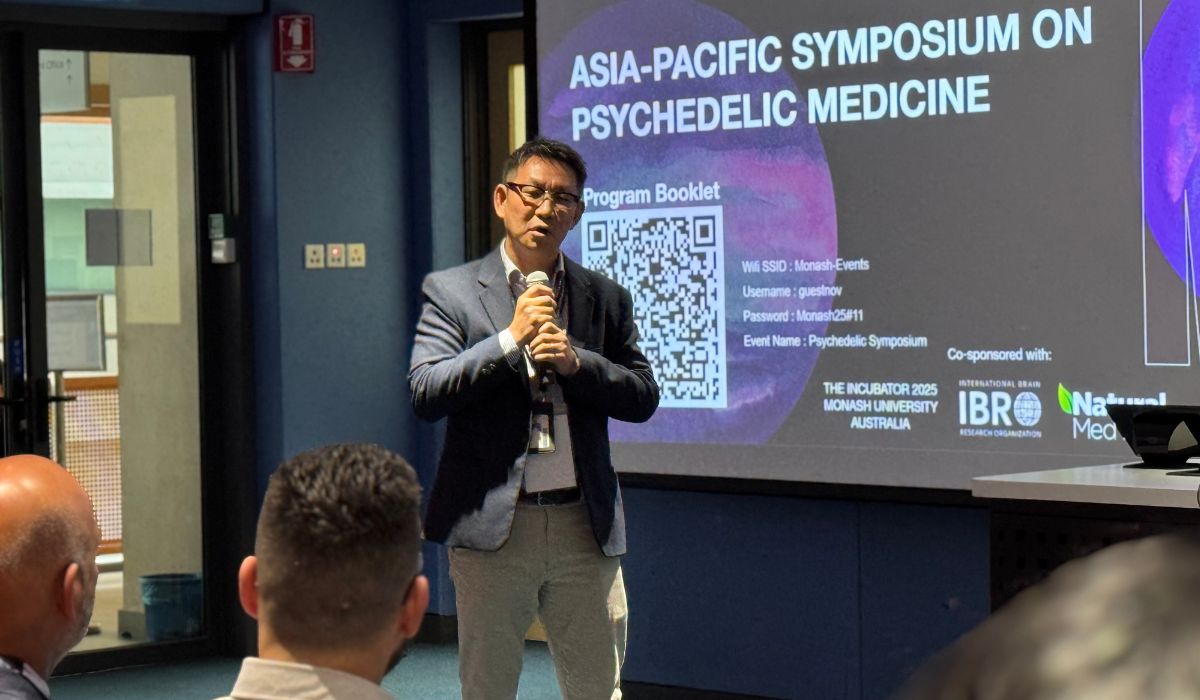 Associate Professor Satoshi Ogawa, during his welcoming address at the opening ceremony
Professor Adeeba commended the initiative, saying, “It’s something very close to my heart, especially given how stringent our drug laws are. These laws have not only harmed people but also prevented access to essential medicines. Evidence-based discussions like this are what will help move the dial.”
The symposium’s sessions traced the past, present, and future of psychedelic science, going from cultural context and clinical practice to regulation and ethics.
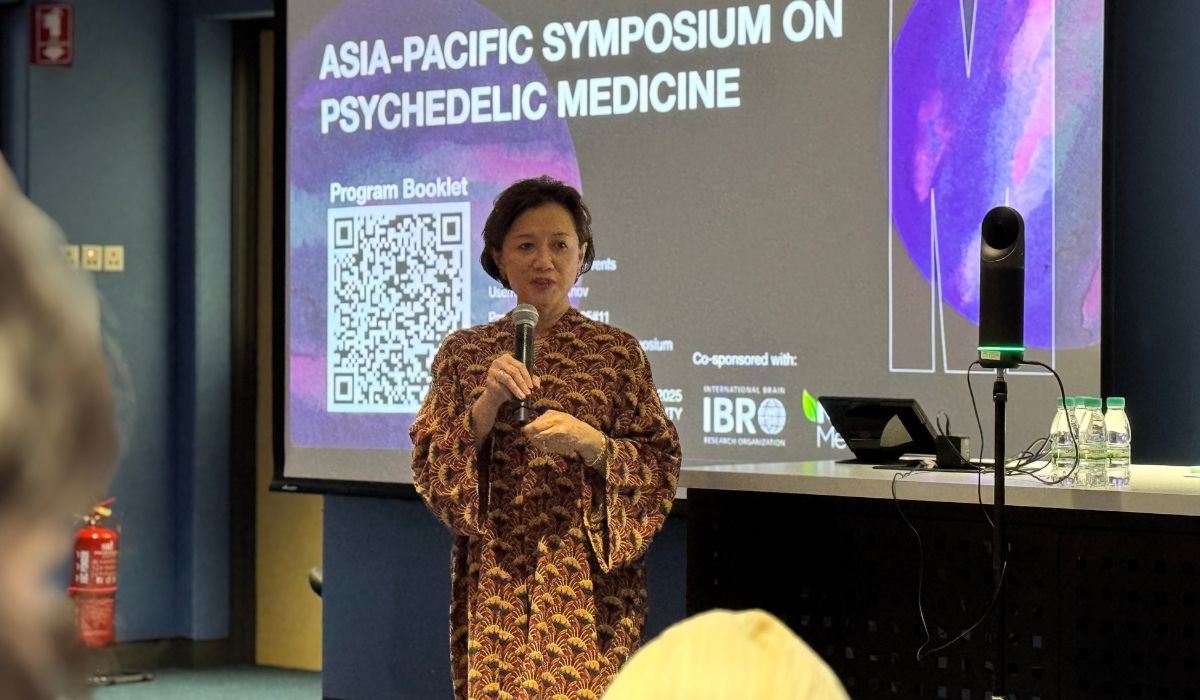 Professor Emeritus Dato’ Dr Adeeba Kamarulzaman provided her opening address during the opening ceremony
Dr Alex Gearin (University of Hong Kong) opened with a call to recognise the diverse cultural models that shape psychedelic medicine, while Professor Erica Dyck (University of Saskatchewan, Canada) offered a historical lens on how psychedelics evolved from mid-century psychiatry to modern research.
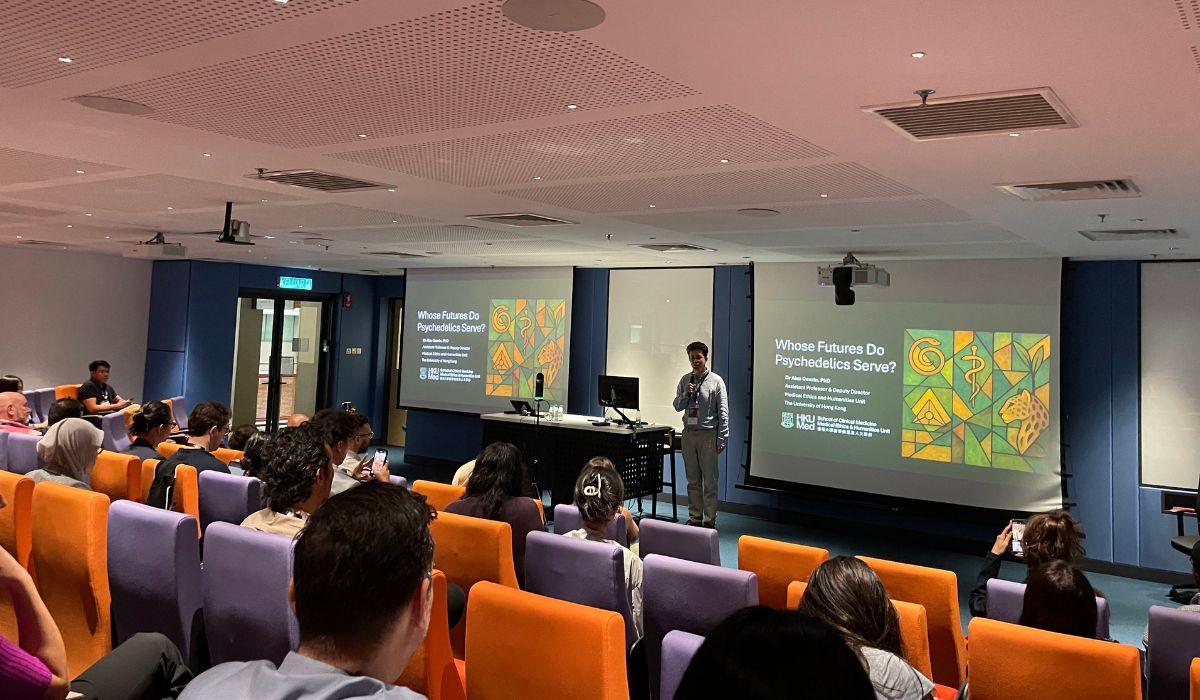 Dr Alex Gearin presenting "Whose Futures Do Psychedelic Medicines Serve?"
Later sessions explored how psychedelics are being studied and applied in different contexts. Speakers, including Sarah Pant (Monash Clinical Psychedelic Lab) and Dr Won-Seok Choi (The Catholic University of Korea), examined the therapeutic and professional dimensions of emerging psychedelic practices, focusing on trust, meaning, and responsible care. Afternoon talks from Dr Rick Doblin (Multidisciplinary Association for Psychedelic Studies, USA), Xiaofan Sun (University of Hong Kong) and Associate Professor Claire Foldi (Monash Biomedicine Discovery Institute) highlighted current scientific progress, from MDMA-assisted therapy to novel clinical frameworks for mental health treatment.
Day two broadened the discussion to focus on capacity-building and governance. International experts, including Professor Matthew W. Johnson (Johns Hopkins University), Professor Hiroyuki Uchida (Keio University, Japan), and Dr Vince Polito (Macquarie University), shared insights into global research trends and translational challenges. Meanwhile, regional speakers focused on ethics, cultural sensitivity, and evolving policy.
The final session, "Regulation, Culture, and Ethics," explored pathways for regional governance, featuring insights from Associate Professor Brian D. Earp (National University of Singapore) and Professor John Skerritt AM (University of Melbourne), alongside Southeast Asian perspectives on Kratom research and reform.
The symposium concluded with the launch of the Asia-Pacific Consortium of Psychedelic Medicine, led by Associate Professor Sivakumar Thurairajasingam (Clinical School Johor Baru, Monash University Malaysia), paving the way for stronger regional networks dedicated to ethical, research-driven innovation in psychedelic medicine. With strong representation from Malaysia and the wider region, the symposium marked a milestone for the university and a new chapter for psychedelic medicine in the Asia-Pacific.