
Giving Kuala Lumpur’s ageing buildings a new lease on urban life
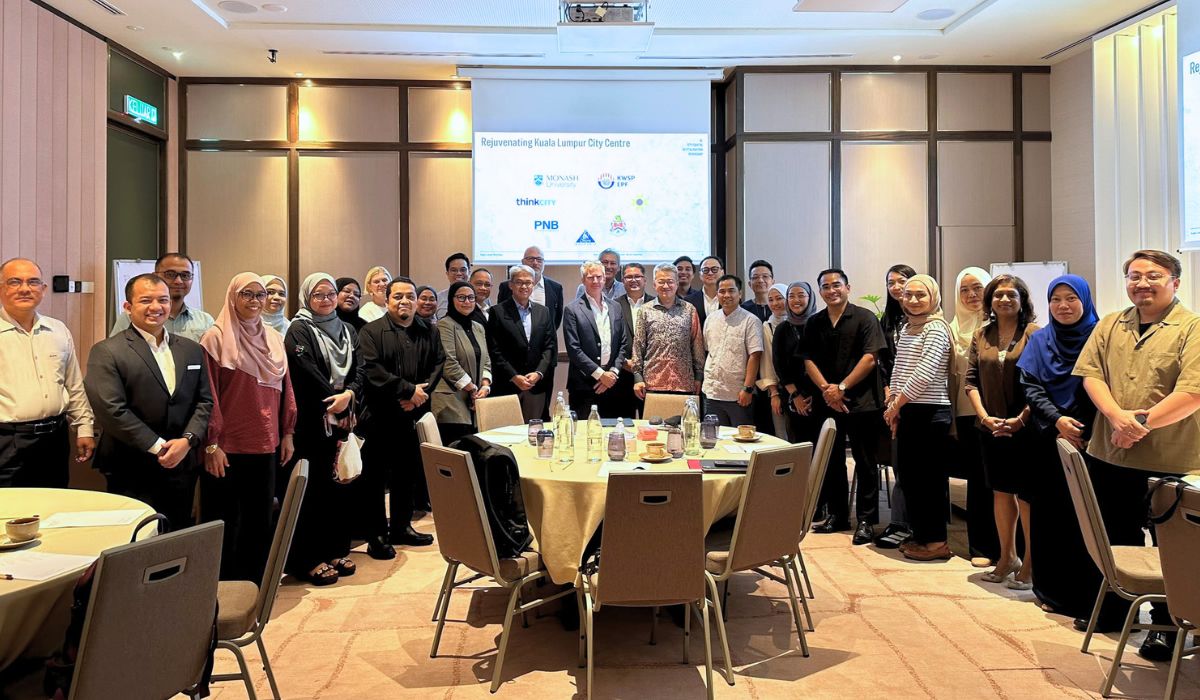 A group photo of the speakers and participants of the workshop.
When Monash architecture students studied the former Chartered Bank building near the Klang and Gombak rivers, they considered what a second life for the 1964 building might entail. Their designs retained its concrete structure and explored how a new outer layer could shade the interior and allow air to circulate naturally.
For Professor Erik L’Heureux, Head of the Department of Architecture at Monash University, the building raises a wider question about the future of central Kuala Lumpur. “The central challenge is how Kuala Lumpur can create more value from the buildings, streets and infrastructure it already has,” he said.
That question framed ‘Revitalising Kuala Lumpur City Centre: From Stranded Assets to an Active, Low-Carbon Urban Core’, held on 13 November 2026 at the Kimpton Naluria Hotel in Tun Razak Exchange. Professor Erik helped organise the workshop alongside two colleagues from Monash University’s Transforming Cities Hub, Professor Tony Wong, Professor of Sustainable Development, and Professor Diego Ramirez-Lovering, the Hub’s International Director. Organised in collaboration with Malaysia’s Ministry of Finance, the workshop brought participants from TRX City, Inland Revenue Board of Malaysia (LHDN), Permodalan Nasional Berhad (PNB), Research for Social Advancement (REFSA), National Property Information Centre (NAPIC), Malaysian Institute of Architects and other institutions to explore how Kuala Lumpur’s underused buildings could support more residential lifeand more active streets.
Professor Erik pointed to the generation of buildings constructed in the decades after Merdeka, when Malaysian architects were developing ways to provide shade and ventilation in a hot, humid climate while in an urban context. Some of those buildings are now underused or face demolition. Adapting them for housing, he said, could retain what still works, avoid some of the carbon cost of rebuilding anew and give nearby businesses a customer base beyond office hours.
Reflecting on Melbourne, Singapore and New York, Professor Erik drew attention to the decisions that can make an individual conversion possible. A smaller pilot project can show owners and developers what an older building might accommodate. Planning changes and financial incentives can help make the conversion viable. In Kuala Lumpur, he added, the streets around a building also matter. For someone considering a move into the city centre, a shaded walk to the shops or a place to rest along the way can make a difference to daily life.
Professor Erik sees a role here for Monash University Malaysia’s School of Engineering and School of Arts and Social Sciences alongside a Monash Department of Architecture. If an older office building were being considered for housing, engineering researchers could assess its structural capacity, energy use and the services that would need upgrading. Arts and social sciences researchers could examine who owns the building, who might live there and what a conversion would mean for existing traders and residents. Architects could then use those findings to develop designs for owners, communities and public agencies to consider.
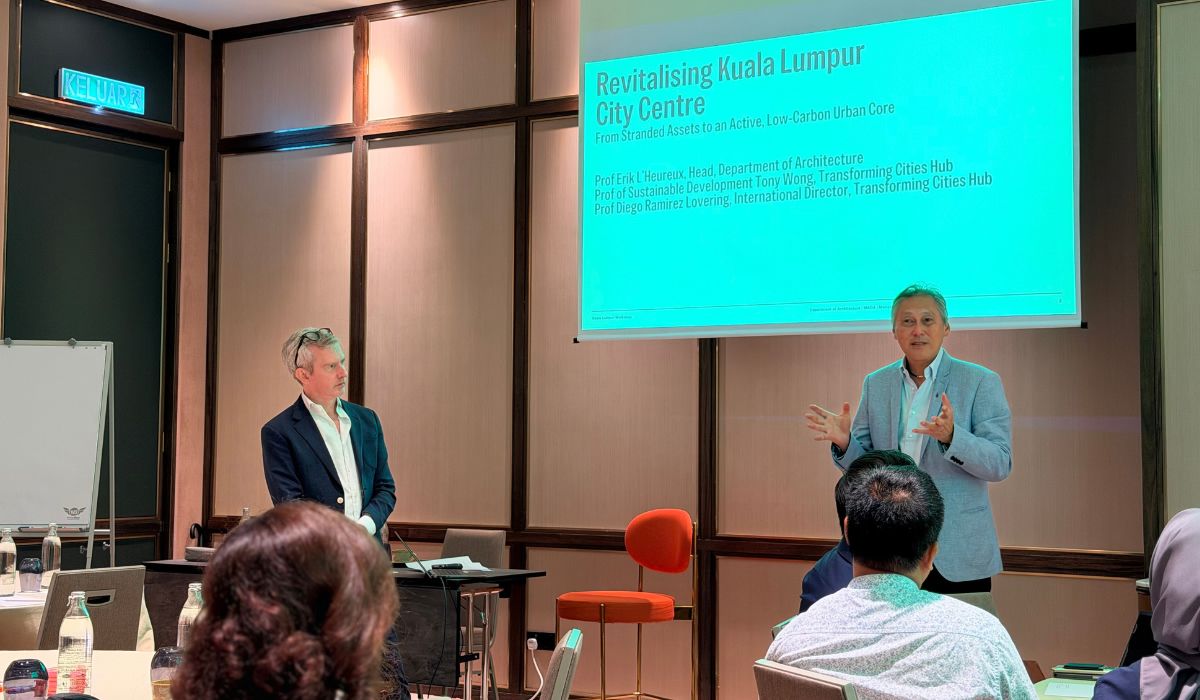 Professor Erik L’Heureux (Standing left) and Professor Tony Wong (Standing right).
Monash’s Master of Architecture travelling studio, Hot Air Transformations: Kuala Lumpur, offers a starting point. Alongside the former Chartered Bank building, students documented the Telekom Malaysia building and Ming Building in April 2026. Malaysian architects and urban practitioners helped them understand the history of each building and its place in the surrounding streets before they developed proposals for reuse.
Professor Erik suggests beginning with a small number of demonstration projects, chosen for their potential to contribute to the surrounding neighbourhood. For him, a measure of success would be whether people of different ages and incomes could make a home in the city centre, while those who already live or earn a living there could continue to do so.
“The Merdeka-era buildings we studied are part of Malaysia’s architectural history, but they are also potential resources for future urban life,” he said. “The task is to understand how they can support new residential and cultural life and connect to active streets and dynamic, safe public spaces.”
Participants were clear that revitalising the city centre is not only about buildings. Conversions are most effective when matched by a more active, accessible, greener and resilient public realm. That means active street frontages, shaded walking routes and seamless links to public transport. It also means multifunctional public spaces that help manage flooding, reduce urban heat and support biodiversity, delivered through co-investment between government agencies and the private sector.
Participants proposed two concurrent next steps. The first is a flagship demonstration project that combines building reuse with improvements to surrounding streets and public spaces.The second is an independent, multidisciplinary Design Review Panel to advise on funded projects as they move into delivery.
The initiative also offers a strong platform for collaboration across Monash University’s campuses. Through the Transforming Cities Hub and the Department of Architecture, colleagues at Monash University Malaysia and Monash University in Australia can work together on a shared program. Academics from arts and social sciences, engineering and public health would contribute alongside architects and urban designers. Together, they could support the project with a rigorous research agenda that generates evidence to guide Kuala Lumpur’s urban transformation.
For Kuala Lumpur, the test of reuse will be whether an old building can become a home, whether the streets and spaces around it can become more active, green and resilient, and whether the surrounding neighbourhood can continue to support the people who already live and work there.