
International Conference on Tropical Biodiversity, Conservation and Genomics 2026 connects research with action
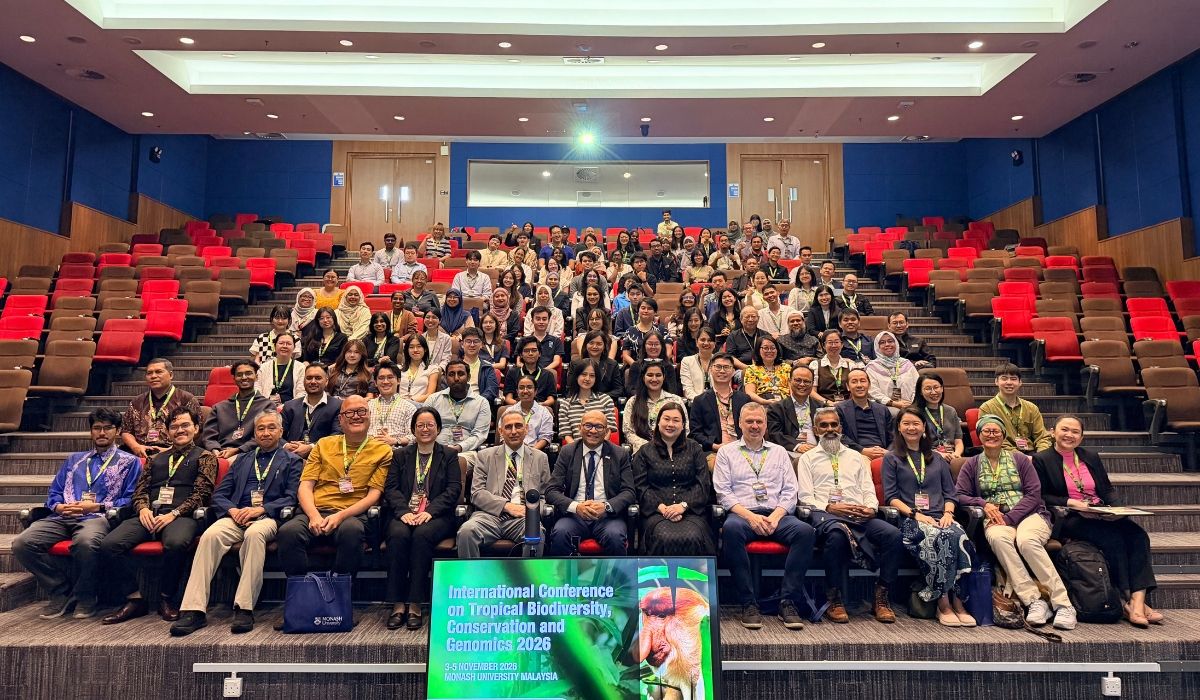 Group photo of the speakers and attendees of the International Conference on Tropical Biodiversity, Conservation and Genomics 2026.
The School of Science at Monash University Malaysia hosted the International Conference on Tropical Biodiversity, Conservation and Genomics 2026 (TBCG 2026) from 3 to 5 November. Chaired by Professor Qasim Ayub, Deputy Head of the School of Science (Research) and Director of the Monash University Malaysia Genomics Platform, and co-chaired by Professor Adeline Ting Su Yien, the Associate Head of the School of Science (International), the conference centred on ‘Integrative Biodiversity: Navigating Climate Change and Conservation’. The three-day program combined keynote addresses, plenary talks, research presentations and networking across four themes: tropical biodiversity, integrative biodiversity discovery, mobilisation for conservation and conservation genomics.
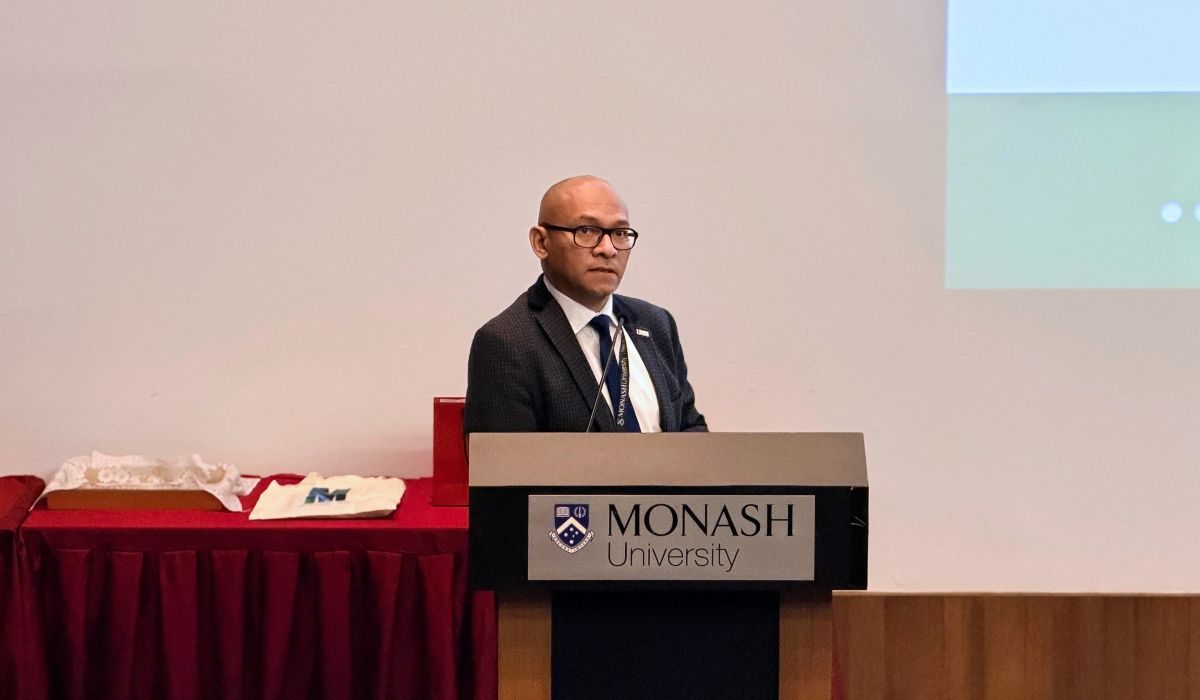 Professor Dato’ Dr Faisal Rafiq Mahamd Adikan during the his opening speech.
Opening the conference, Professor Dato’ Dr Faisal Rafiq Mahamd Adikan, Vice-President (Research and Development) at Monash University Malaysia, highlighted the importance of biodiversity audits in land development and the university’s genomics and microscopy capabilities. Professor Qasim followed with his welcs.
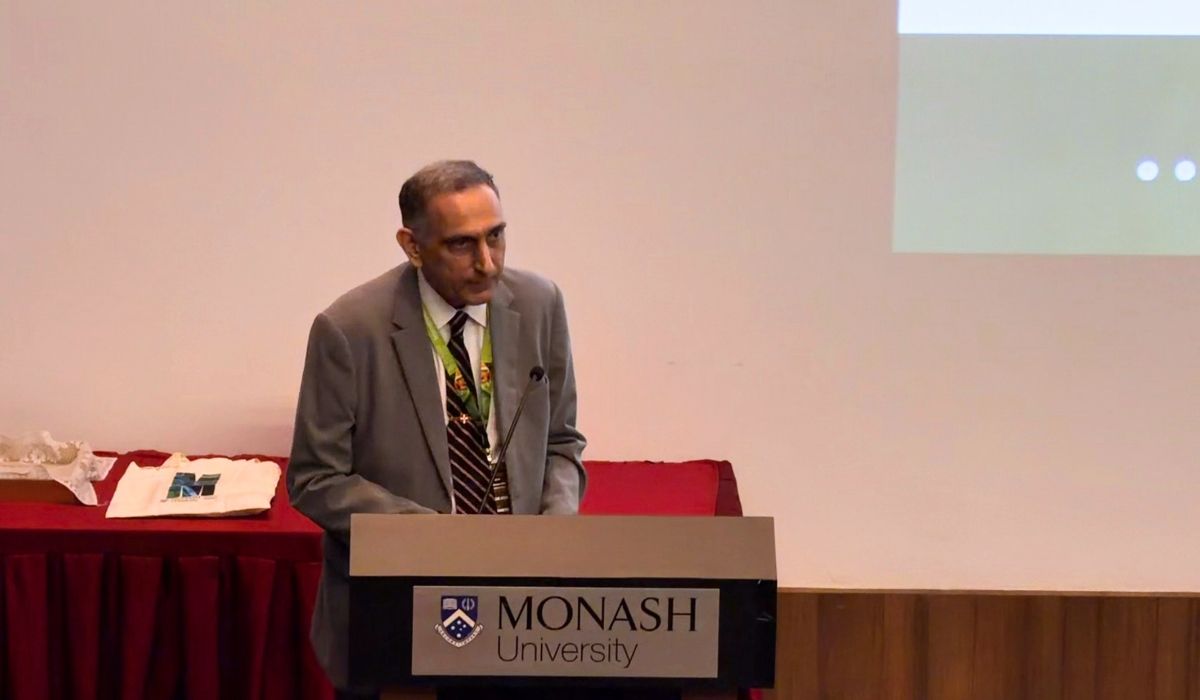 Professor Qasim Ayub during his opening remarks.
The first day focused on tropical biodiversity. In his keynote, ‘Biodiversity Conservation: What Are We Protecting?’, Professor Mohd Azlan Jayasilan bin Abdul Gulam Azad of Universiti Malaysia Sarawak explored the relationship between species richness, habitat connectivity and conservation policy. “Wildlife doesn’t recognise boundaries,” he said, drawing on examples of animals moving between protected areas and across national borders.
Dr Jarina Mohd Jani, Co-Founder of the Local Initiative for the Environment Centre – Malaysia, then examined how colonial perspectives have shaped understandings of tropical nature. Her plenary encouraged researchers to recognise local expertise and Indigenous knowledge, drawing on examples including Sabah’s community-based Tagal resource management system.
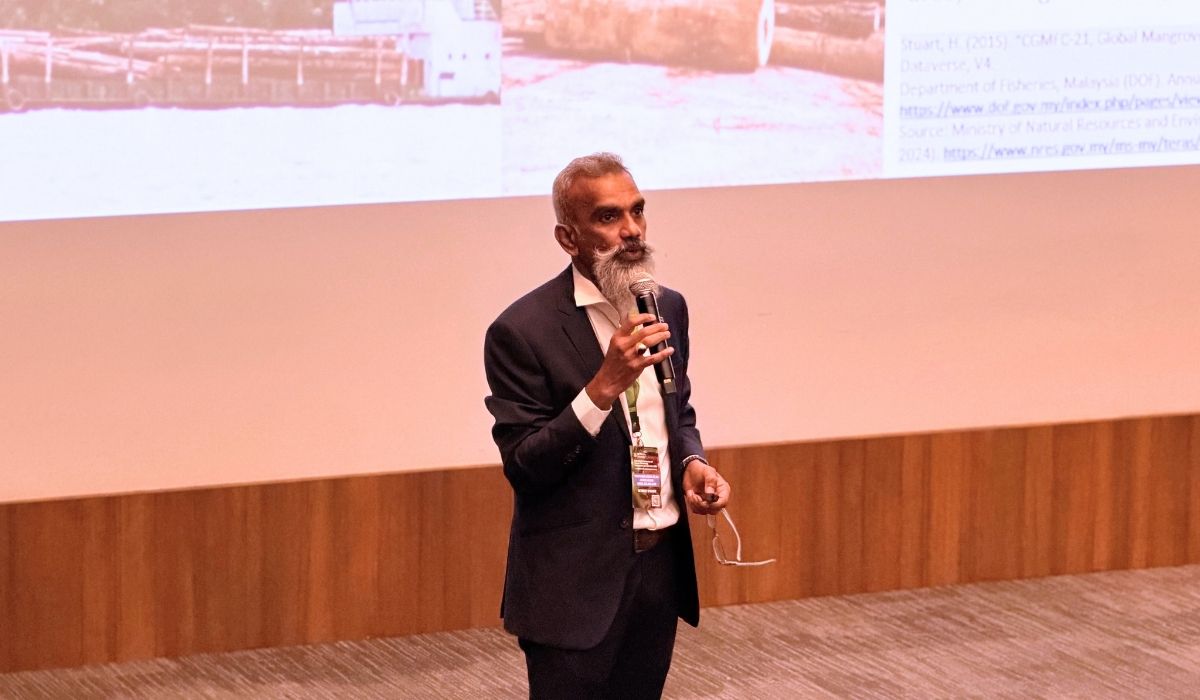 Professor Mohd Azlan Jayasilan during his keynote address titled “Biodiversity conservation: What are we protecting?”.
The morning’s oral presentations addressed specific conservation challenges. Sydric Earl V. Piamonte of the University of San Carlos, Philippines, presented research on discarded fishing nets and seagrass ecosystems. Dr Agkillah Maniam of Green Spine Network / Yayasan Hasanah discussed the governance challenges of connecting fragmented habitats through Peninsular Malaysia’s Central Forest Spine. The program also included Dato’ Henry S. Barlow’s virtual presentation on conserving endangered plants at Genting Tea Estate.
Afternoon rapid oral presentations presented research ranging from bamboo bats and orangutan monitoring to mangrove conservation and marine mammal genetics. Among the Monash contributions, Ting Guang Liang combined field surveys and citizen science records to document 64 amphibian and reptile species in Bukit Kiara. The School of Science researchers Fathan Anandadzikra Muharraran and Tan Hong Liang presented complementary firefly studies. Fathan explored how canopy cover and artificial lighting influence fireflies, while Tan examined the potential of flash patterns to support species identification. Carisa Wong from the School of Science presented her work on population genomics of the endangered helmeted hornbills and highlighted the reduced genetic diversity observed in present day populations as compared to historical museum samples.
The second day turned to integrative biodiversity discovery and mobilisation for conservation. Professor Rudolf Meier of the Museum für Naturkunde Berlin addressed digital approaches to insect diversity, followed by Professor Bob Wong of Monash University, who addressed behavioural responses to environmental change.
Dr Chen Pelf Nyok, Co-Founder and Executive Director of the Turtle Conservation Society of Malaysia, then shared insights from a long-term community-based river terrapin conservation project in Kemaman, Terengganu. She described how former egg collectors had become conservation partners, helping the project protect more than 13,000 eggs from human consumption and release more than 8,000 terrapins. “We need to connect genetics to conservation outcomes,” she said, inviting collaboration with Monash researchers and students to investigate genetic diversity and connections between river populations.
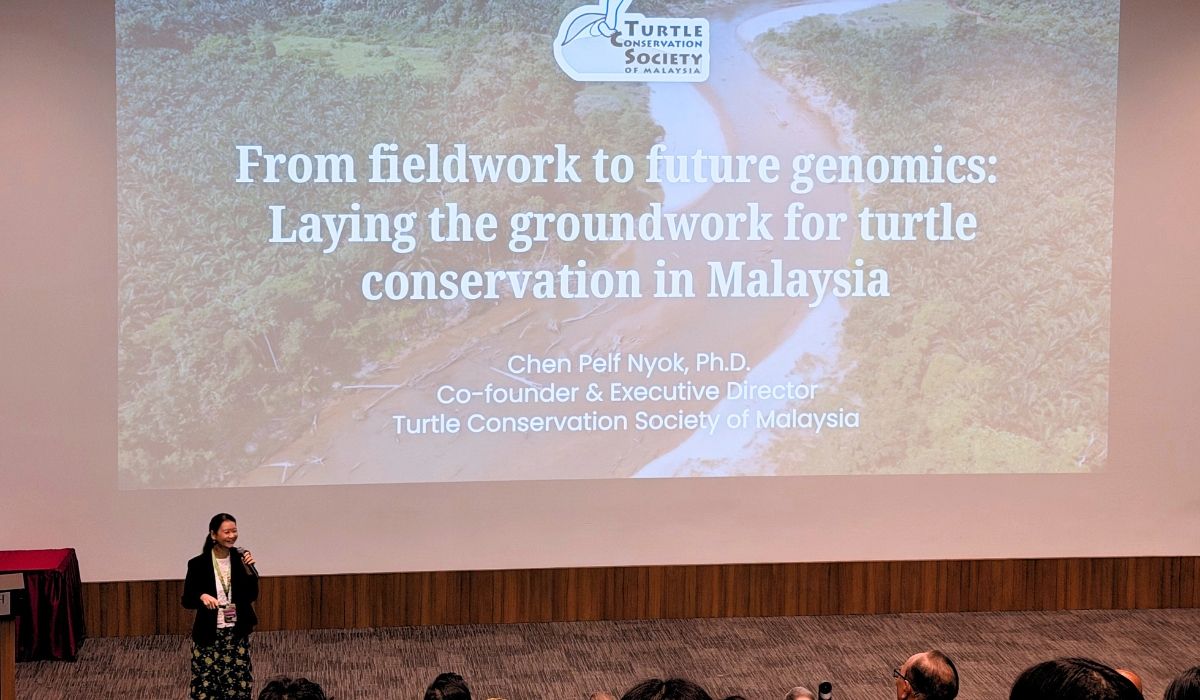 Dr Chen Pelf Nyok shared her insights from her plenary titled “From Fieldwork to Future Genomics: Laying the Groundwork for Turtle Conservation in Malaysia”.
Further sessions covered plant conservation, community-led firefly protection, coral restoration and human–wildlife interactions. A panel on ‘Navigating Climate Change and Conservation’ offered perspectives from government, environmental journalism and conservation education.
The final day centred on conservation genomics, opening with ‘Sequencing for Conservation’ by Professor Qasim Ayub. Hong Leong Cheah, from the university’s Genomics Platform and School of Science, presented the Aquatic Genome Project of the Malaysian BioGenome Project. Muhammad Zarul Hanifah bin Md Zoqratt, affiliated with the Advanced Computing Platform at Monash University Malaysia and Fast Genomics Solutions (M) Sdn Bhd, presented the complete mitochondrial genomes of four species in the Betta waseri complex.
Other presentations included Jia Jun Ngiam of Singapore Botanic Gardens on sequencing Singapore’s flora, Associate Professor Liew Thor Seng of Universiti Malaysia Sabah on the conservation of Sundaland’s limestone micro land snails, and Lee Chai Ting of the Forest Research Institute Malaysia on DNA profile databases as forensic tools for combating illegal logging.
Across the three days, TBCG 2026 connected scientific findings with conservation practice, creating opportunities for collaboration across research institutions, communities and conservation organisations.