
Monash hosts inaugural Transport Conference Malaysia 2026
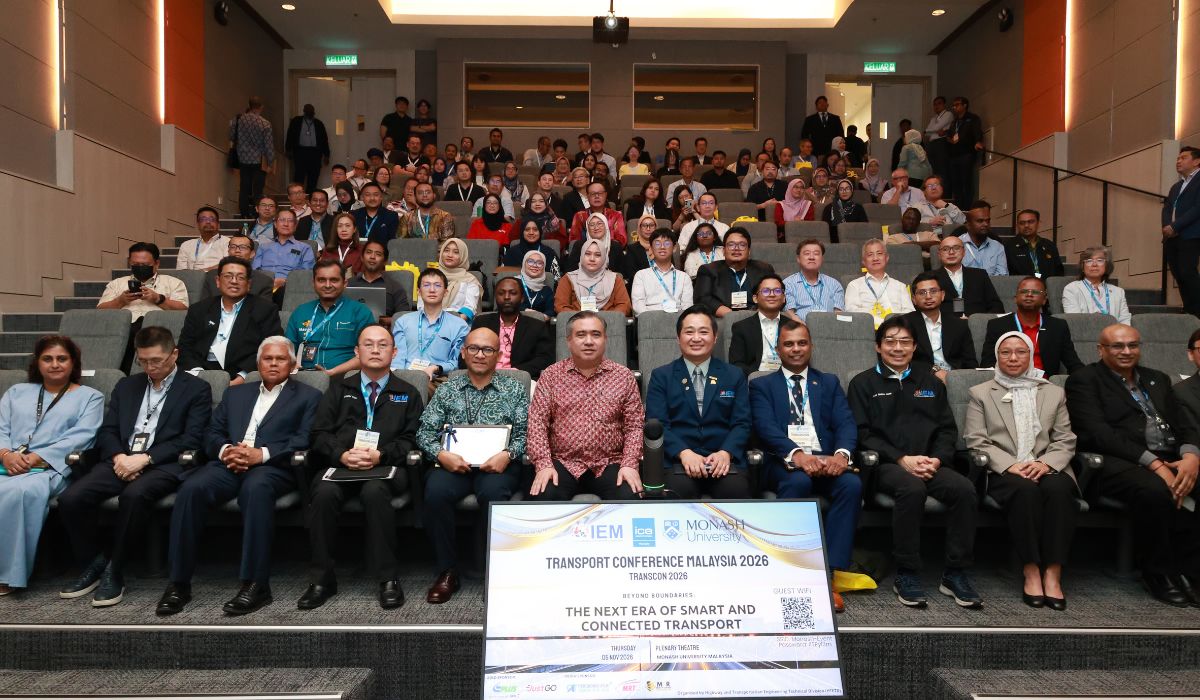 Group photo of the speakers and attendees of the Transport Conference Malaysia 2026.
Former Minister of Transport YB Anthony Loke Siew Fook identified rail reliability as his most pressing challenge when he officially opened Transport Conference Malaysia (TRANSCON 2026) at the university on 5 November 2026.
In his afternoon address, YB Anthony Loke pointed to delays on the Kelana Jaya LRT and Kajang MRT lines and called for research into how maintenance teams could predict faults before they disrupt services. Turning to road safety, he asked engineers how existing highways could be adapted to protect motorcyclists, particularly on routes built without dedicated motorcycle lanes. “Smart transport must ultimately serve the people. It must be safe, inclusive, and sustainable,” he said.
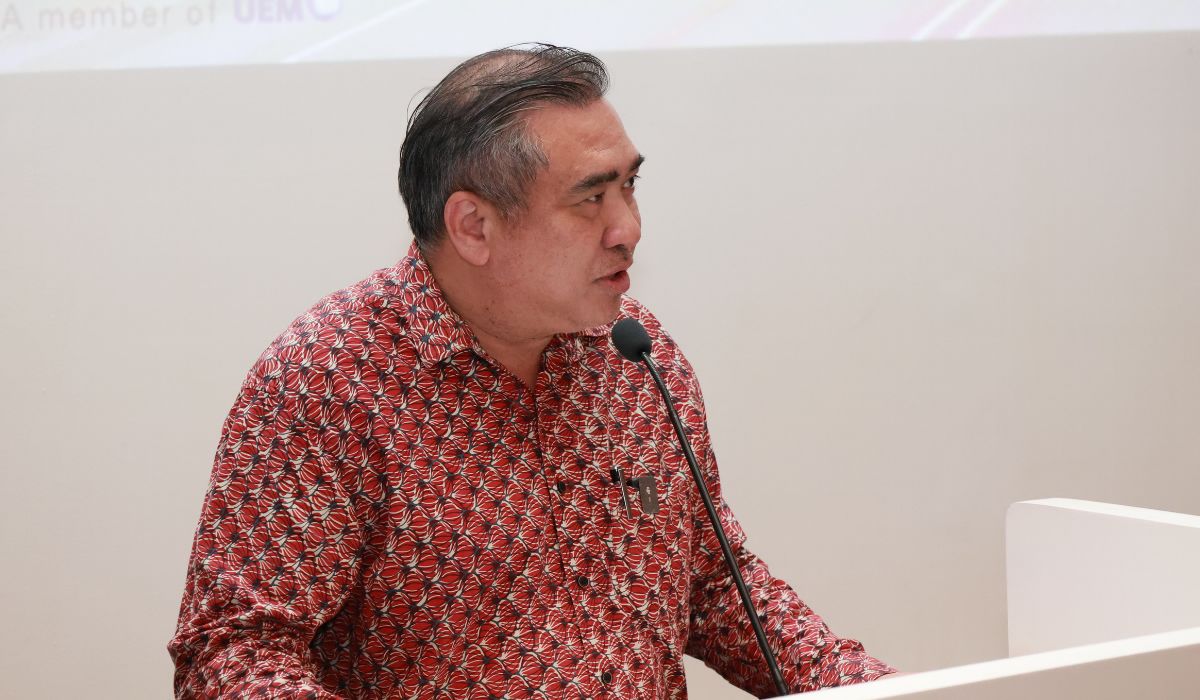 YB Anthony Loke during his address.
Ir Yau Chau Fong, President of The Institution of Engineers, Malaysia (IEM), then said how the journey to and from a station shapes a passenger’s experience. “A public transport journey depends on safe pedestrian access and effective first and last mile connections,” he said.
Monash University Malaysia co-organised the conference with the Highway and Transportation Engineering Technical Division (HTETD) of The Institution of Engineers, Malaysia (IEM) and the Institution of Civil Engineers (ICE) Malaysia. The theme, ‘Beyond Boundaries: The Next Era of Smart and Connected Transport’, ran through discussions on issues ranging from the time pedestrians have to cross a road to the early signs of a fault on a train.
Earlier that morning during the welcoming speeches, organising chair Ir Danny Foo Kam Fai encouraged participants to build partnerships that could address congestion and gaps in last-mile connections. Ir Gandhi Suppiah, Chair of ICE Malaysia, pointed to the flooding that had stranded motorists in the Klang Valley the previous day and called for engineers to plan highways and drainage systems together.
Professor Anthony Guo, the Head of the School of Engineering and IT, spoke about how industry partners help shape what engineering students learn. He identified joint research, industry projects and student internships as opportunities to build on the conference. “It will depend on how effectively we bring together engineering expertise, research, industry experience, and public policy to turn innovation into real benefit for society,” he said.
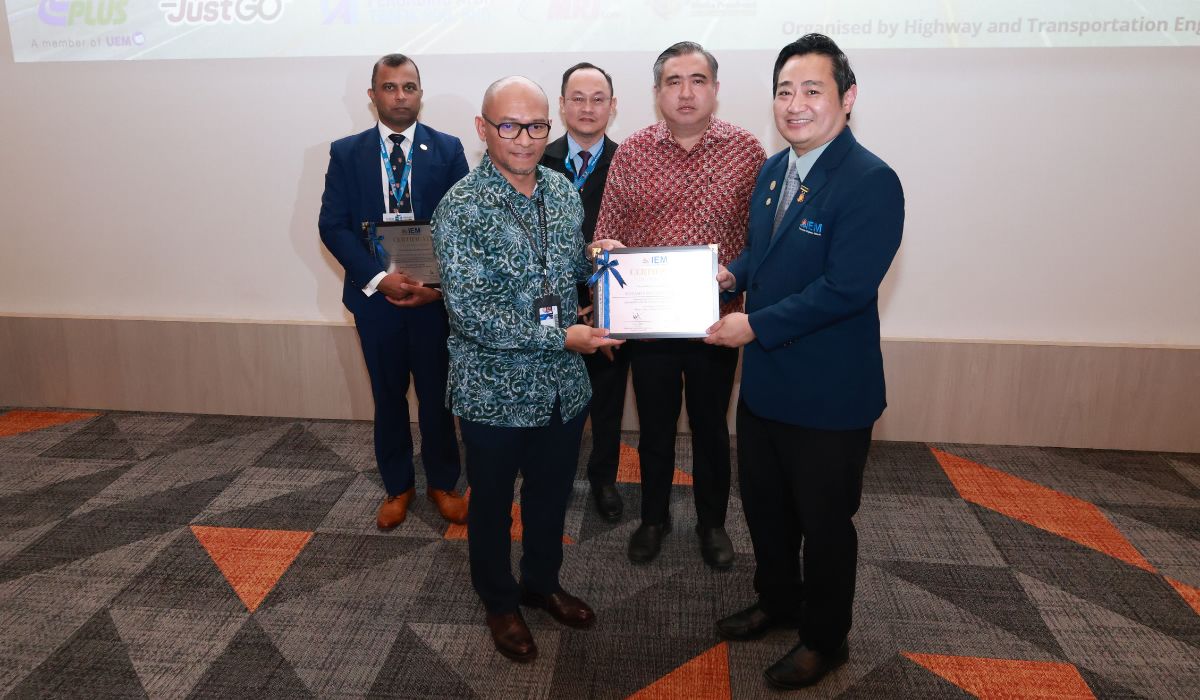 From left to right: Ir Gandhi Suppiah, Professor Dato’ Dr Ir Faisal Rafiq Mahamd Adikan, Ir Danny Foo Kam Fai, YB Anthony Loke Siew Fook, and Ir Yau Chau Fong.
Across the two keynote sessions and a special presentation, speakers explored what smarter transport would mean for the people using it. A discussion of Malaysia’s Intelligent Transport Systems Roadmap 2030 used a busy junction to illustrate the trade-offs. Adjusting a signal might shorten queues for drivers while leaving pedestrians waiting longer to cross. On rail reliability, Prasarana shared how its engineers were testing sensors on the Ampang Line to detect faults in the switches that guide trains between tracks.
The afternoon industry session drew on local examples, including how mobile network data and roadside counts help planners understand where journeys begin and end. Other examples ranged from number plate recognition at toll plazas to tunnelling methods used to reduce sinkhole risk during construction of the Putrajaya MRT Line. The final paper session featured Alan Wong, Jonathan Gan Jia Jiun and Dr Susi Susilawati from the School of Engineering.
TRANSCON 2026 offered a first-hand look at how decisions about rail maintenance, road design and public transport affect people’s daily journeys, and highlighted opportunities for academics and students to work with transport operators and professional bodies through joint research and industry projects.