
More than 40% of the world’s death-row population is in Asia. Regional conference to examine pathways to abolition
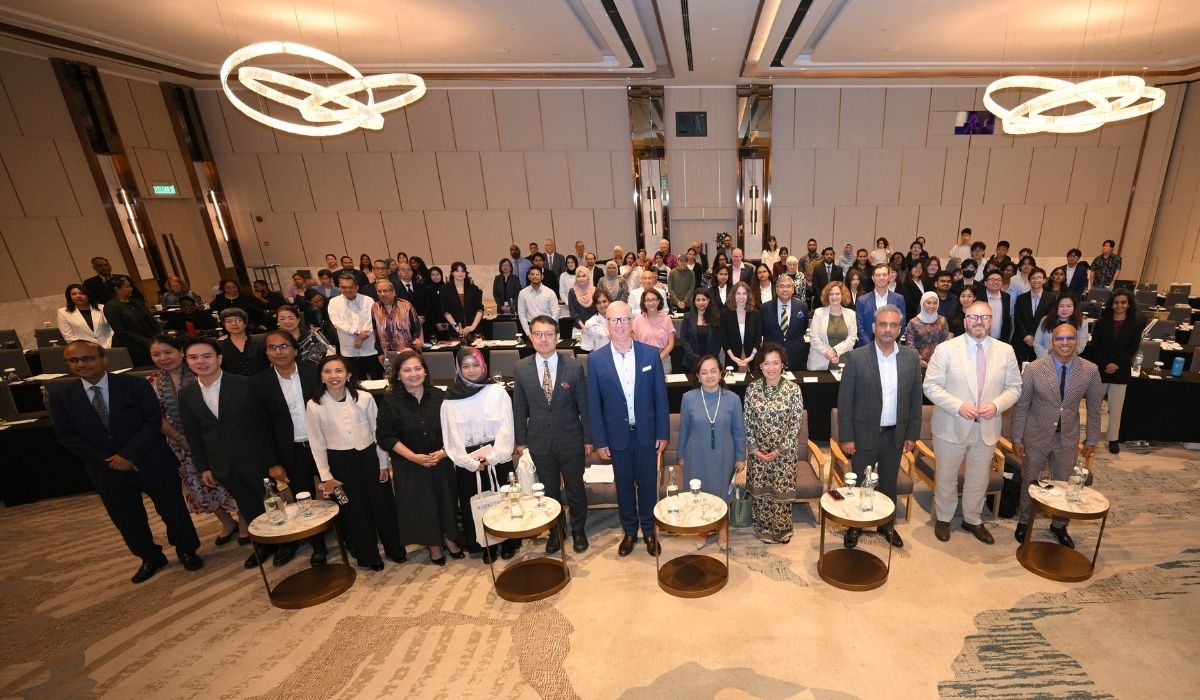 Group photo of the attendees, speakers, and academics at the Ending the Death Penalty in Asia: Reform Pathways, Comparative Perspectives, and Path Forward Conference.
More than 40% of people on death row globally are in Asia, making the region central to international efforts to understand the legal, political and institutional barriers to abolishing capital punishment.
Against this backdrop, legal experts, policymakers, academics and civil society representatives are gathering in Petaling Jaya today for Ending the Death Penalty in Asia: Reform Pathways, Comparative Perspectives, and Path Forward, a regional conference examining how countries can move beyond debates over individual cases towards practical pathways for legal and policy reform.
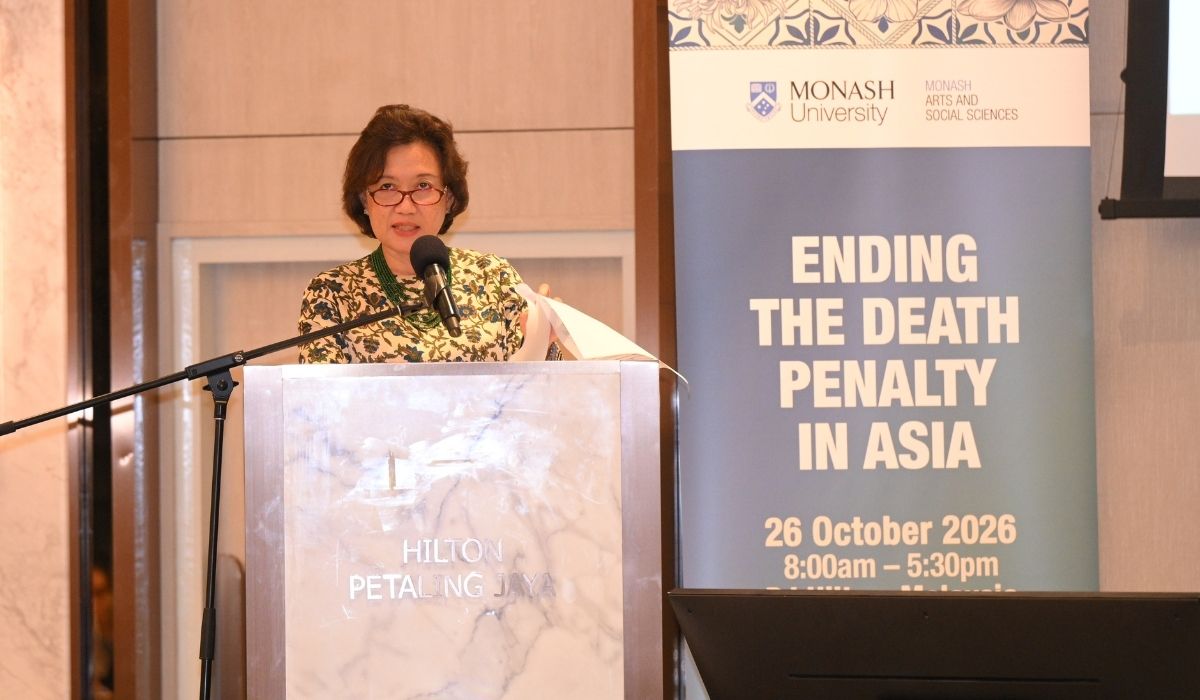 Professor Dato’ Dr Adeeba Kamarulzaman during her opening remarks at the conference.
The conference comes as countries across Asia-Pacific pursue markedly different approaches to the death penalty. Malaysia has taken significant steps towards reform, abolishing the mandatory death penalty in 2023 and undertaking a major resentencing exercise for people previously sentenced under the mandatory regime. Elsewhere, capital punishment remains in use, including for drug-related offences, while constitutional, political and judicial developments continue to shape the prospects for reform.
Organised by Monash University Malaysia, Eleos Justice at Monash Law, the United Nations Office of the High Commissioner for Human Rights (OHCHR) and Rashid Zulkifli Advocates and Solicitors, in partnership with the Anti-Death Penalty Asia Network (ADPAN), the conference brings together regional and international perspectives to examine what progress towards abolition requires in practice, from legislative change and judicial developments to public policy, human rights protections and sustained civil society engagement.
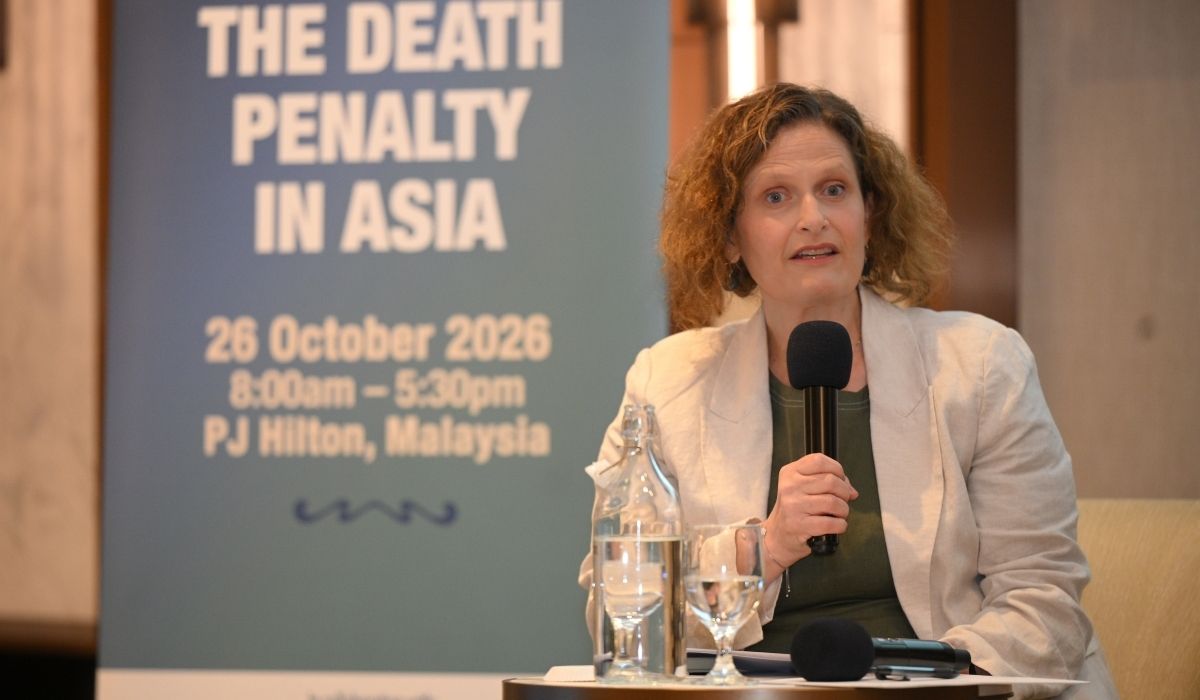 Sara Kowal, during the second panel, discussed Mitigation pathways towards abolition in Asia — suffering on death row, disproportionate impact, and emerging jurisprudence.
Sara Kowal, Co-Director of Eleos Justice at Monash Law, said:
“Reform in one country shows us what is possible in the next. Malaysia’s abolition of the mandatory death penalty and its resentencing exercise offer the region a working model that values rehabilitation. Indonesia has now gone ten years without an execution, and Viet Nam has cut the number of crimes punishable by death. The Anti-Death Penalty Asia Network and other civil society organisations have been building these connections across borders for years. This conference adds an academic forum to that work, bringing together scholars, lawmakers, lawyers and advocates to share what has worked, be honest about what hasn’t, and turn those lessons into progress towards abolition. With executions continuing in Asia, particularly for drug offences, there is much we can learn from one another.”
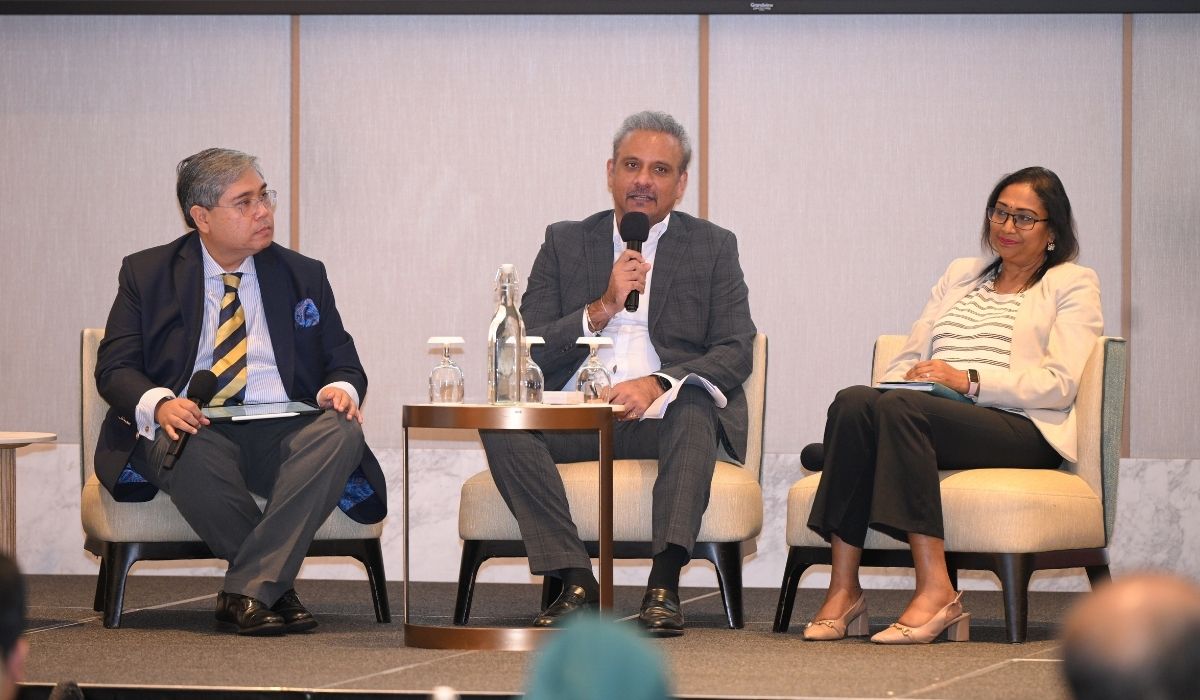 From left to right: Abdul Rashid Ismail, YB Ramkarpal Singh, and Dato’ Dr Punitha Silivarajoo.
Malaysia’s experience is a key focus of the program. An opening keynote conversation will examine the country’s pathway towards abolition, featuring YB Ramkarpal Singh, Member of Parliament for Bukit Gelugor, and Dato’ Dr Punitha Silivarajoo of the Legal Affairs Division (Bahagian Hal-Ehwal Undang-Undang, BHEUU).
The conference also brings an international perspective to the discussion, with participants including Her Excellency Gloria Macapagal-Arroyo, former President of the Philippines & Commissioner at the International Commission Against the Death Penalty; Barrister Aqeel Malik, Pakistan’s Minister of State for Law and Justice; Sarah Belal, Executive Director of Justice Project Pakistan; and Professor Morris Tidball-Binz, United Nations Special Rapporteur on extrajudicial, summary or arbitrary executions, who will participate remotely.
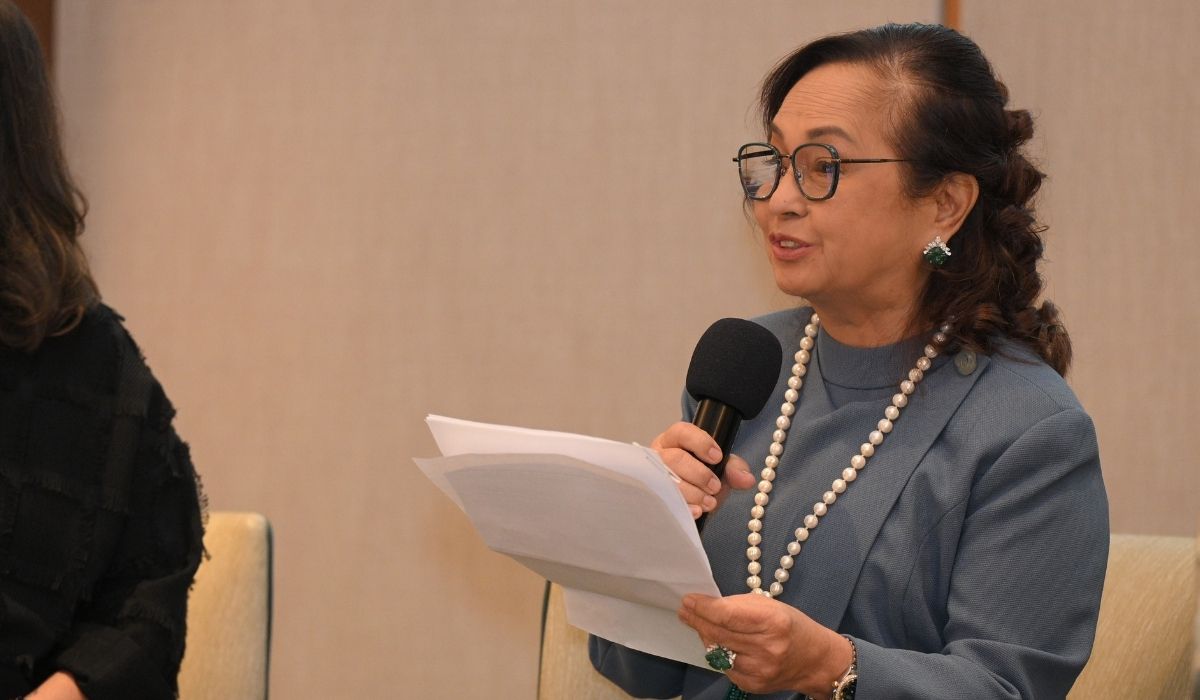 Her Excellency Gloria Macapagal-Arroyo, former President of the Philippines & Commissioner at the International Commission Against the Death Penalty.
Four panel discussions will examine the different conditions shaping reform across the region. The first compares legal, political and institutional pathways towards abolition in Malaysia, the Philippines, Indonesia and South Korea. A second explores mitigation, including the suffering experienced by people on death row, the disproportionate impact of capital punishment on marginalised and vulnerable communities, and emerging jurisprudence.
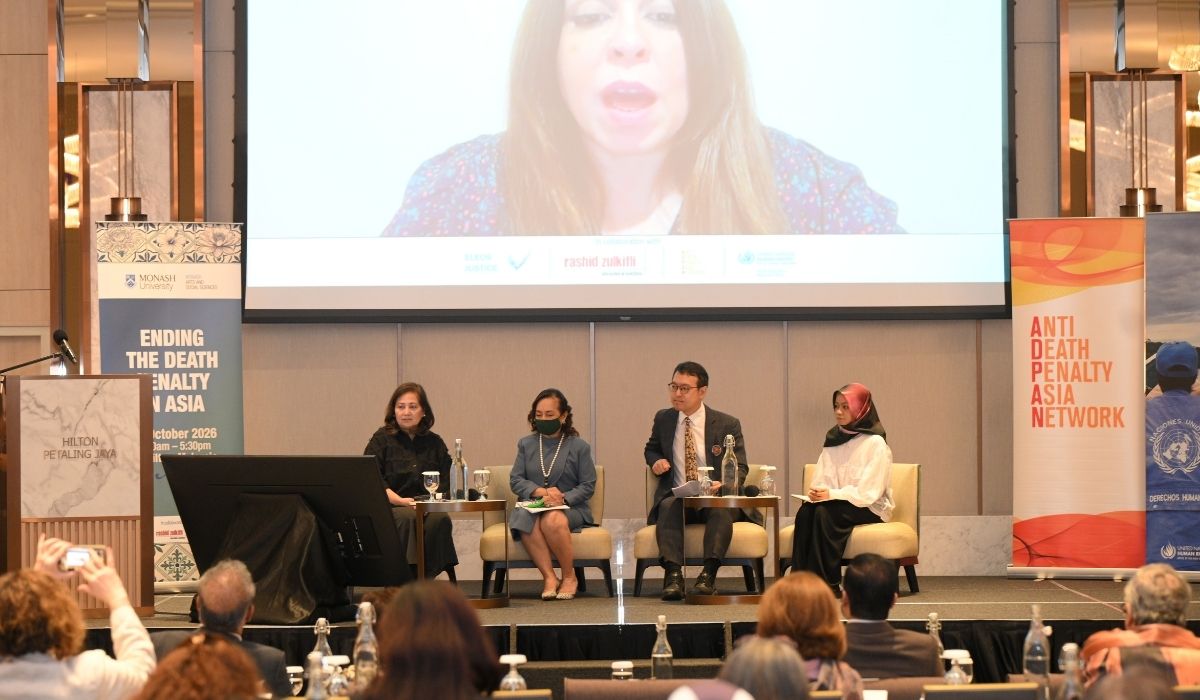 From left to right: Karen Gomez-Dumpit, Her Excellency Gloria Macapagal-Arroyo, Dr Ethan Hee-Seok Shin, and Novia Puspitasari. Top screen: Lara Saade.
A third panel focuses on drug-related offences, examining the use of capital punishment in drug policy and considering public health and other policy alternatives. The final discussion considers the obstacles that continue to impede abolition, with comparative perspectives on retention and reform in jurisdictions including Singapore, Japan and Taiwan.
Together, the discussions aim to strengthen understanding of the region’s differing legal and policy landscapes, encourage collaboration among legal practitioners, academics, policymakers and civil society, and identify opportunities for future research and advocacy.
Thaatchaayini Kananatu, Deputy Head of School (Research) at the School of Arts and Social Sciences, Monash University Malaysia and Co-Director of Eleos Justice, said:
“Across Asia, the death penalty for drug offences is often justified through a ‘war on drugs’ national narrative that presents it as a deterrent or a form of retribution, an ‘eye for an eye’. This political framing overlooks the disproportionate impact of capital punishment on marginalised communities, particularly people from low-income backgrounds and those with less educational and psychosocial support. It also disregards systemic injustices within the criminal justice system. This regional conference of academics, practitioners, civil society and policymakers asks a difficult but necessary question: how can Asia move beyond the death penalty? Through evidence-informed, human rights and public health approaches, we explore new and innovative pathways towards reforming capital drug laws and related criminal justice policy.”
Monash University Malaysia’s collaboration with Eleos Justice at Monash Law on death penalty scholarship dates back to 2019 and will now be formalised through a new co-location arrangement. Eleos Justice will be based across Monash Law and the School of Arts and Social Sciences at Monash University Malaysia, and will be co-led by Sara Kowal and Thaatchaayini Kananatu as Co-Directors. The arrangement strengthens Eleos Justice’s presence in the region, supporting its research, advocacy and casework across Asia-Pacific. Research at Monash University Malaysia has examined capital punishment in Malaysia and its intersections with drug offences, fair trial rights and broader criminal justice issues.
By bringing these perspectives together in Malaysia, the conference seeks to support a more sustained, evidence-informed regional conversation about abolition, while identifying practical opportunities for legal and policy change across Asia-Pacific.