
Stronger regional cooperation needed to prepare Southeast Asia for health emergencies
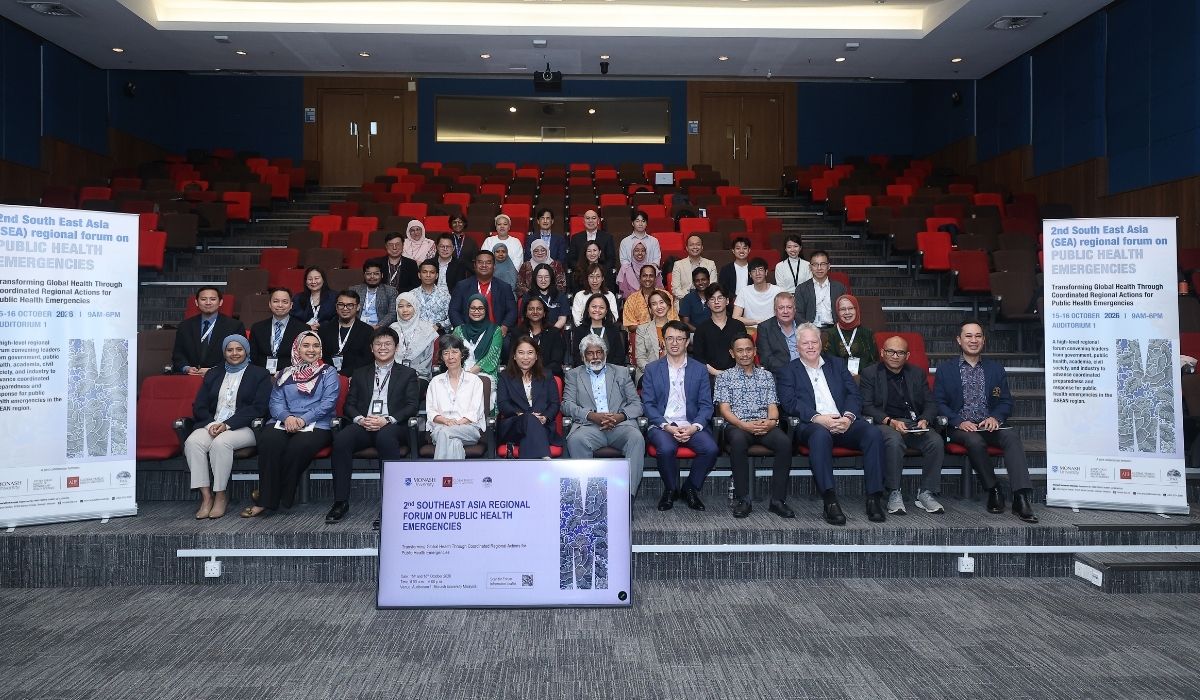 Group photo of the attendees, speakers, and panelists of the 2nd Southeast Asia Regional Forum on Public Health Emergencies.
Southeast Asia needs stronger cross-border cooperation and sustained investment to prepare for health emergencies, with healthcare supply chains and financing increasingly linked to national security, speakers emphasised at the regional forum. The 2nd Southeast Asia Regional Forum on Public Health Emergencies, held on 15 and 16 October 2026, brought together government, public health, academic, civil society and industry representatives from 16 countries, including eight ASEAN member states.
The forum is the flagship annual event of the Policy Hub for Public Health Emergencies (PHE Policy Hub), led by Professor Elil Renganathan, Professor of Public Health and Policy, and his team at the Jeffrey Cheah School of Medicine and Health Sciences (JCSMHS), Monash University Malaysia. Organised in collaboration with the AHF Global Public Health Institute and PAX sapiens’ Pandemic Compensation Initiative, it explored how evidence and policy commitments can translate into coordinated action.
During the second day’s session on financing and sustainable investment, Nurhisham Hussein, Economic Advisor at the Prime Minister’s Office, Malaysia, highlighted how geopolitical conflicts can disrupt access to medicines, medical devices and essential materials. “You cannot divorce healthcare from national security. You cannot divorce industrial capacity from national security,” he said.
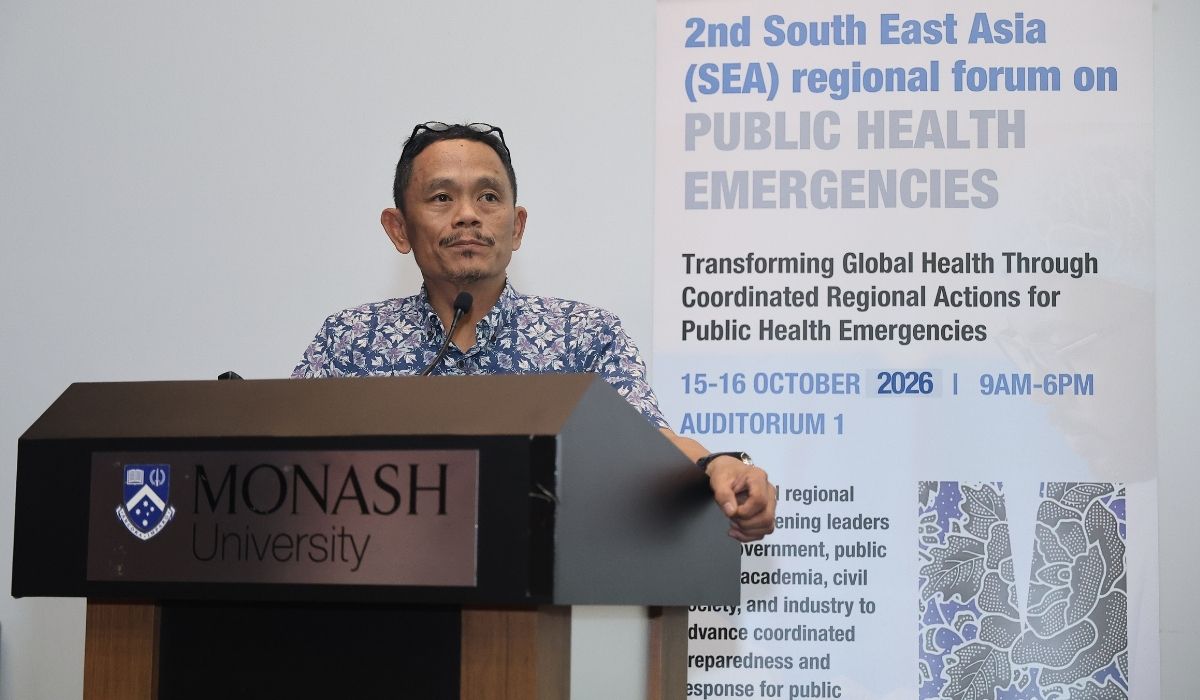 Nurhisham Hussein speaking during his session.
Drawing on Malaysia’s experience monitoring medical supplies during international disruptions, he stressed the importance of mapping supply chains, diversifying suppliers and building domestic capacity. He also identified Malaysia–Singapore cooperation as a potential foundation for wider ASEAN healthcare collaboration, while acknowledging differences in capacity across the region.
Moderated by Margie Ong, Founder and Chief Executive Officer of Thoughts In Gear, the session examined how government, philanthropic and private funding could complement one another in supporting preparedness.
Dr David Bowen, Senior Fellow at PAX sapiens and Lead of its Pandemic Compensation Initiative, presented the proposed Pandemic Early Reporting Incentive. The mechanism would provide tiered payments to eligible countries reporting disease threats, helping counter the economic disincentives associated with potential trade and travel restrictions. He identified regional partnerships as a promising route towards implementation.
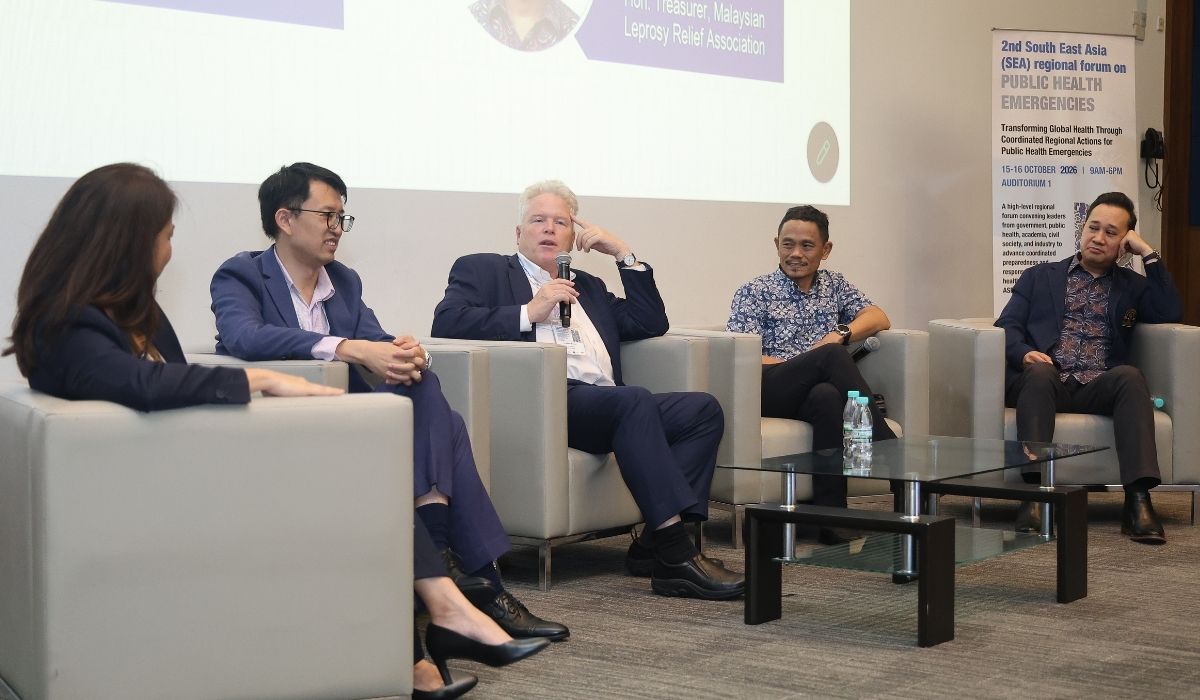 From left to right: Margie Ong, Dr James Qu, Dr David Bowen, Nurhisham Hussein, and Datuk Wira Johan Rozali-Wathooth.
Dr James Qu, Associate Director at Temasek Foundation, discussed philanthropic funding as a starting point for testing approaches that public or private partners could subsequently sustain. Datuk Wira Johan Rozali-Wathooth, Chief Executive Officer of Bintang Capital Partners and Honorary Treasurer of the Malaysian Leprosy Relief Association, distinguished commercially viable healthcare investments from public goods, such as stockpiles and early warning systems, that require other funding sources.
These discussions built on the first day’s focus on scientific capability, regional governance and community trust. Professor Dato’ Dr Ir Faisal Rafiq Mahamd Adikan, Vice President (Research and Development), Monash University Malaysia, delivered remarks during the opening session.
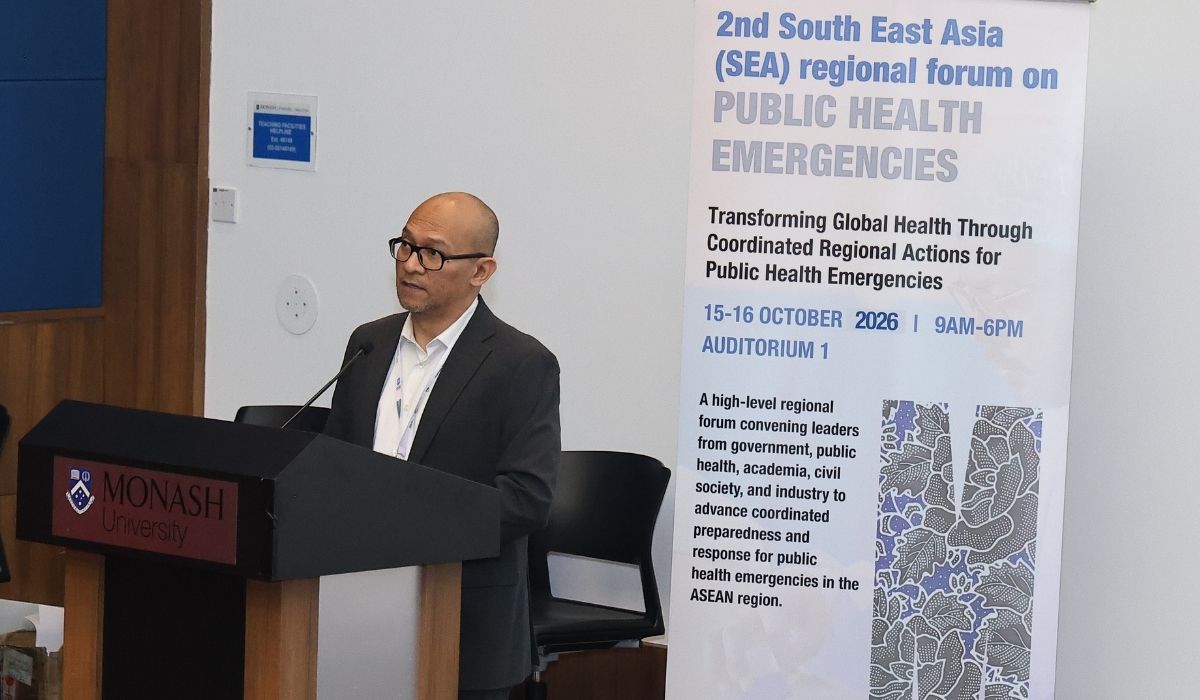 Professor Dato’ Dr Ir Faisal Rafiq Mahamd Adikan during the opening session during the first day.
Dr Rabindra Abeyasinghe, WHO Representative for Malaysia, Brunei Darussalam and Singapore, highlighted climate-related health threats and the importance of coordinated regional action. Speaking on behalf of Dr Jorge Saavedra, Executive Director of the AHF Global Public Health Institute, Dr Ivan Meidika Kurnia, Director for Asia and the Western Pacific at the Institute, called for shared decision-making on financing, data governance and benefit-sharing.
Dr Noraryana Hassan, Director of the Disease Control Division at the Ministry of Health Malaysia, presented the ASEAN Strategic Health Agenda 2026-2030 which was recently adopted at the ASEAN Health Ministers Meeting in Kuala Lumpur in September. She also mentioned plans for setting up a National Centre for Disease Control, as well as emphasised regional cooperation and stronger connections between public health, clinical services, laboratories and environmental agencies.
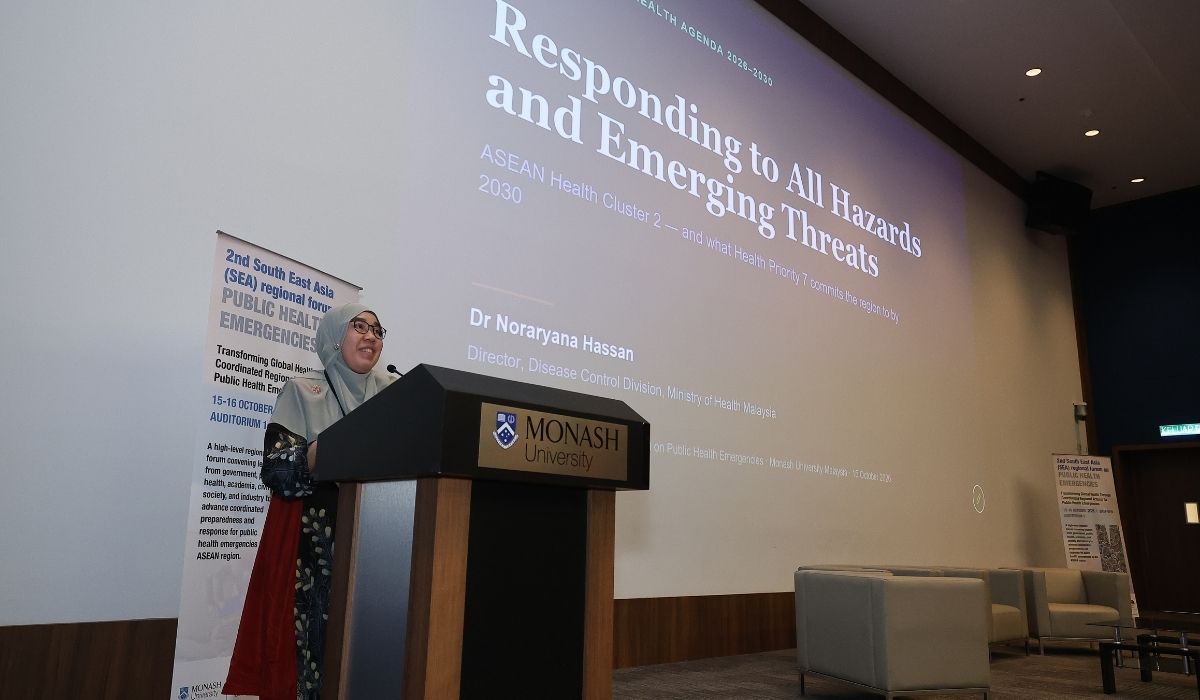 Dr Noraryana Hassan speaking during her session during the first day.
Professor Hsu Li Yang, Director of the Asia Centre for Health Security, examined emerging infectious disease risks. Professor Adi Utarini, Professor of Public Health at Universitas Gadjah Mada and Project Leader of the Eliminate Dengue Project in Yogyakarta, shared lessons from translating Wolbachia research into wider implementation. Other presentations explored how surveillance, diagnostics and infectious disease modelling can inform preparedness decisions.
A community engagement panel moderated by Professor Meera Sivasothy, Professor of Practice in Digital Media and Communication at Monash University Malaysia, examined accessible communication, continuity of care and the inclusion of underserved communities. The panelists were Choub Sok Chamreun, Executive Director of KHANA, Cambodia; Manvir Victor, Co-founder of Vital Signs Asia; Dr Siti Noraida Habibullah, Senior Lecturer at JCSMHS; and Mandy Thoo, Deputy Director of Community Engagement at the National Cancer Society of Malaysia.
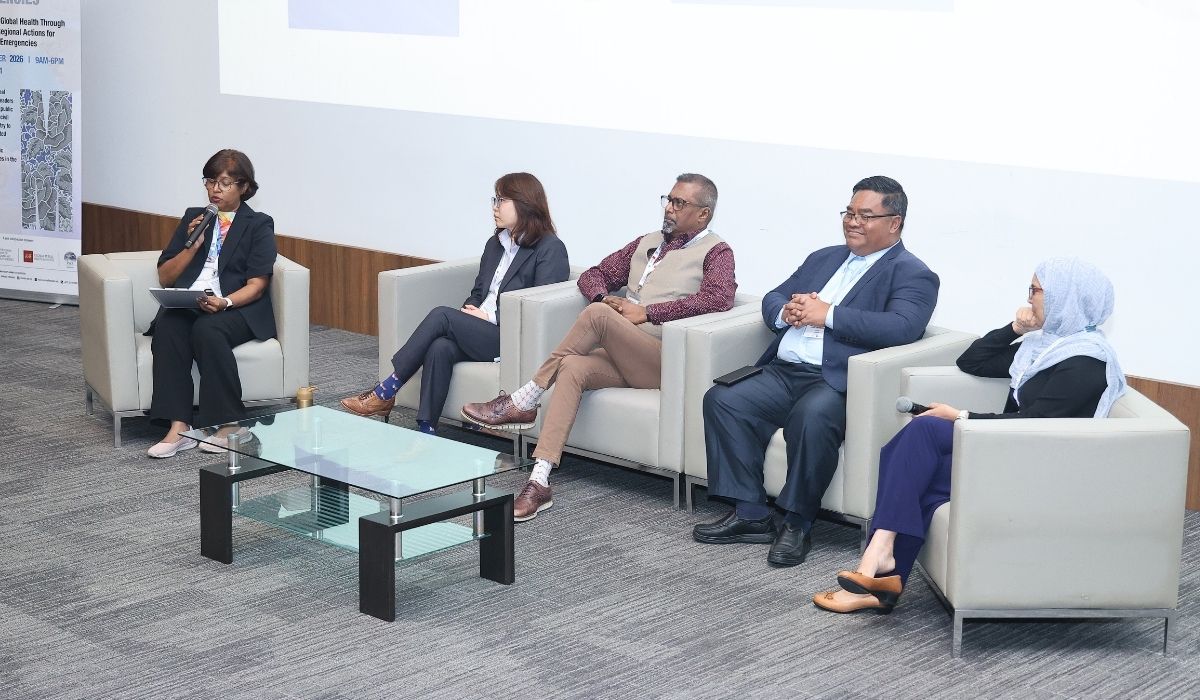 From left to right: Professor Meera Sivasothy, Mandy Thoo, Manvir Victor, Choub Sok Chamreun, and Dr Siti Noraida Habibullah.
Opening day two, Professor Elil emphasised policy coherence, institutional alignment and cross-border governance. Dr Ana B. Amaya, Associate Professor at Pace University and Associate Research Fellow at the United Nations University Institute on Comparative Regional Integration Studies, presented the BRIDGE Study on regional approaches to health emergencies.
The second day also addressed legal preparedness in public health emergencies. Dr Fifa A Rahman, Chief Executive Officer and Principal Consultant at Matahari Global Solutions, presented a baseline report on legal preparedness in ASEAN and a benchmarking tool, both developed in collaboration with the PHE Policy Hub, alongside wider discussions on the WHO Pandemic Agreement, pathogen access and benefit-sharing.
By combining scientific evidence, community experience and financing perspectives, the forum gave participants a broader understanding of how regional cooperation can strengthen preparedness, sustain essential services and protect communities during public health emergencies.
For the complete speaker line-up and session details, view the full forum program here.