
The Sir John Monash Lecture - Archaic Genomes and Insights into Human Evolution
12 March 2015
 Venue: Plenary Theatre, Monash University Malaysia
Time: 6pm
Fossil, archaeological, and genetic evidence are united in supporting a recent African origin of modern humans and dispersal out of Africa within the past 60,000 to 80,000 years. However, given that archaic humans (such as Neanderthals) preceded the exodus of modern humans out of Africa by several hundred thousand years, the question then arises as to the nature of the interactions between modern and archaic humans. In particular, did archaic humans contribute any genes to modern humans, or is all of our ancestry derived from the recent origin in Africa? This question proved remarkably difficult to answer, until genome sequences from archaic humans recently became available. These archaic genome sequences have provided a number of important insights into the history of our own species, and Professor Stoneking will present the latest findings in the field, including the potential adaptive value of genes that the present human beings might have received from interbreeding with archaic humans outside of Africa.
Speaker
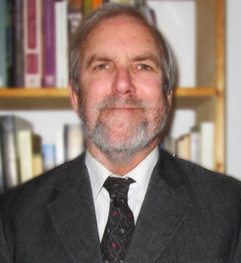 Professor Mark Stoneking
Group Leader, Max Planck Institute for Evolutionary Anthropology
Honorary Professor of Biological Anthropology,
University of Leipzig, Germany
Professor Stoneking is one of the world’s leading scientists in the field of human evolution, especially on genetic evolution, origin and dispersal of modern humans. He came to prominence for his work on mitochondrial DNA variation among different human populations. He and his doctoral advisor Allan Wilson and fellow researcher Rebecca L. Cann made a monumental contribution to the Out of Africa Theory in 1987 by introducing the groundbreaking concept called the Mitochondrial Eve, a hypothetical common mother of all living humans based on mitochondrial DNA. Some of his research works were also published in leading international journals such as Nature and Science. Professor Stoneking is a Fellow of the American Association for the Advancement of Science.