
The Sir John Monash Lecture (03/2015)
8 June 2015

Venue: Plenary Theatre, Monash University Malaysia
Time: 6pm
Waking up the brain: Mechanisms of Central Nervous System (CNS) arousal
There are mechanisms in the brain that regulate mammalian behaviour for reproduction. Widespread among mammals and different between the male and female brain, these mechanisms could also have an impact on the physiology of the human libido. Professor Donald Pfaff suggests that these brain mechanisms for reproductive behaviours offer the organisational principles which supports all prosocial behaviours. Underlying sexual arousal and other specific forms of brain arousal, such as hunger or fear, links to a deeper biological force called the “Generalised CNS Arousal” (GA).
In this public lecture, Professor Pfaff will discuss recent discoveries on how GA works in the brains of laboratory animals and how abnormalities in GA mechanisms in the human brain may lead to a variety of medical problems.
Speaker
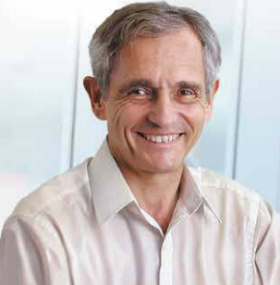 Professor Donald W. Pfaff
Professor Pfaff graduated from Harvard College magna cum laude and received his PhD from the Massachusetts Institute of Technology in 1965. He joined Rockefeller University in 1966 as a postdoc and was named assistant professor in 1969, before becoming a full professor in 1978. His laboratory has published over 900 research reports about how the brain regulates behaviour.
Professor Pfaff is a member of the National Academy of Sciences and a fellow of the American Academy of Arts and Sciences. Author of several books on the brain and behaviour, he received the 2005 Award for Excellence in Professional and Scholarly Publishing (medical science category) from the Association of American Publishers for his book titled Brain Arousal and Information Theory. He also received the 2010 Ipsen Foundation Prize in Neuronal Plasticity and the Daniel S. Lehrman Lifetime Achievement Award in Behavioural Neuroendocrinology in 2011.
Professor Pfaff is a faculty member in the David Rockefeller Graduate Program and the Tri-Institutional MD-PhD Program.