
Cyber Violence: Unmasking Digital Shadows
In an age where technology weaves itself into the fabric of our daily lives, a troubling question emerges: Is it also becoming a tool for perpetuating gender violence? This pressing issue took centre stage at a recent public panel discussion, “The Virtual is Real: Tackling Technology-Facilitated Gender Violence,” held at Monash University Malaysia; hosted by the Southeast Asia Research Centre for Digital Tech and Society (SEADS).
The panel boasted a lineup of formidable experts, including Dhyta Caturani, a renowned gender equality activist and founder of the Purple Code Collective; Dr Dyah Pitaloka, Senior Lecturer in Communications and Media Studies at Monash University Malaysia's School of Arts and Social Sciences and Dr Indri Saptaningrum, Director of the Institute of Public Policy and the Institute for Advanced Research at Atma Jaya Catholic University of Indonesia. Together, they delved into the complex intersections of technology, law, and societal attitudes towards gender-based violence.
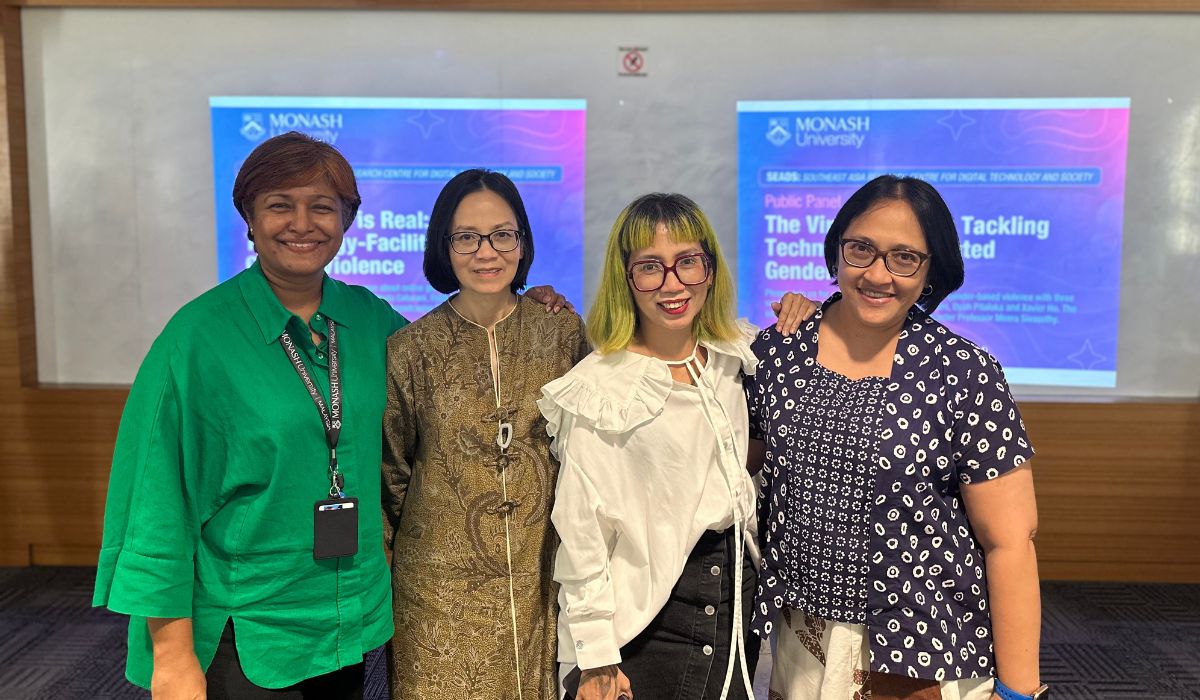 From left: Professor Meera (moderator), Dr Indri, Dhyta and Dr Dyah — shared expertise and changes on technology-facilitated gender violence.
The conversation was ignited by a startling case: a teenager reported being gang-raped in the metaverse, claiming emotional trauma from the incident. Professor Meera, who steered the discussion, posed a thought-provoking question: “How can an avatar-based incident leave someone emotionally scarred? And what does this tell us about our understanding of violence?”
Dhyta’s response was both personal and powerful. Reflecting on her years of activism against gender-based violence, she revealed that her fight, which began in the physical world, soon spilled into the digital realm. “Back in 2010, as I started addressing online harassment, I found myself at the receiving end of severe online abuse,” Dhyta shared. “The harassment I endured online felt just as real and distressing as physical threats. The virtual world, much like the real one, is where genuine experiences and impacts unfold.” She emphasised that online and offline violence are deeply intertwined, urging society to recognise the severe emotional toll of digital harassment.
Shifting the focus to legal implications, Dr Indri highlighted the glaring gaps in current legal frameworks. “Most legal systems, including Indonesia’s, are anchored in physical evidence,” she explained. “This creates a significant blind spot when dealing with virtual violence, where material evidence is often non-existent.” Dr Indri pointed out that in Indonesia, virtual sexual violence frequently receives lighter sentences compared to physical crimes. “This discrepancy highlights a broader issue in our legal approach to online violence,” she observed. Her research calls for an urgent rethinking of legal doctrines to address the realities of digital abuse.
The panel also navigated the complexities of online interactions. Dr Dyah shared insights from her research on how different countries respond to virtual violence. “In the UK, specialised cyber police stations manage such cases,” she noted. “But in Malaysia and Indonesia, there’s often confusion over distinguishing between in-game actions and real violence.” Dr Dyah’s research underscores that our brains react similarly to all forms of violence, whether physical or virtual. “Young people often struggle to tell the difference between normal interactions and violent acts in virtual spaces,” she added. This emphasises the need for greater awareness and robust support systems.
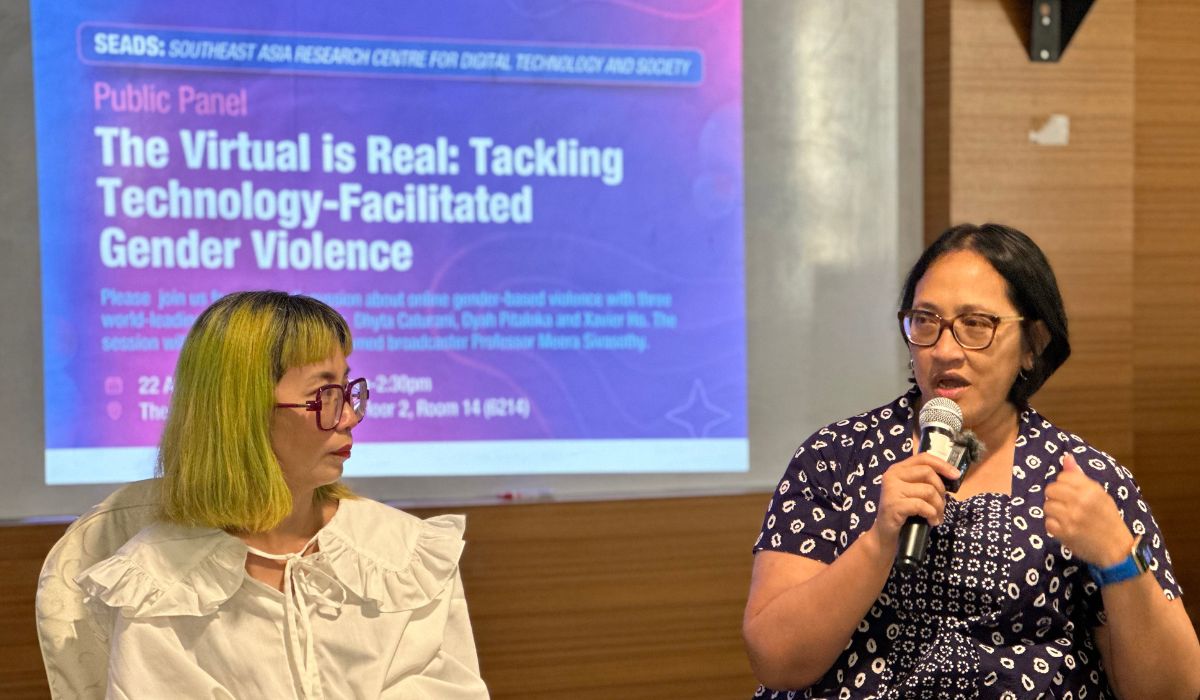 Dr Dyah highlighting the global variations in addressing virtual violence and the need for greater awareness and support system.
Throughout the discussion, the panellists underscored the necessity of a holistic approach to technology-facilitated gender violence. Professor Meera called for an integrated response, stating, “The digital space is an extension of our physical reality. We must treat online violence with the same seriousness as violence that happens offline.”
Dr Indri echoed this sentiment, urging a re-evaluation of legal frameworks to include virtual violence. “We need to challenge the old doctrines that rely solely on physical evidence and develop laws that address non-physical forms of harm,” she asserted.
Dr Dyah stressed the importance of enhancing infrastructure and reporting mechanisms. “Our response systems must be strengthened, and policymakers need to take these cases seriously,” she argued. “The psychological impact of virtual violence is profound and our approach must reflect this reality.”
As we continue to navigate the complexities of this rapidly evolving digital landscape, the panel’s discussion serves as a compelling reminder that tackling technology-facilitated gender violence demands a significant expansion of our understanding and responses. It’s crucial that we recognise the profound and often distressing impact of digital abuse which can be as real and damaging as physical violence.
By acknowledging these realities and pushing for meaningful systemic change, we can work towards creating a more inclusive and protective framework that addresses all forms of violence; both online and offline. This comprehensive approach will ensure that we are equipped to confront and mitigate the challenges posed by technology-facilitated abuse, fostering a safer and more equitable environment for everyone.
SEADS was established in 2024 and is based within the School of Arts and Social Sciences. SEADS serves as a dynamic platform connecting academic research with civil society, governments, and corporations in Southeast Asia. The Centre's vision is to foster a society where digital interactions are equitable, transparent, inclusive, and accountable. SEADS advances scholarship by critically examining the relationship between digital technologies and human societies in Southeast Asia. It collaborates with various stakeholders to promote ethical and inclusive digital reforms. Additionally, SEADS actively engages the public and develops educational resources aligned with its mission.