
Shining light on a hidden wonder
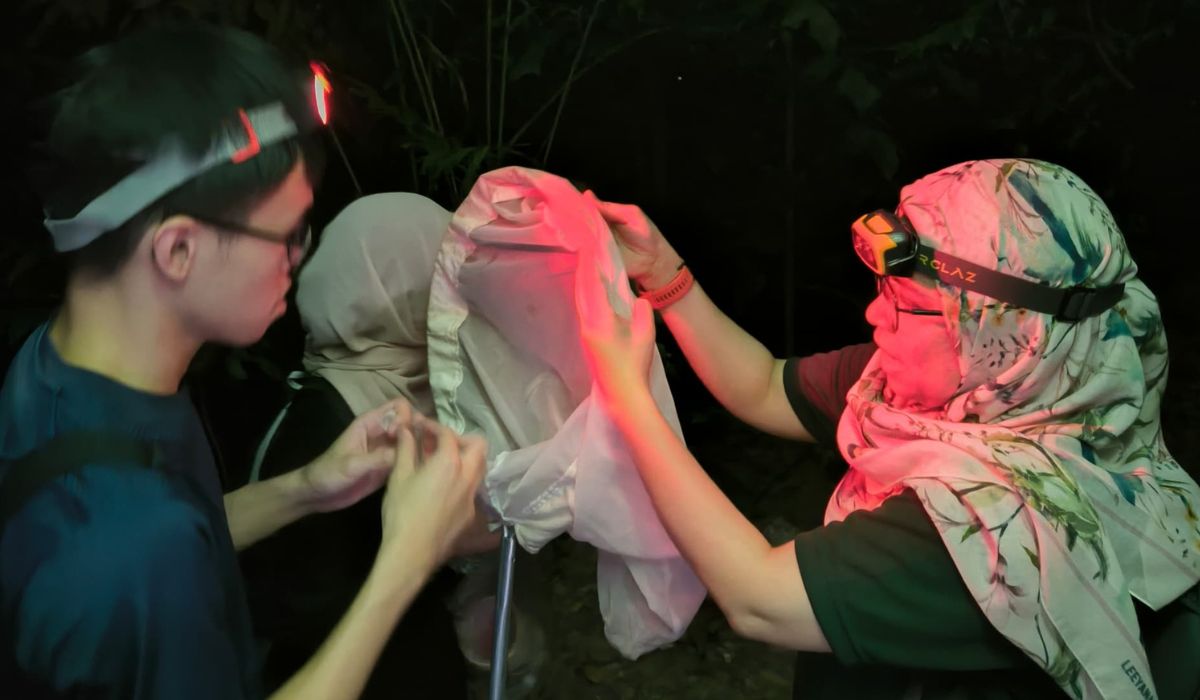 Tan Wei Jack (Left) and Dr Wan Faridah Akmal Jusoh (Right) on one of their routine firefly expeditions.
Earlier this year, a rare firefly species was rediscovered, more than a century after its last confirmed sighting. Tan Wei Jack, a graduate from the university, identified the Gombak bent-winged firefly (Pteroptyx gombakia) during a routine specimen examination at Bukit Kiara, Kuala Lumpur. This find marks only the third known specimen and the first live sighting of this species, last collected in the 1930s. The initial specimen, collected in 1921, resides in the Natural History Museum in London.
A research assistant under the university’s leading entomologist Dr Wan Faridah Akmal Jusoh, Jack noticed unusual characteristics while studying preserved firefly samples. “I was examining some previously collected specimens under the microscope and noticed something strange, a feature that didn’t match what I’d just learned about Colophotia fireflies the day before. This was the moment I knew that something was different,” Jack explained. After consultation with Dr Wan, the specimen was confirmed to be the long-lost Pteroptyx gombakia.
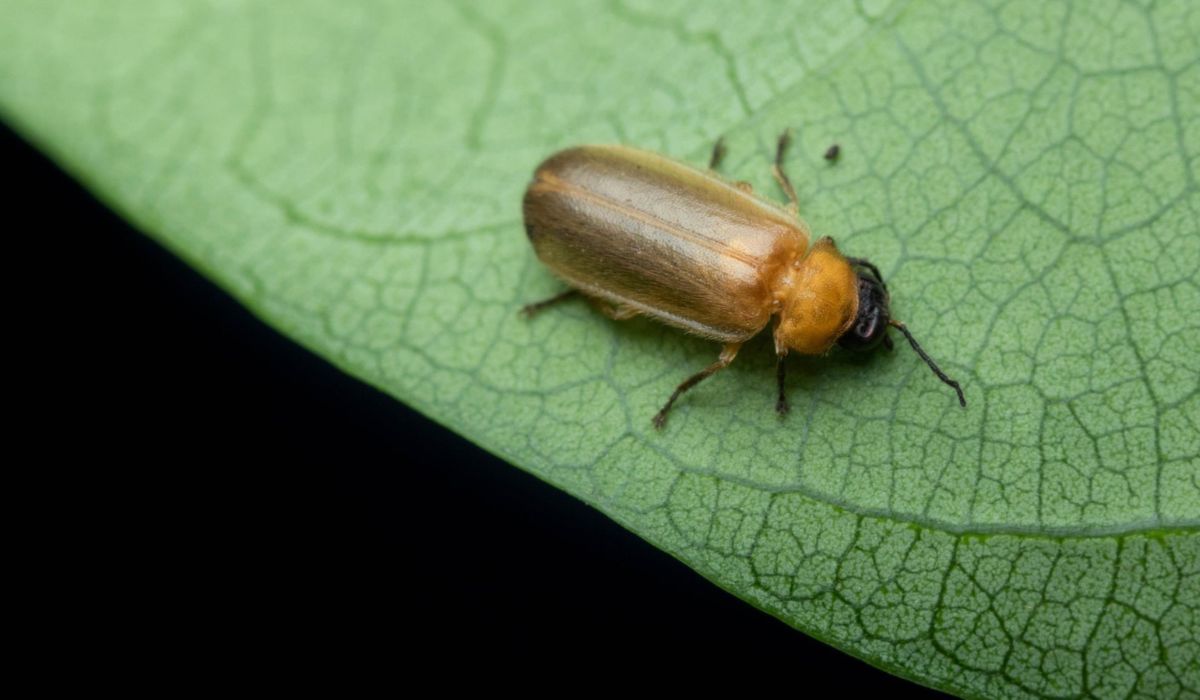 The third known specimen of the Gombak bent-winged firefly (Pteroptyx gombakia) in the wild (Photo taken by Nicholas HL Tan).
The rediscovery has sparked new interest in Bukit Kiara’s biodiversity. It is now the ninth known firefly species to inhabit the forest reserve and the only Pteroptyx species found in a non-estuarine, secondary forest, a contrast to its mangrove-dwelling cousins in Kuala Selangor and beyond.
However, Jack’s journey into entomology wasn’t a straight line, starting from a childhood interest in wildlife documentaries and solidifying during a firefly walk organised by Dr Wan and the Friends of Bukit Kiara (FoBK). Despite initial reservations about insects, his passion for nature ultimately led him to entomology.
Since completing his honours degree in science with a major in tropical environmental biology, Jack has immersed himself in fieldwork, a role that demands both scientific rigour and physical endurance. “The physical fatigue from hiking and the mental fatigue from constantly being on the lookout for a flash of light, all while being in near total darkness, gradually took its toll. I have come to learn that recognising your body’s limits and taking appropriate breaks is essential for the long run,” said Jack. Despite the challenges, the thrill of discovery keeps him going. “It’s a reminder that even when things seem lost, they can still find their way back.”
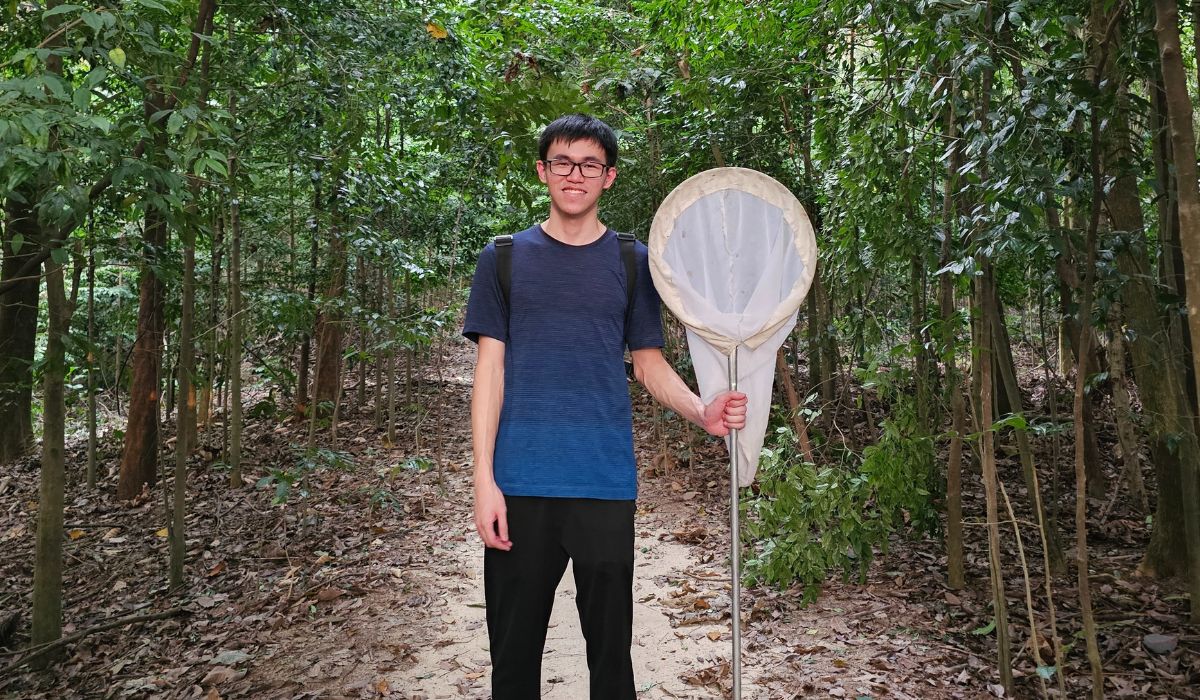 Jack in the field posing with a bug net.
News of the rediscovery was met with pride from his family and friends. “Everyone was so supportive. I’m really grateful for that,” he shares. While the discovery hasn’t drastically changed his life, it has strengthened his resolve to stay in research. “There’s still so much to learn, especially about Pteroptyx gombakia. The next step is to study its ecology and figure out what it’s doing in a place like Bukit Kiara.”
Beyond its scientific significance, this rediscovery also holds promise for conservation. Groups like Friends of Bukit Kiara play a vital role in these efforts, advocating for the gazettement and protection of the forest and educating the public.
 Tan Wei Jack jotting down notes on one of his field expeditions.
To aspiring researchers and conservationists, Jack offers words of encouragement drawn from his own journey, “Wildlife and conservation are fields which require a lot of passion. If you have enough passion, that passion will light the path ahead of you towards the future.” As the light of rediscovered firefly species flickers once more in the heart of Bukit Kiara, it stands as proof that nature’s wonders are just waiting to be rediscovered by those who care enough to look.
Jack’s quiet dedication, and the firefly’s reappearance after nearly a century show that nature still holds secrets for those willing to pay attention.