
Advancing infectious disease collaboration across the Pacific Rim
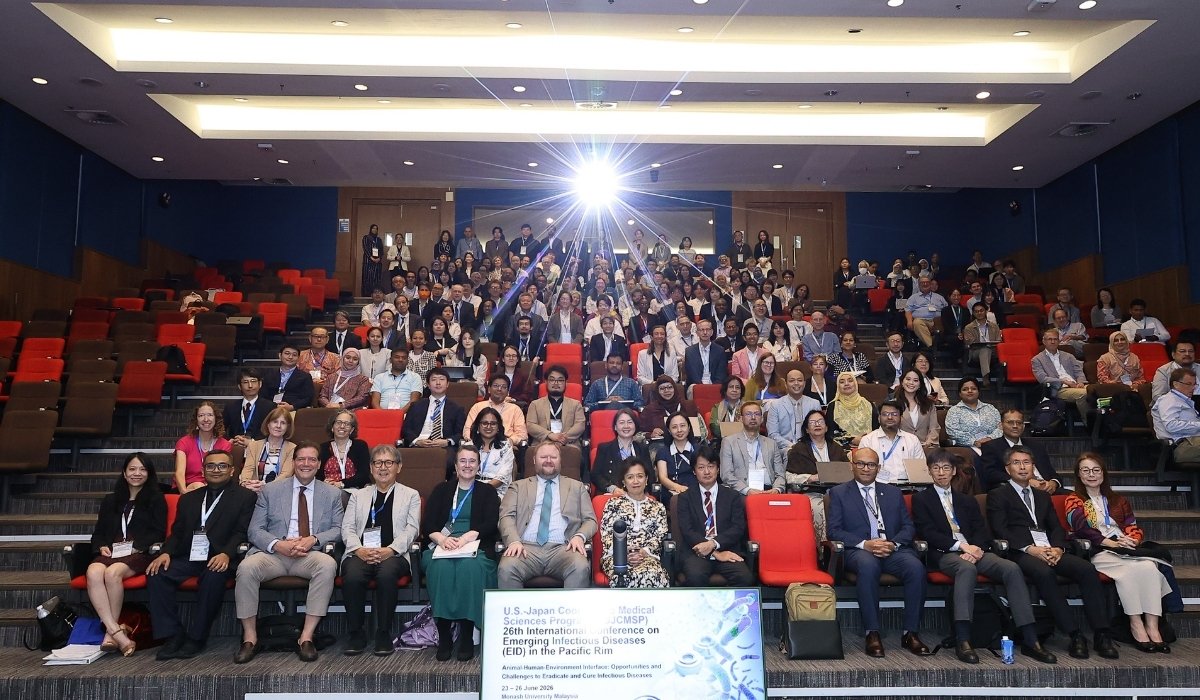 Group photo of the speakers and attendees of the U.S.-Japan Cooperative Medical Sciences Program (USJCMSP) 26th International Conference on Emerging Infectious Diseases (EID) in the Pacific Rim.
The university welcomed researchers, public health experts, policymakers and students to the U.S.-Japan Cooperative Medical Sciences Program (USJCMSP) 26th International Conference on Emerging Infectious Diseases (EID) in the Pacific Rim. The conference marked a major accomplishment for the university, as it brought both the U.S. National Institutes of Health’s National Institute of Allergy and Infectious Diseases (NIH/NIAID) and the Japan Agency for Medical Research and Development (AMED) to Malaysia for the first time through this international platform.
The four-day conference was held under the theme Animal-Human-Environment Interface: Opportunities and Challenges to Eradicate and Cure Infectious Diseases. The meeting aimed to share current research findings and encourage international collaborations involving investigators and institutions across Japan, the Asia-Pacific region and the United States. The Malaysia organising effort was led locally by Associate Professor Vinod Balasubramaniam, Co-Chair of the conference from the Jeffrey Cheah School of Medicine and Health Sciences, working closely with NIAID/NIH, AMED and the wider organising team. His role spanned scientific program support, local coordination, stakeholder engagement and strategic partnership-building, helping position the meeting as a platform for sustained infectious disease collaboration across Malaysia, Japan, the United States and the wider Asia-Pacific region.
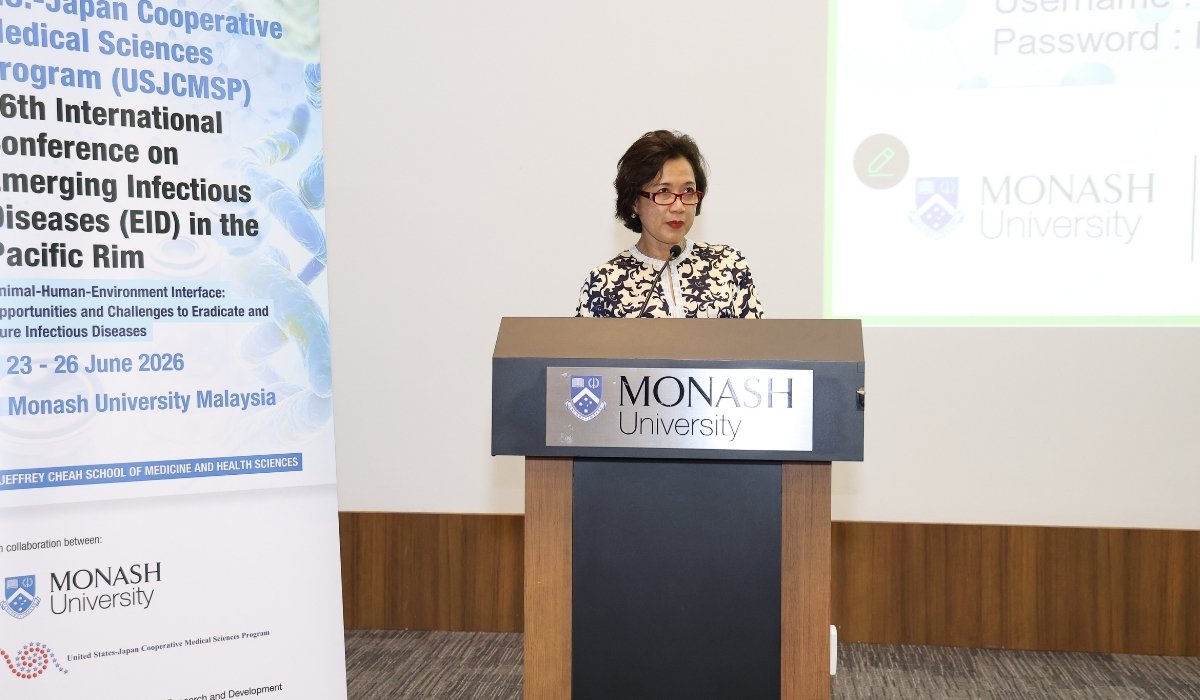 Professor Emeritus Dato’ Dr Adeeba Kamarulzaman during the opening remarks of the conference.
Professor Emeritus Dato’ Dr Adeeba Kamarulzaman, President and Pro Vice-Chancellor of Monash University Malaysia, provided the opening remarks to the event. In her address, she highlighted the timeliness of the conference theme, particularly in Southeast Asia, where biodiversity and close human-animal-environment interactions continue to shape infectious disease risks. “We do not see this conference merely as a four-day event, but as a launch pad to catalyse deep, enduring collaboration between Monash University Malaysia, universities in Malaysia, NIAID, AMED and our partners across the United States, Japan, Malaysia and the wider Asia-Pacific,” she said.
Nihei Daisuke, Minister and Deputy Chief of Mission at the Embassy of Japan in Malaysia, reaffirmed the long history of the USJCMSP, which was launched in 1965, and noted its continued role in fostering collaboration among Japanese, American and regional scholars. He also acknowledged Malaysia’s public health leadership, including efforts to address mosquito-borne diseases, emerging infectious diseases and antimicrobial resistance.
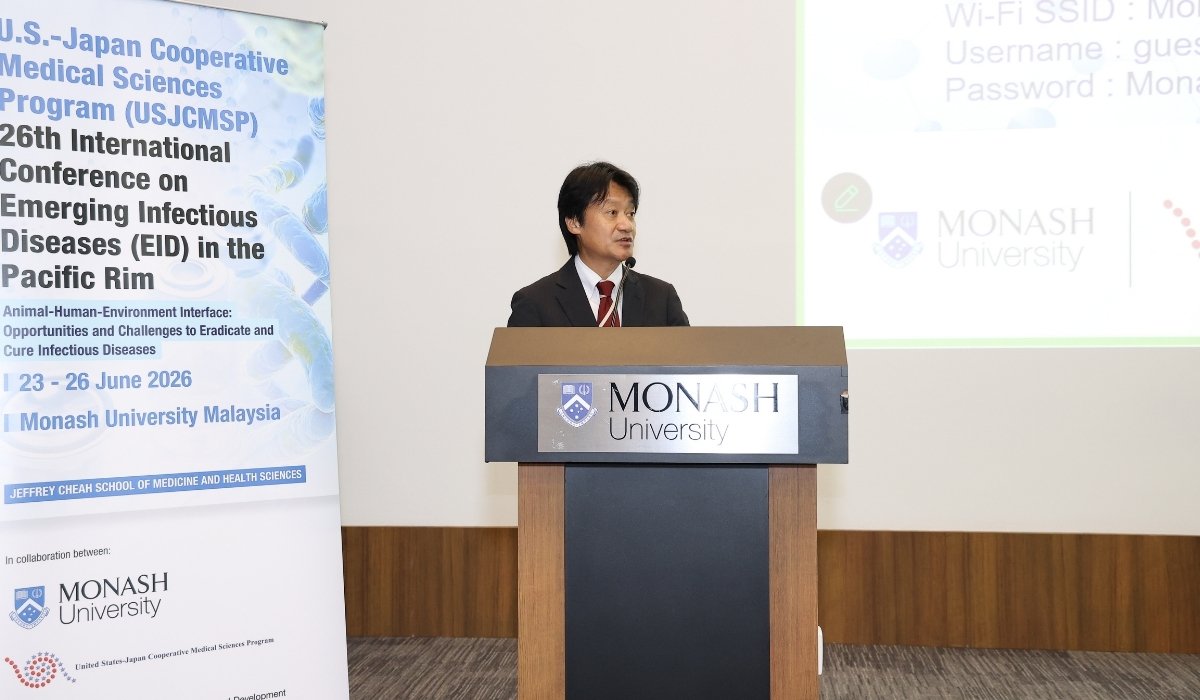 Nihei Daisuke provided his opening remarks during the first day of the conference.
Cameron Millard, Economic Officer, Embassy of the United States in Malaysia, also mentioned the importance of international scientific exchange, noting that the COVID-19 pandemic had reinforced the need for countries to collaborate quickly and effectively in the face of global health challenges.
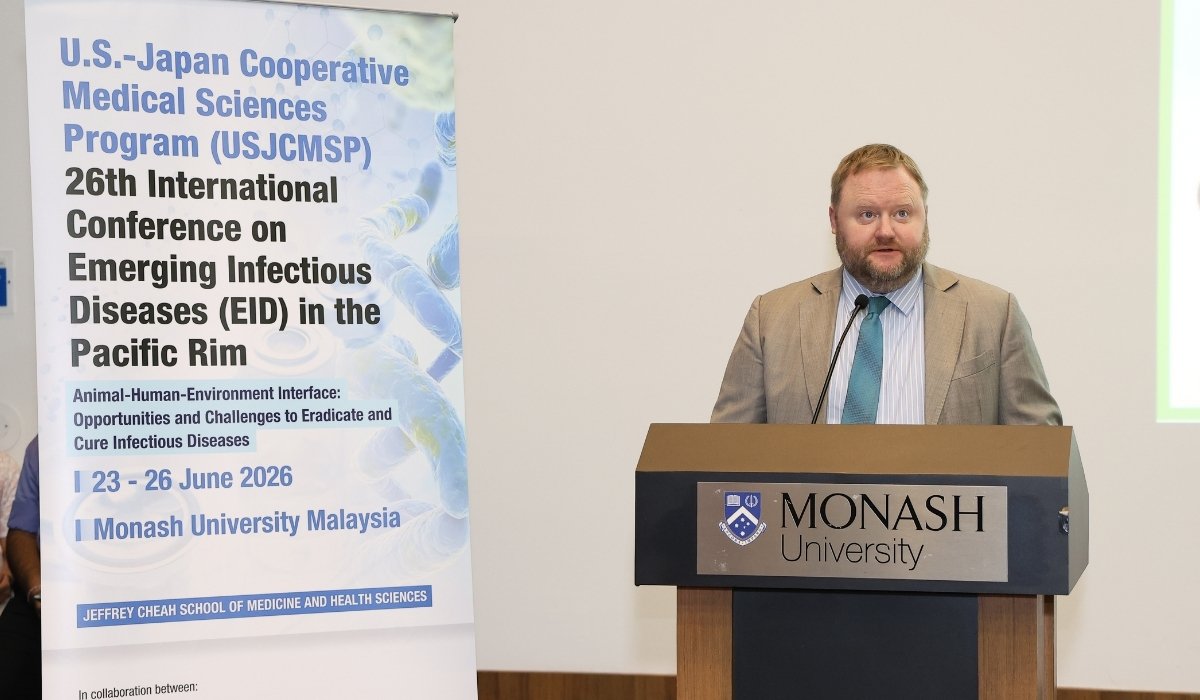 Cameron Millard provided his opening remarks during the conference.
Professor Hiroshi Kiyono, Japan USJCMSP Chair, also shared the enduring importance of the USJCMSP in strengthening scientific exchange across borders. (Note: Professor Richard Kuhn, U.S. USJCMSP Chair, was not able to make it in time for the opening due to his flight being delayed).
Following the opening remarks, Professor Kiyoshi Takeda from The University of Osaka delivered the Shimao-Takeda Lectureship on host-microbiota interaction in inflammatory bowel diseases. His presentation explored the increasing burden of Crohn’s disease and ulcerative colitis in Asia, highlighting the role of intestinal immunity, microbiota, lysophosphatidyl serine and OTUD3 mutations in shaping disease pathways.
The La Montagne-Heilman Lectureship was then delivered by Professor Victor DiRita from Michigan State University, who spoke on how Campylobacter jejuni remodels host physiology to drive its growth during infection. His presentation examined how the pathogen thrives in inflamed gut environments, including the role of lactate production, oxygen levels, nitrate respiration and microbiota-derived indole in influencing infection outcomes.
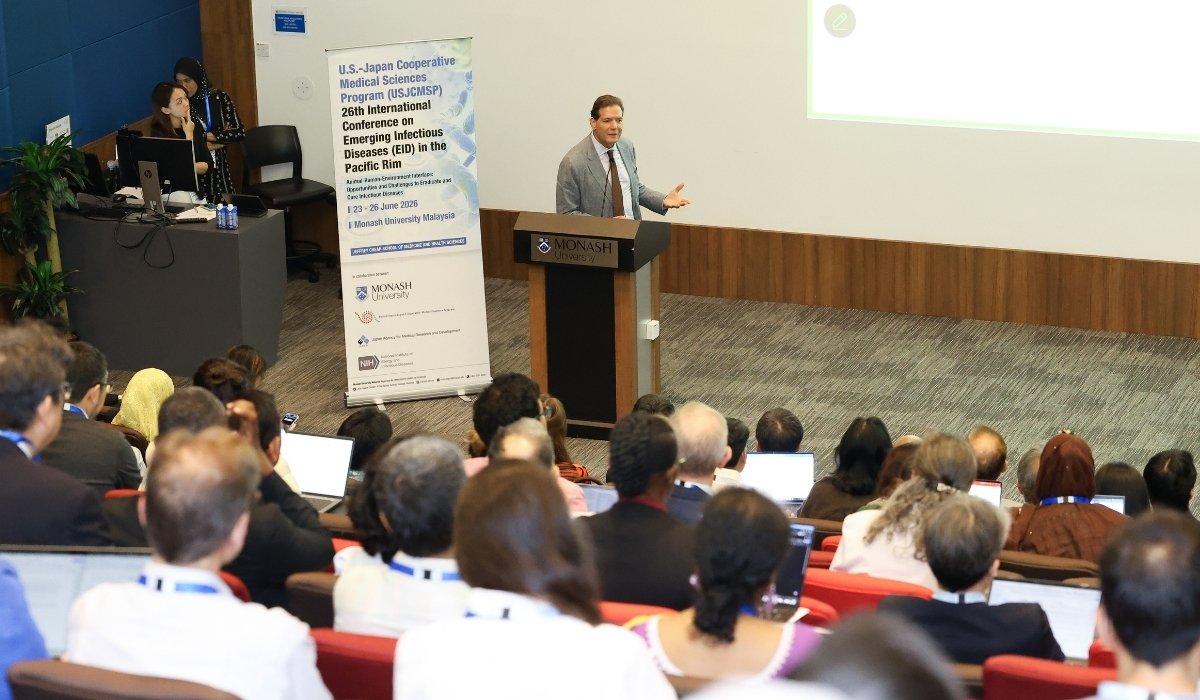 Professor Victor DiRita delivered his lectureship during the conference.
The conference continued with flash talks and poster sessions, providing early-career researchers and participants with opportunities to present their work and engage directly with international experts. The afternoon sessions focused on antimicrobial resistance and zoonotic diseases, featuring research on wastewater surveillance, mupirocin-resistant Staphylococcus aureus, live-attenuated vaccine platforms, Plasmodium knowlesi, zoonotic tuberculosis, Salmonella virulence and emerging infectious diseases in Malaysia and Borneo.
The second day expanded the scientific discussions with sessions on the microbiome and infectious diseases, novel models in drug development, and the translational and clinical aspects of bacteriology and parasitology. Speakers explored topics including sexually transmitted infections, the skin microbiome in ageing, next-generation phage therapy, artificial intelligence in clinical microbiology, malaria vaccine development, rapid infectious disease testing, antibiotic discovery, tuberculosis vaccination and cholera.
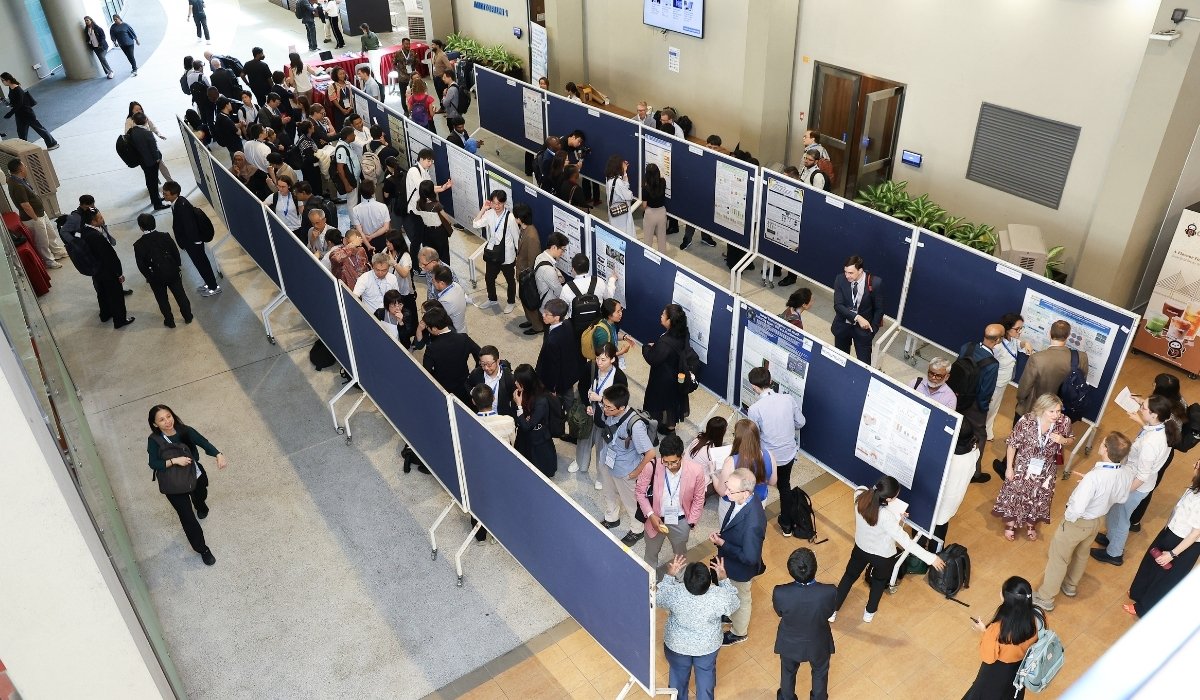 Poster viewing sessions that occurred between lectureships.
The final two days focused on the Outstanding Poster Award announcement, plenary closing remarks and concurrent USJCMSP panel meetings.
The conference reflected the university’s commitment to advancing regional and global health research. By bringing together expertise across institutions, disciplines and countries, the meeting strengthened scientific exchange and supported stronger responses to emerging and re-emerging infectious diseases.
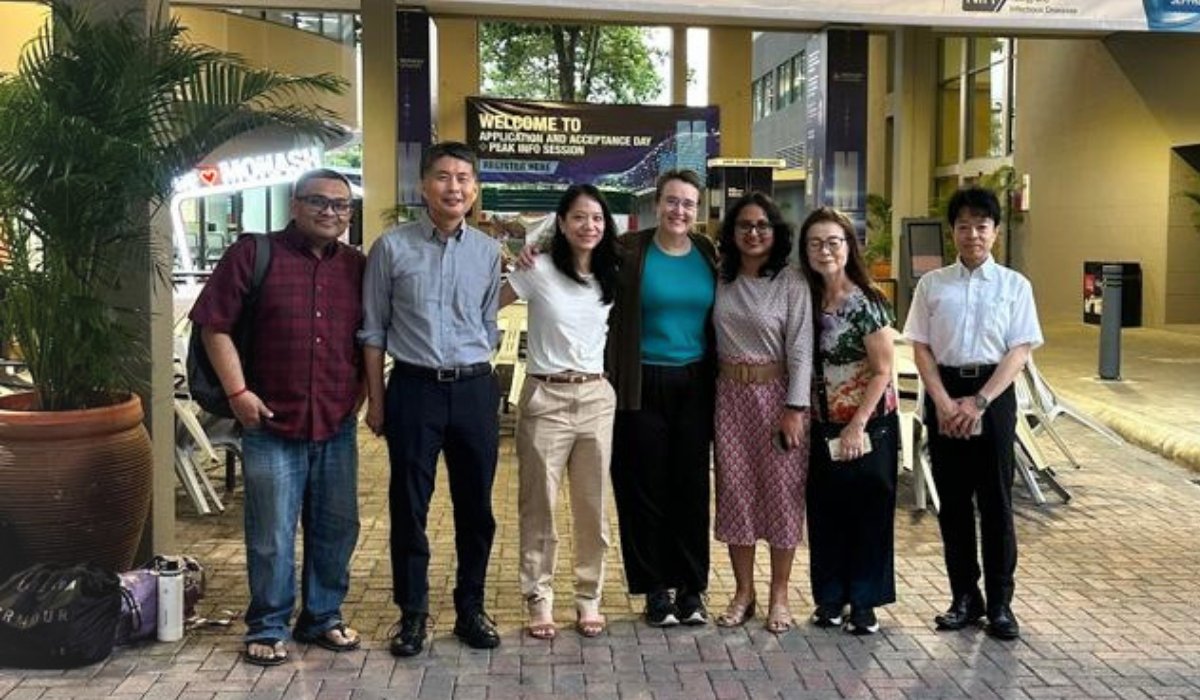 From left to right: Malaysian Co-Chair Associate Professor Vinod Balasubramaniam (Monash University Malaysia), Kyosuke Haze (AMED), Tami Lu (Regional Officer, NIAID/NIH), Joyelle Dominique (Director at Office of Global Research at NIAID/NIH), Dr Shweta Aggarwal (Scientific Affairs Specialist, NIAID/NIH), Kanako Kono (AMED), and a delegate from AMED.