
Children’s health at risk beyond healthcare, expert warns
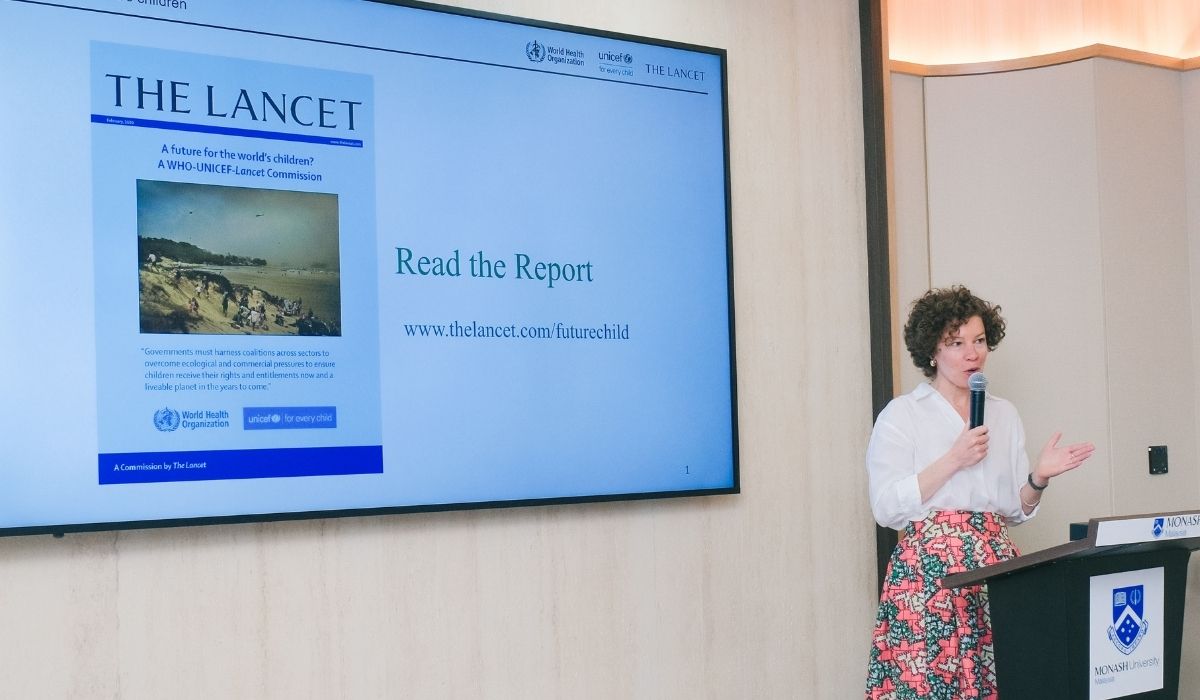 Dr Sarah Dalglish delivering her lecture on Children in All Policies: Findings and Implementation of the WHO-UNICEF-Lancet Commission on Child Health and Well-being.
Progress in reducing child mortality is no longer enough. Speaking at the Jeffrey Cheah School of Medicine and Health Sciences, Dr Sarah Dalglish, Executive Director of Children in All Policies 2030 (CAP2030), a global initiative based at University College London, emphasised that modern threats to child health, from climate change to digital risks, demand a fundamental shift in how policies are designed.
Referencing the WHO-UNICEF-Lancet Commission on Child Health and Well-being, which was published in February 2020, she highlighted that despite decades of progress, factors beyond healthcare systems now play a defining role in shaping children’s futures. She explained that while global child mortality has declined significantly over the past few decades, new challenges such as climate change, harmful commercial marketing, poor urban planning, unsafe environments and digital risks require a broader approach to child health.
Reflecting on the motivation behind the report, Dr Dalglish echoed climate activist Greta Thunberg’s famous words, saying the Commission’s starting point was the recognition that “our house is on fire”.
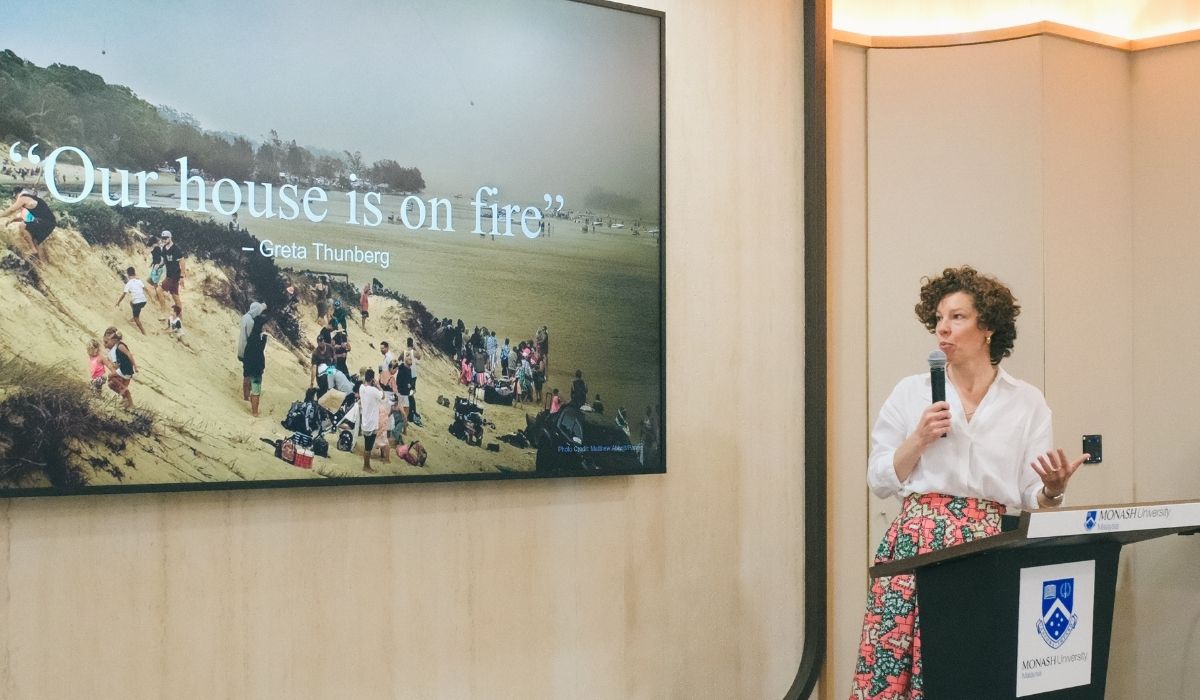 Dr Sarah referencing Greta Thunberg’s quotes.
She highlighted that children themselves consistently identify family togetherness, clean environments, access to education, culture and opportunities to play as important to their health and well-being. These priorities are also closely aligned with the rights set out in the United Nations Convention on the Rights of the Child.
She explained that improving child health requires collaboration across multiple sectors beyond healthcare alone. “When you’re thinking about taking a holistic view of the child and improving children’s health and well-being, to help protect and ensure their health across the life course, you really have to look across all these sectors,” she said.
Throughout the session, Dr Dalglish highlighted how decisions in transport, agriculture, trade, housing, education and environmental planning all directly shape children’s lives. She pointed out that safer transport systems can help reduce road injuries among young people, while urban planning and recreational spaces can support children’s physical activity and development.
A major focus of the lecture was the importance of engaging children in policy-making. Dr Dalglish stressed that children’s participation is not merely symbolic but can lead to stronger, more effective policies. “Children’s participation improves the policies themselves. When you include the lived experience of the people whose policies are actually targeting, it’s always going to make them better,” she stated.
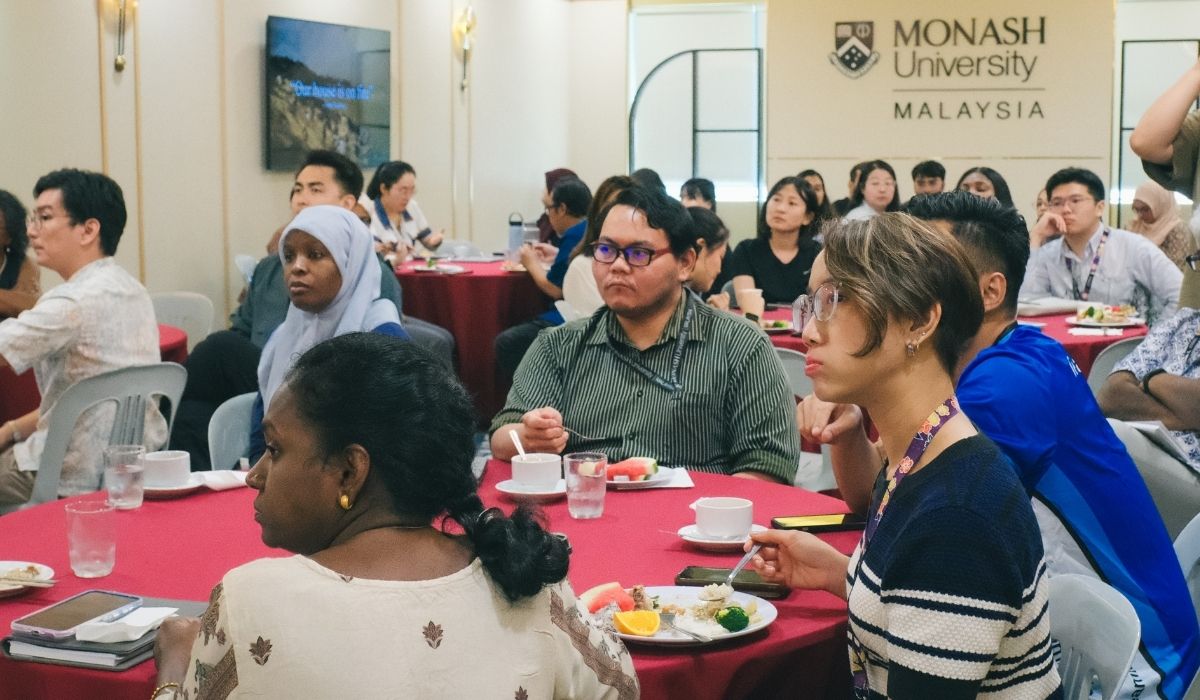 The lunch talk lecture attendees attentively listening to Dr Sarah’s session.
Dr Dalglish shared CAP2030’s experience working with a Youth Advisory Board made up of young people from around the world. The group contributed to policy reports, child health dashboards developed with WHO and UNICEF, and discussions on climate change and child health priorities.
She explained that children are frequently exposed to marketing for unhealthy foods, sugary drinks, tobacco, vapes and alcohol, particularly through digital platforms and social media. “Marketing is way more pervasive than adults think. They’re not targeted to the same extent as us through messages from fast food apps or advertisements on social media and YouTube,” she said.
Closing the session, she highlighted concerns about how children’s habits and consumer behaviours are shaped from an early age. “Marketing builds a relationship with us from a very, very young age, and we feel these are our products,” she shared, quoting one young participant in the initiative.
The lecture reinforced the importance of recognising that every policy decision, from transport and housing to education and digital governance, can shape children's health, opportunities and futures.