
Connecting Indigenous knowledge across borders
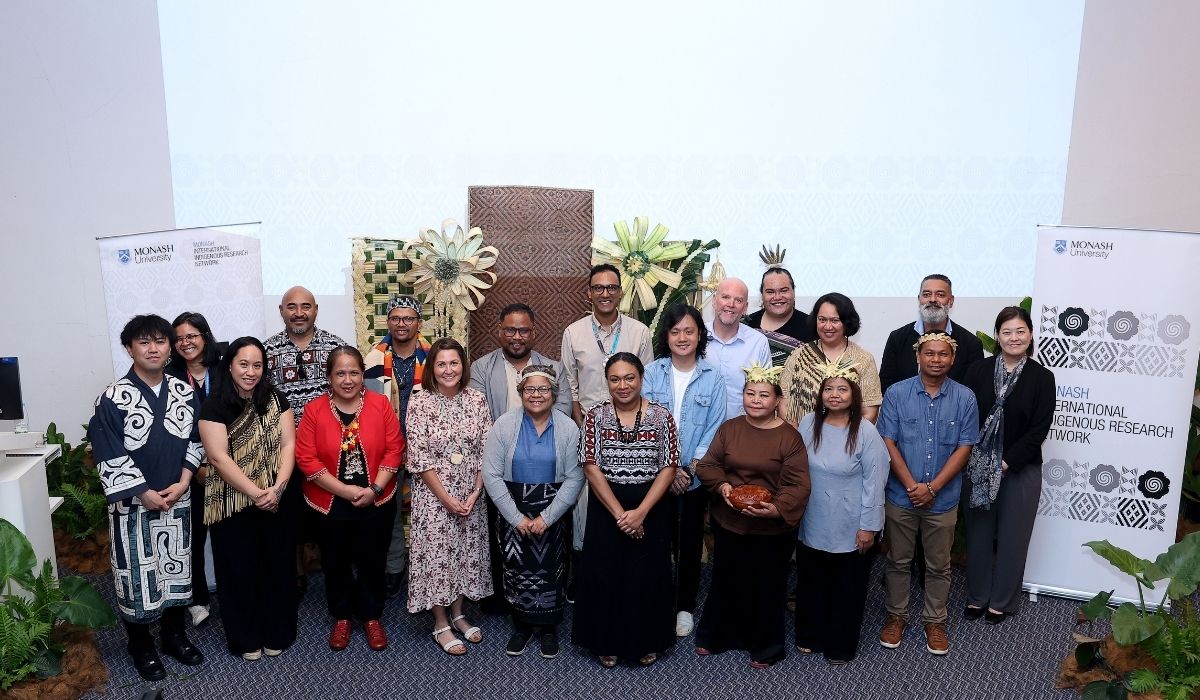 Speakers, invited guests, community representatives and participants at the official launch of the International Indigenous Research Network (IIRN) and the IIRN Malaysia Hub.
We officially launched the International Indigenous Research Network (IIRN) and its first regional hub, the IIRN Malaysia Hub,at Monash University Malaysia on 21 July 2026, bringing together Indigenous leaders, academics, researchers and community representatives from Malaysia, Australia, Canada, Fiji, Japan, New Zealand and the Philippines.
Organised in partnership with the Office of the Deputy Vice-Chancellor (Indigenous), Monash University, the two-day event marked an important step in strengthening international research collaborations grounded in Indigenous knowledge, self-determination and genuine partnership.
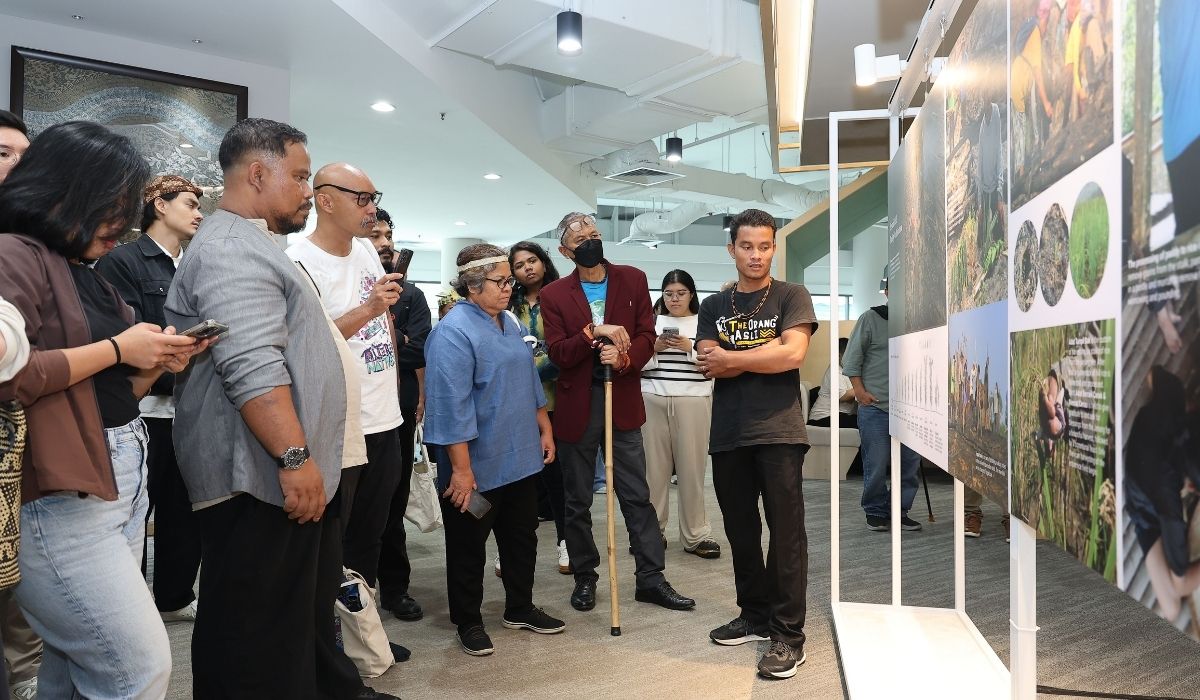 Participants exploring the workshop displays.
By connecting researchers with Indigenous communities across the Asia-Pacific region and North America, the network aims to recognise Indigenous peoples as co-creators of knowledge rather than research subjects, and to create opportunities to address shared global challenges such as climate change, food security, health and cultural sustainability.
Welcoming participants to the launch, Professor Emeritus Dato' Dr Adeeba Kamarulzaman, President and Pro Vice-Chancellor of Monash University Malaysia, highlighted the importance of learning directly from Indigenous communities and working together to address issues that affect communities worldwide.
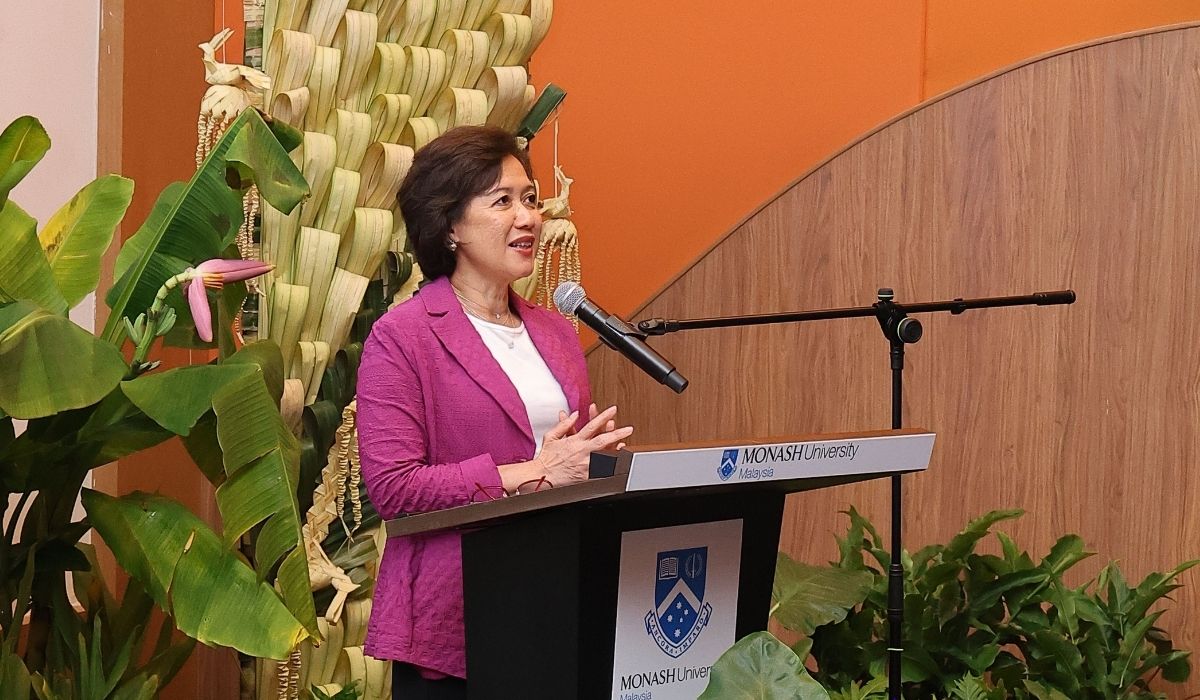 Professor Emeritus Dato' Dr Adeeba Kamarulzaman delivering the opening address at the official launch.
"The days of doing siloed research are long gone," she said. "If we put our collective thoughts together, there is a lot we can learn from Indigenous communities." She also noted that Indigenous communities have long practised principles of caring for the environment, adding that they have respected the planet long before modern scientists found a word for it.
Introducing the network, Professor Tristan Kennedy, Deputy Vice-Chancellor (Indigenous) and Senior Vice-President at Monash University, described the IIRN as a platform that brings together researchers, community knowledge holders and institutions to create meaningful impact.
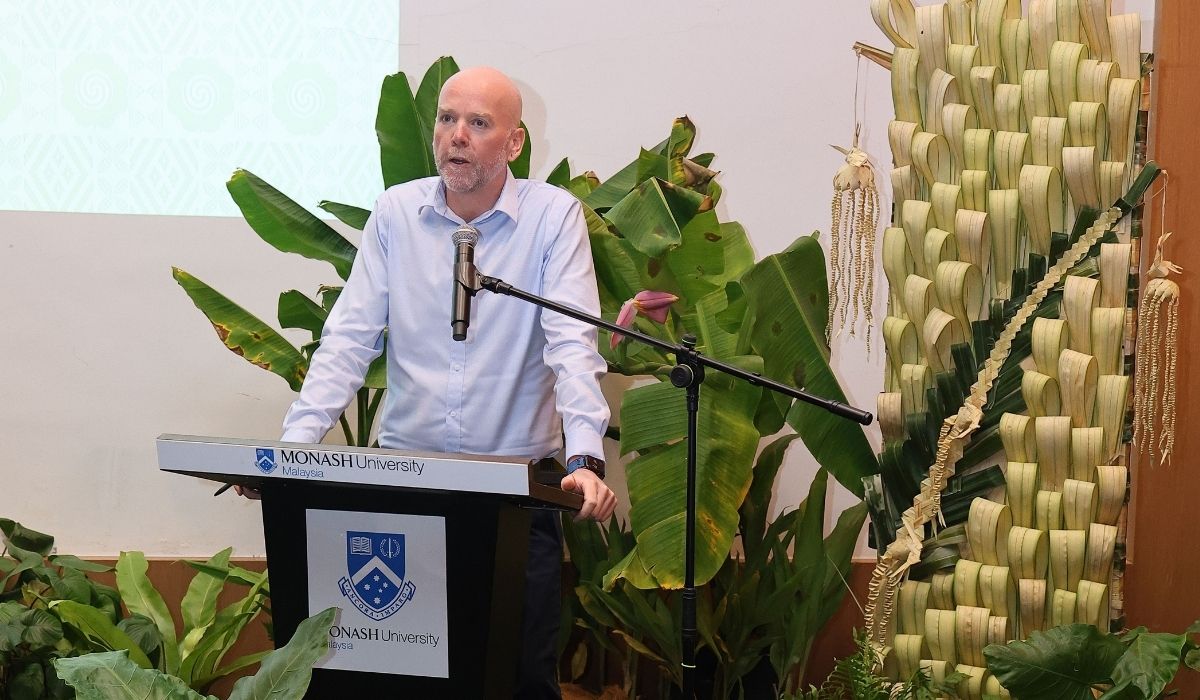 Professor Tristan Kennedy introduced the International Indigenous Research Network (IIRN) and the IIRN Malaysia Hub.
He explained that the Malaysia Hub will serve as the starting point for future collaborations across Australia, the Pacific and North America. "This network is a platform for excellent researchers and community knowledge holders to come together, share ideas and identify opportunities to pool our talents for positive community impact and the urgency with which First Nations voices must be meaningfully brought into the conversation," he said.
The event also welcomed Professor Leah E. Abayao, Vice Chancellor for Academic Affairs at the University of the Philippines Baguio, who shared experiences of Indigenous education and research in the Philippines. She spoke about the importance of strengthening regional partnerships and creating greater support for Indigenous knowledge within universities.
Reflecting on the growing international network, she said she was encouraged to see a larger network for Indigenous knowledge in Asia and the Pacific taking shape through collaborations with institutions such as Monash.
The second day of the event featured a panel discussion and workshop with academics, community leaders, artists and advocates, who explored how Indigenous knowledge can be protected, shared and strengthened through research and education. Discussions focused on moving away from extractive research practices towards genuine partnerships that empower communities.
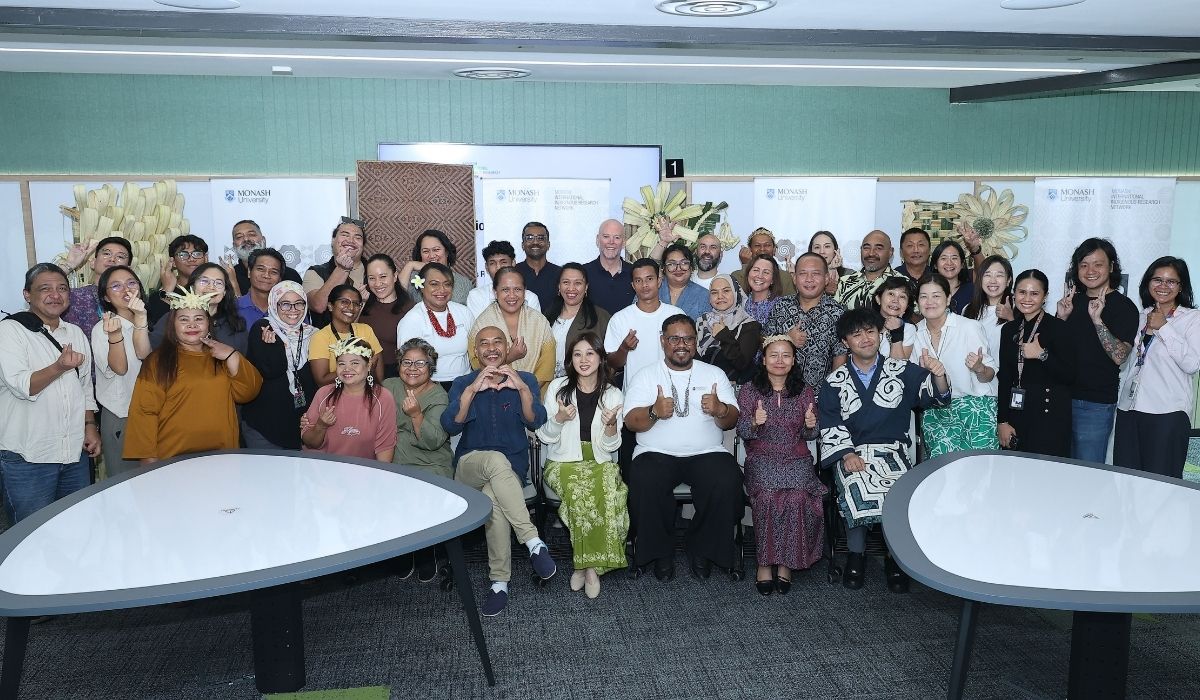 Participants, speakers and facilitators at the Indigenous knowledge workshop.
The launch of the IIRN Malaysia Hub marks the beginning of a long-term commitment to international collaboration that places Indigenous voices at the centre of research.
Through the Hub, we will continue working with Indigenous communities, researchers and institutions across the region and beyond to build meaningful partnerships, support Indigenous-led knowledge production and advance research that creates positive impact for Indigenous communities and society as a whole.