
Exchange of MoU between Monash University Malaysia and the Selangor State Government
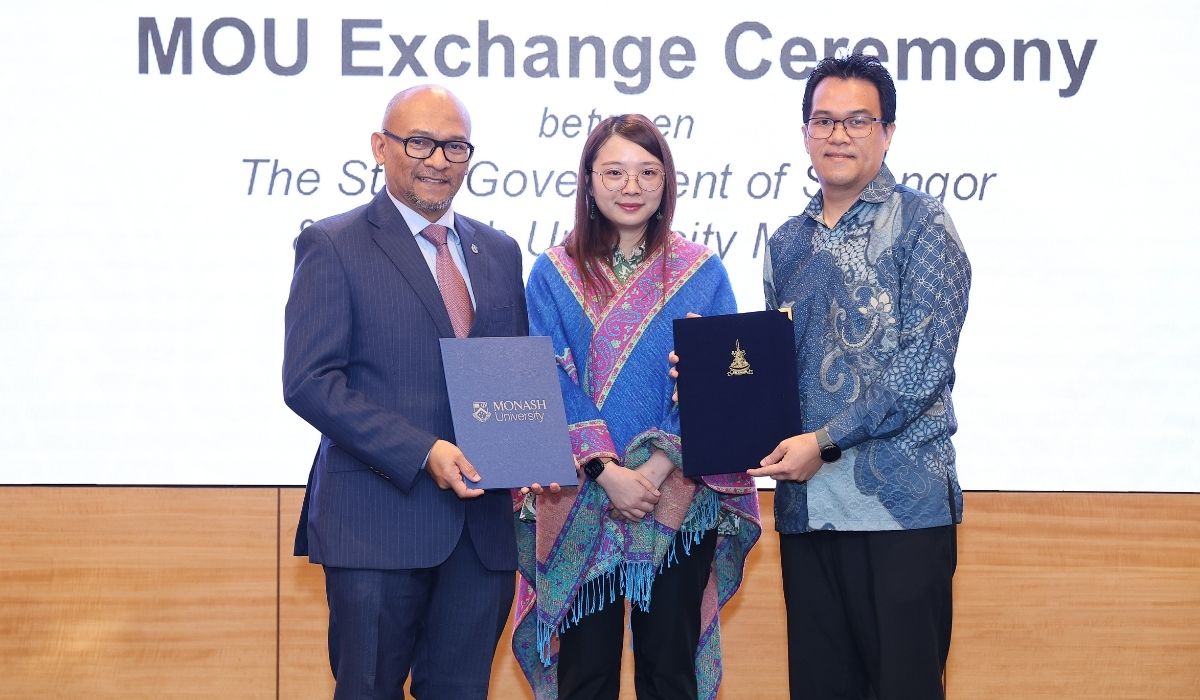 From left to right: Professor Dato’ Dr Ir Faisal Rafiq Mahamd Adikan, Yang Berhormat Puan Jamaliah Jamaluddin, and Daniel Lee
Monash University Malaysia and the Selangor State Government have formalised a Memorandum of Understanding (MoU) to strengthen collaboration in climate adaptation and evidence-based policymaking.
The MoU comes as Selangor continues to face growing climate and development pressures across water, energy, food and environmental systems. The Sungai Selangor Basin alone spans 1,955 square kilometres and supplies about 60% of Kuala Lumpur and Selangor’s water, while nearly 3,000 million litres of water were identified as flowing unused to the sea daily.
Selangor also contributes about 25% to the national GDP and is aiming to reach RM500 billion in GDP, while its population is projected to grow from around 7 million people to 8.4 million by 2050.
Exchanged during the Selangor-Monash Nexus Conference held at Sunway Resort Hotel, the MoU marks a new chapter in the partnership between Monash University Malaysia and the Selangor State Government, represented by the Selangor Climate Adaptation Centre (SCAC). The collaboration aims to support Selangor’s efforts to become more climate-resilient through integrated planning, research, capacity building and practical policy solutions, with expertise from Monash University Malaysia’s School of Engineering and School of Business contributing to the development of nexus-based climate adaptation tools and analysis.
The three-year MoU provides a basis for cooperation across academic collaboration, research initiatives, professional development, advisory and consultancy services, community engagement, joint activities and fundraising. Areas of collaboration include climate change, sustainable development, socio-economic impacts, disaster risk management, policy development, regulatory reforms, capacity building and public awareness initiatives.
The conference explores how Selangor can operationalise climate adaptation through the Water, Energy, Food and Environment Systems (WEFES) nexus approach. The framework recognises that water, energy, food and environmental systems are deeply interconnected, and that decisions in one area can create direct impacts across others.
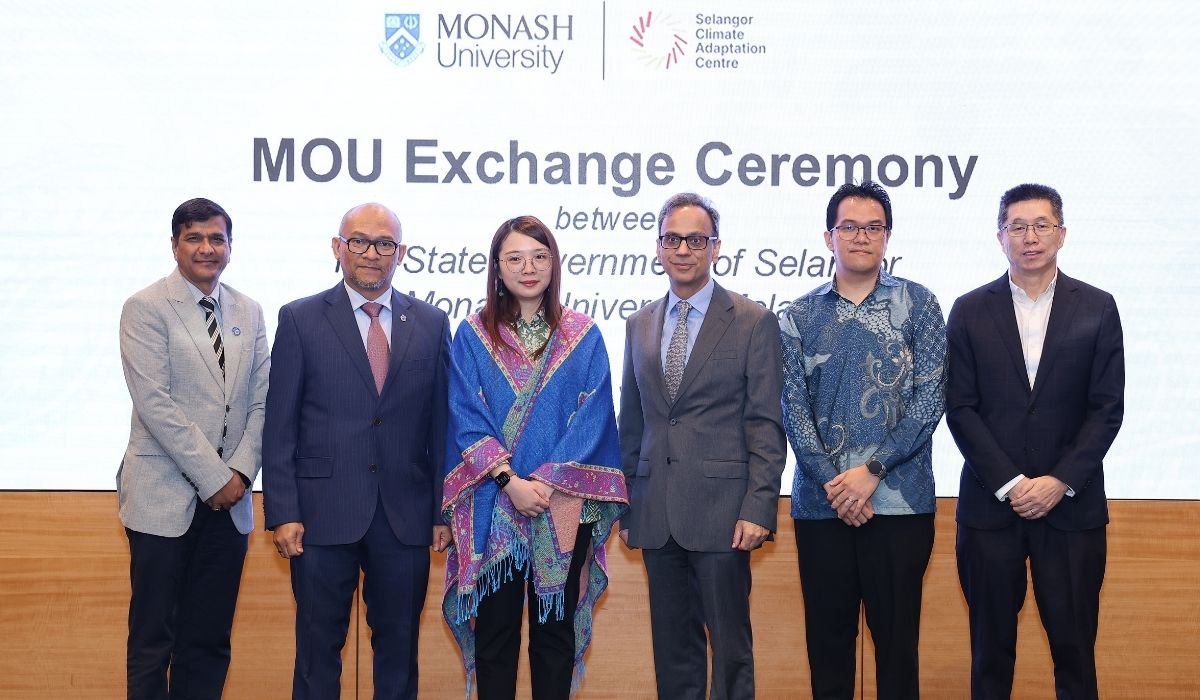 From left to right: Professor Nafis Alam, Professor Dato’ Dr Ir Faisal Rafiq Mahamd Adikan, Yang Berhormat Puan Jamaliah Jamaluddin, His Excellency Ajay Sharma CMG, Daniel Lee, and Professor Anthony Guo
Professor Dato’ Dr Ir Faisal Rafiq Mahamd Adikan, Vice President, Research and Development, Monash University Malaysia, said the MoU reflects the university’s commitment to translating research into practical solutions for society. “At the heart of this initiative is the water, energy, food and environment nexus approach. We aim to develop data-driven solutions for our climate and sustainability challenges,” he said.
Yang Berhormat Puan Jamaliah Jamaluddin, Selangor’s Executive Councillor for Public Health, Environmental Sustainability, Climate Resilience and Green Technology, said climate adaptation is no longer only about responding to climate hazards, but about safeguarding development, protecting communities and strengthening resilience. “Water, energy, food and environmental systems are deeply interconnected. Disruptions in one area can quickly cascade into others, adding another layer of complexity to how we understand and respond to climate change. Adaptation must be integrated into how we plan, invest and govern development,” she said.
A key outcome showcased during the conference was the Sungai Selangor Basin Analysis Portal, a digital dashboard developed through support from the UK government’s flagship Climate Action for a Resilient Asia (CARA) program, with support from the UK Foreign, Commonwealth and Development Office (FCDO). Developed with expertise from Monash University Malaysia’s School of Engineering and School of Business, the portal brings together geospatial data, econometric modelling, climate risk analysis, nature-based solutions and stakeholder feedback to support more targeted adaptation planning.
His Excellency Ajay Sharma CMG, British High Commissioner to Malaysia, also reaffirmed the United Kingdom’s support for locally led and integrated adaptation through the CARA program.
The conference also featured a plenary presentation by Dr Hezri Adnan, Senior Advisor for Sustainable Development at the United Nations Development Program in Malaysia, Singapore and Brunei, panel discussions moderated by Dr Gary Theseira, Chairman of Climate Governance Malaysia, as well as lightning talks on addressing gaps and setting the locally led adaptation agenda.
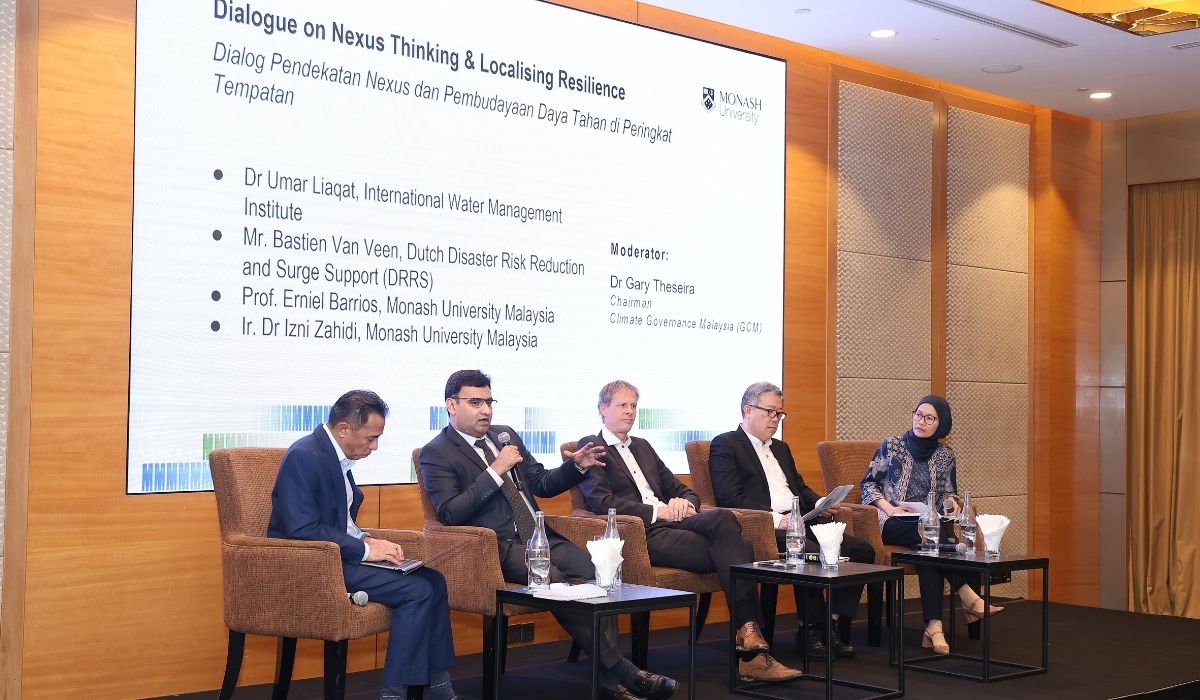 Dialogue on Nexus Thinking & Localising Resilience. From left to right: Dr Gary Theseira, Dr Umar Liaqat, Bastien Van Veen, Professor Erniel Barrios, and Ir Dr Izni Zahidi
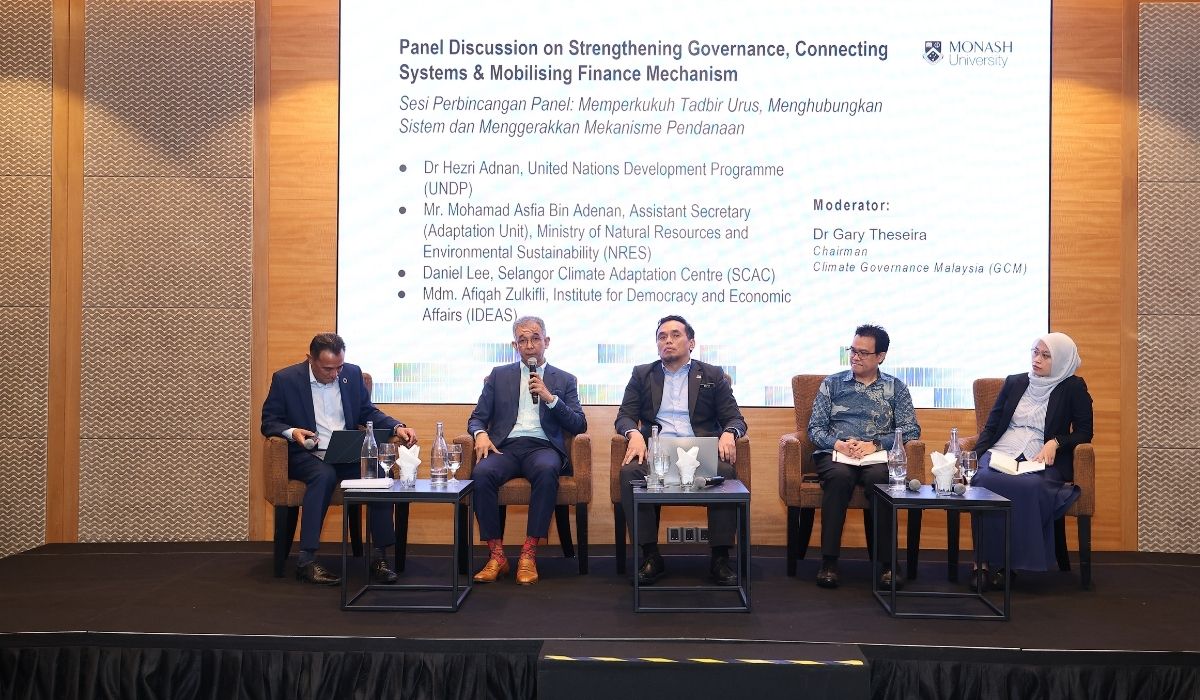 Panel Discussion on Strengthening Governance, Connecting Systems, & Mobilising Finance Mechanism. From left to right: Dr Gary Theseira, Dr Hezri Adnan, Mohamad Asfia bin Adenan, Daniel Lee, and Afiqah Zulkifli
With the MoU in place, Monash University Malaysia and the Selangor State Government are positioned to strengthen integrated climate adaptation planning, support evidence-based policymaking and build more resilient communities in Selangor and beyond.