
From classroom to industry
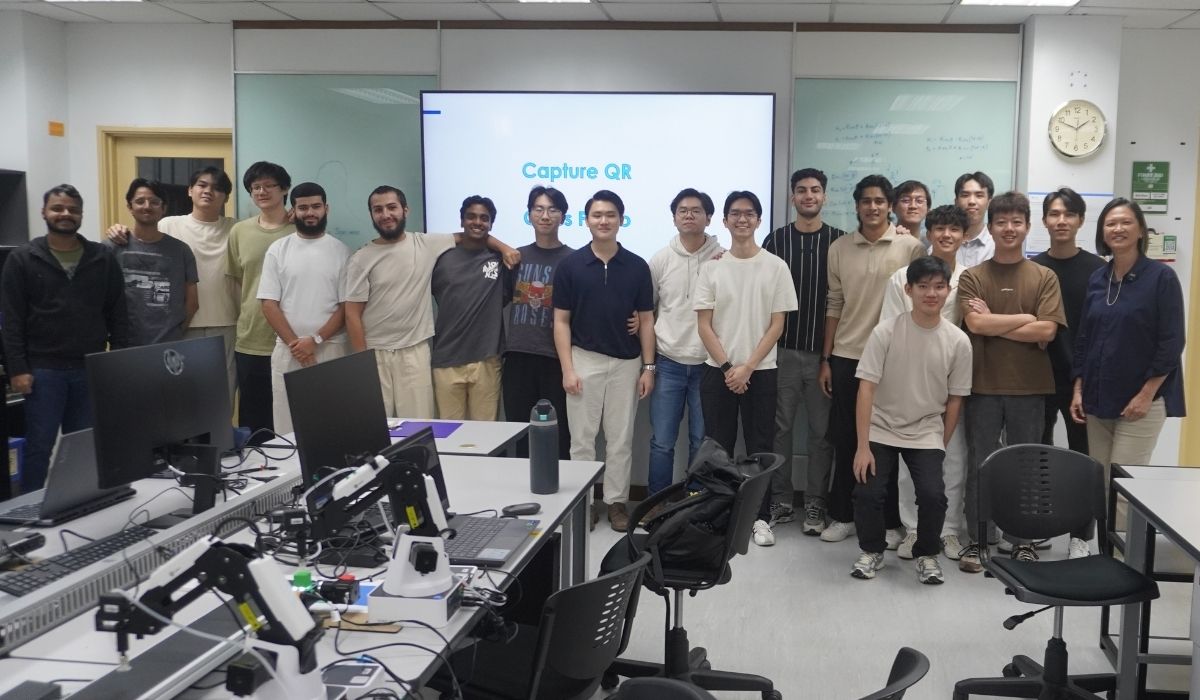 A group photo of the participants of the program.
From 21 April to 21 May 2026, APulsar Technologies Sdn Bhd, a Malaysian industrial technology company, conducted a four-week undergraduate robotics training program for 80 Bachelor of Robotics and Mechatronics Engineering students at Monash University Malaysia. The program was designed to give students practical, industry-relevant skills they can apply in real working environments.
APulsar provides digital solutions and professional training in areas including industrial automation, industrial networking, data analytics, the Internet of Things, cybersecurity and clean energy systems. The company, alongside Monash University Malaysia, are members of the Federation of Malaysian Manufacturing (FMM).
This program stemmed from the School of Engineering’s strong emphasis on industrial exposure and graduate employability, where experiential learning and industry readiness are regarded as essential components of engineering education. To support this objective, the School allocated funding for students to undertake additional professional training and certification beyond the standard academic curriculum.
The training followed a clear, step-by-step format to ensure students were well-prepared before entering the classroom. It began with a self-paced pre-class preparation phase, where students spent one hour setting up their software environment, learning the basics of Blockly programming, and completing a knowledge assessment. This gave everyone a solid foundation before the instructor-led sessions began.
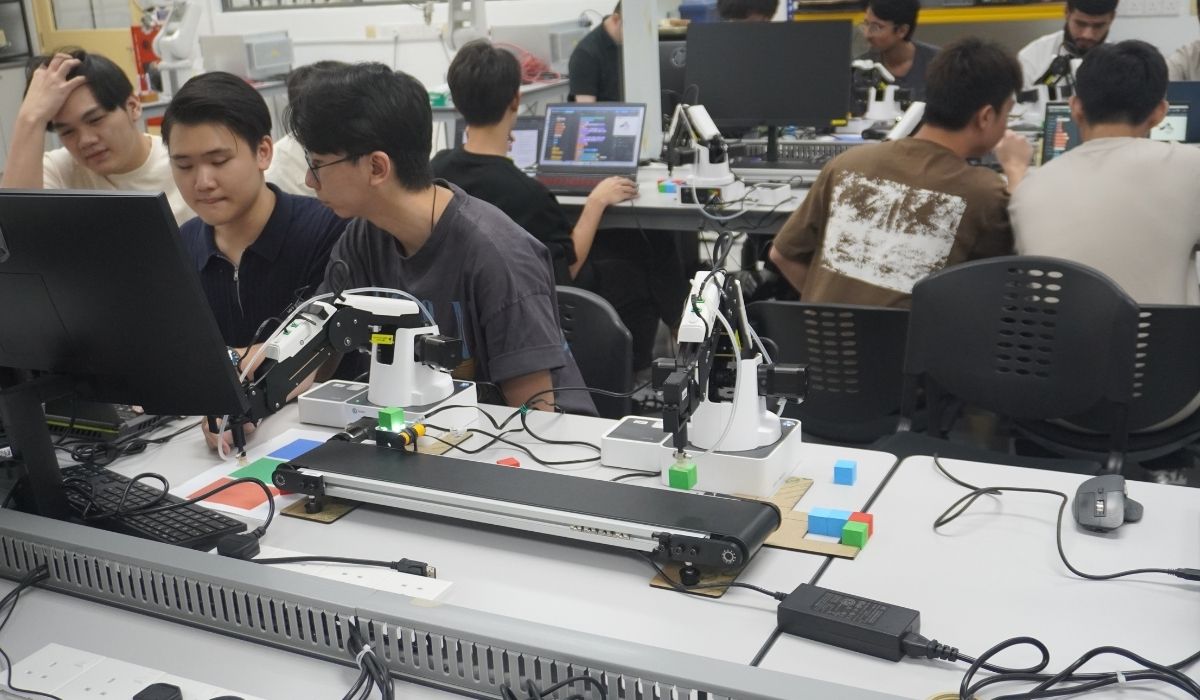 One of the sessions being conducted.
The first classroom session, Class A, focused on programming foundations and ran for three hours. Students were introduced to the DOBOT Magician robotic arm, learned how to set up different tools for the robot, and worked through guided programming exercises using Blockly. The session ended with a competency assessment where students demonstrated their ability to program a palletising operation, which is a common task in warehousing and manufacturing.
The second classroom session, Class B, also ran for three hours and moved into more advanced territory. Students applied their skills to design and execute an industrial workflow that combined a conveyor system and sensor-based pick-and-place routines. Their performance was evaluated against real-world industrial scenarios, ensuring that the assessment reflected the standards expected in the workplace.
The DOBOT Magician platform, combined with Blockly's visual programming interface, offered students an accessible yet powerful way to understand how robots work in industrial settings. Rather than focusing solely on theory, the program was built around real, hands-on experience in which students wrote code, tested their programs, and solved problems as they went.
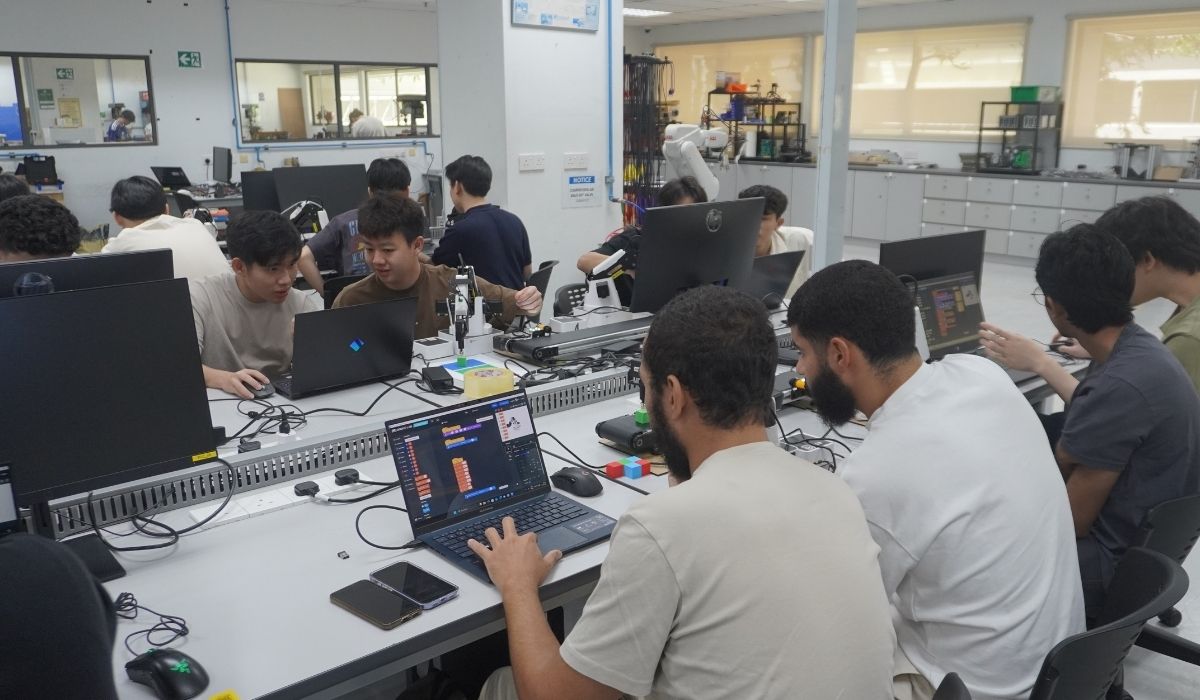 Students having hands-on experience with the robotic arm.
By the end of the training, each student had worked through a complete cycle of learning: preparation, guided instruction, independent practice, and formal evaluation. This structure ensured that competency was genuinely developed, not just assumed.
The completion of this program marks a meaningful step forward in preparing Malaysian undergraduates for careers in automation and robotics. With 80 students trained across seven hours of structured learning, the collaboration between Monash University Malaysia and the APulsar Dobot Team demonstrates what is possible when academic institutions and industry partners work together with a shared goal. Ultimately, initiatives like this highlight the vital role that Industry-Academia Collaboration plays in strengthening our nation’s digital talent pipeline. As industries rapidly transition toward automation and smart manufacturing, bridging the gap between university and lecture halls and modern factory floors becomes essential. By combining academic knowledge with industry-validated technologies, we ensure that the next generation of graduates is not just digitally literate but highly competent and ready to drive industrial transformation forward.