
Reimagining healthcare through preventive technology
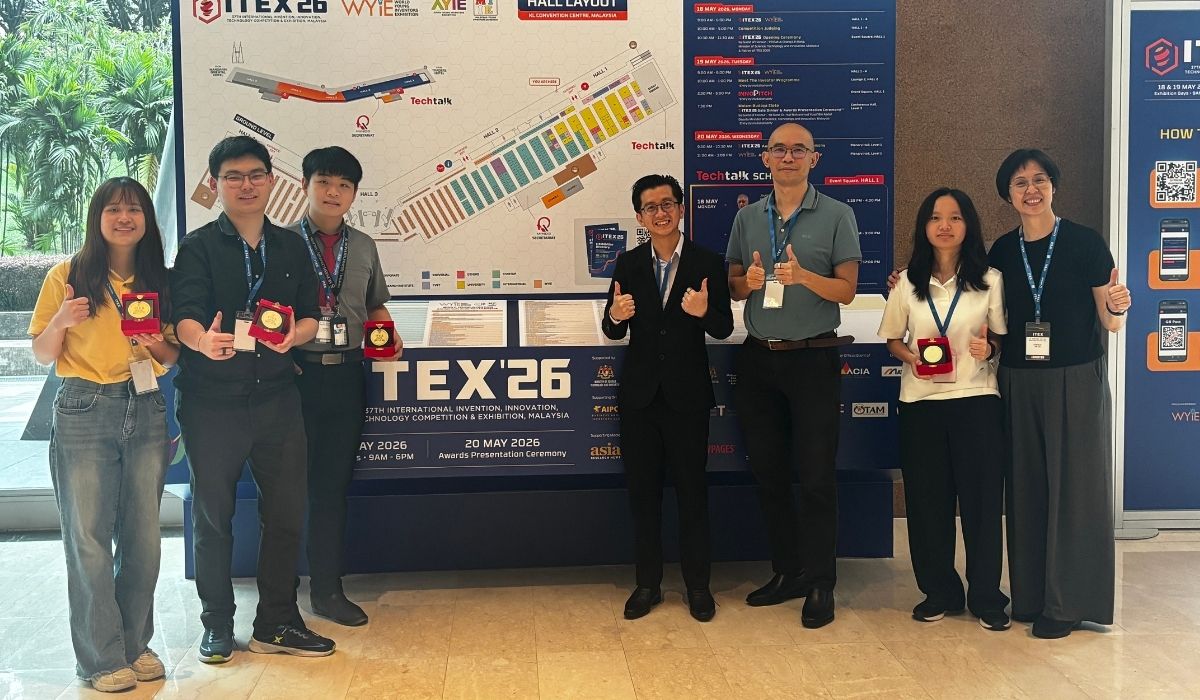 From left to right: Teoh Xing Tong, William Wong Yi Yang, Low Yinn Ean, Dr Howgen Pratama Kesuma, Lew Hon Kean (Signsbeat Pte Ltd), Ng Kye Li, Tracey Yim (Signsbeat Pte Ltd)
Led by Dr Howgen Pratama Kesuma, a team from the School of Engineering has won a Gold medal at ITEX 2026 for developing a prototype point care system that aims to make healthcare more accessible.
The project was developed in collaboration with Signsbeat Pte Ltd and its co-founder, Lew Honkean. The student team (Low Yinn Ean, William Wong Yi Yang, Teoh Xing Tong, and Ng Kye Li) created a smart supplement dispensing machine that connects wearable health data with personalised health recommendations.
The project was inspired by the growing pressure on healthcare systems, where patient numbers continue to rise while the number of doctors and medical practitioners may not be increasing at the same pace. According to Dr Howgen, long waiting times at clinics and hospitals reflect the reality of a system under strain.
“The waiting hours are not because the doctors are slacking, but because their commitments and their patients are that many,” he shared. “Can you imagine they have to do 20-plus-hour shifts while they cannot afford to make any mistakes? That is really unreasonable, but that is the reality.”
 Dr Howgen (on the right) receiving the Gold Award on stage
Today, many people use smartwatches and wearable devices to track data such as heart rate, sleep, movement, and recovery. However, the team observed that this -data is often not meaningfully interpreted by users. This is where Signsbeat’s system plays a central role. Using machine learning algorithms trained on patient data, medical journals, and professional healthcare expertise, the system analyses wearable data and translates it into personalised guidance on diet, lifestyle, activity levels, and supplement recommendations.
Users wear their smart wearables as usual and tap their NFC-enabled device on the machine. The machine then syncs the data to the backend, where professional healthcare providers analyse the user’s metrics and adjust the recommended supplement dosage accordingly.
Once the recommendations are ready, the information is sent back to the machine. Users can then tap “Dispense” to receive a personalised liquid supplement dosage tailored to their daily health metrics, with up to 1ml accuracy.
The team chose liquid supplements because they allow for more precise personalisation compared with solid supplements. The machine is also programmed with a self-cleaning function for its pneumatic piping to prevent residue from affecting the dosage.
What sets the project apart is its integrated ecosystem. Rather than functioning only as a health app or a standalone dispenser, the system connects data collection, medical analysis, personalised recommendations, and dispensing into one platform.
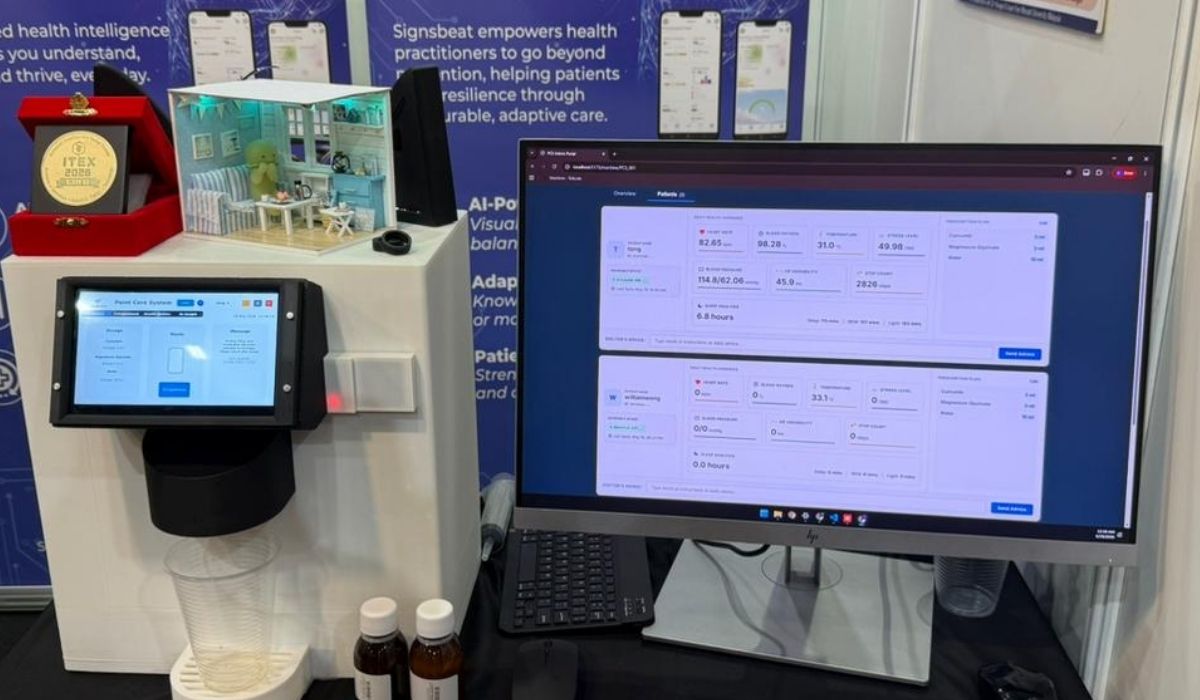 The prototype point care system on display at ITEX 2026
To test the system, the team calibrated the dispensing amount using measuring cups and developed a dedicated power distribution board to manage power from the electrical outlet to the machine. Since the system involves liquid, electrical components were coated with epoxy to provide additional protection in case of leakage.
Each student contributed a different area of expertise. Low Yinn Ean, the Hardware Designer, developed the 3D CAD models, wired the internal electronics, and designed the logic circuits. William Wong Yi Yang, the Backend Developer, built the APIs, Raspberry Pi-to-Arduino communication pipeline, RFID login system, Firebase integration, and SCADA dashboard. Teoh Xing Tong, the Frontend Developer, designed the user interface on the dispenser machine and integrated it with the backend and hardware systems. Ng Kye Li, the Marketing Lead, translated the technical features into a clear product narrative for everyday audiences.
Moving forward, the team hopes to develop the point care system into an end-user customer-grade product by working with manufacturers to improve its design and market readiness. Through the point care system, they hope to bring personalised preventive care closer to homes, workplaces, and communities.