
Assessing ecosystem services in tropical marine protected areas

Written by Dr Lim Voon Ching, School of Science
Ecosystem services (ES) are the benefits that human obtain directly and indirectly from the ecosystems which contribute to their well-being. When developing an integrated management plan for a protected area, understanding the supply and demand of ES within is crucial. ES supply is the capability of a place to offer ecosystem goods and services within a period. In contrast, ES demand is the ecosystem goods and services consumed and used in the area. A high level of demand exceeding the supply level in a room may lead to unsustainable use of ecosystem goods and services. Therefore, identifying the mismatches between ES supply and demand and mapping the ES within the area could facilitate the evaluation of trade-offs and synergies associated with decision-making and management for natural resource use. For this study, we used the recently proposed ES assessment matrix approach to assess the ES.
Assessing ecosystem services (ES) is crucial for developing an integrated management plan for a protected area. However, such assessment is challenging for marine ecosystems. The data remains limited often due to difficulties in conducting a large-scale spatial survey and the mobile nature of marine animals of concern. Furthermore, the recently proposed ES assessment matrix is used primarily in European countries and manages Marine Protected Areas (MPA) in tropical countries. In addition, the planning and management of MPAs in low countries often use a top-down approach that excludes the local communities, who are the primary ES users.
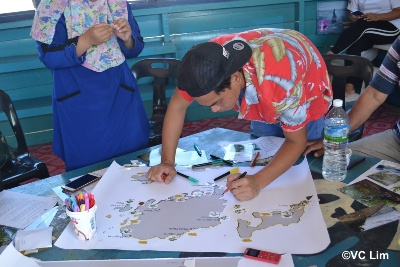
This work is community-partnered participatory research that involved the local communities in assessing ecosystem services (ES) in marine protected areas (MPA) across Malaysia, Indonesia, the Philippines, and Vietnam. It served as a platform for local communities to voice their thoughts and consequently contribute to the management of the MPAs. The results from the ES assessment could also improve the existing management plan for the MPAs. Furthermore, this work serves as a technical example for other tropical MPAs that aimed for inclusive and ecosystem-based management. This study also demonstrated how participatory mapping and Photovoice could provide further support to the ES assessment matrix and consequently revealed the potential of such assessment to tropical MPAs.
The stakeholders include the local communities residing within the MPAs, authorities that manage the MPAs, local experts with a diverse background, and non-governmental organisations (NGO) and community-based organisations (CBO) that have been championing the establishment of the MPAs. Meanwhile, our primary funder is United Kingdom Research and Innovation (UKRI) through Global Challenges Research Fund (GCRF) and The Rufford Foundation through The Rufford Small Grant. Monash University Malaysia has provided capacity-building training workshops and various platforms for promoting the work to the Monash community and the public. As a result, two Q1 journals have accepted two manuscripts from this study, and a technical guide is currently underway.