
Enabling the educational empowerment of young refugees
Education is key to brighter futures for refugee children and youth. Unfortunately, many face obstacles that hinder their access to higher education. Some barriers include lack of legal status, inability to provide identification documentation, limited economic resources, and non-recognition of previous educational qualifications.
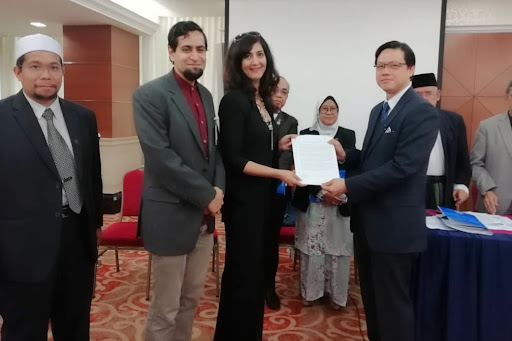 Presentation of the Executive Summary of the Whitepaper proposal to the All Party Parliamentary Group Malaysia (APPGM) on Refugee Policy. | 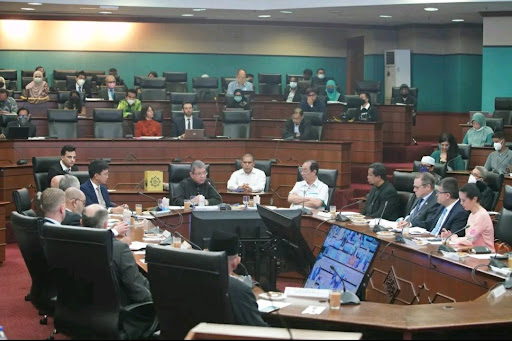 "High-Level Roundtable on Refugee Education: Moving the Agenda Forward'' hosted by the All Party Parliamentary Group Malaysia (APPGM) on Refugee Policy with International Islamic University Malaysia, led by the Minister of Foreign Affairs, Dato' Sri Saifuddin bin Abdullah on World Refugee Day 2022. |
Malaysia, for example, has not signed the 1951 Refugee Convention and lacks a national legal framework for refugees, leading to an absence of formal education structures. Consequently, refugee children and youth in Malaysia rely on an informal parallel education system.
The Connecting and Equipping Refugees to Tertiary Education (CERTE) initiative, developed by Opening University for Refugees (OUR), United Nations High Commissioner for Refugees (UNHCR), and the Non-Governmental Organization (NGO) Fugee, is a commendable effort to support young adult refugees in accessing private tertiary education opportunities.
In collaboration with community learning centres, NGOs, and universities, the CERTE task force supports young adult refugees accessing tertiary education through knowledge sharing, bridge courses, school readiness preparation, and mentorship. CERTE strives to identify motivated refugees with academic potential, empowering them to pursue higher education at any university or college.
Since 2017, the Monash University Malaysia PRME (Principles of Responsible Management Education) platform, based in the School of Business, has been a dedicated contributor to the CERTE program. In June this year, hosted online by the PRME platform, 15 refugee youth participated in the program.
The impact of CERTE is evident in its outcomes. In 2020, CERTE facilitated the admission of 19 refugee youth into private tertiary institutions. By 2023, 41 refugee students were accepted into private tertiary institutions, demonstrating the program's positive impact in supporting and empowering refugees in their educational journeys.
Recognising the necessity of higher education, a coalition of academics from private tertiary institutions, collaborating with humanitarian actors, put forth a Whitepaper proposal titled "Towards Inclusion of Refugees in Higher Education in Malaysia." The paper proposes a five-year pilot program, in which refugees who have been verified of their refugee status by the UNHCR and met admission standards set by the signatory institution can use their UNHCR Refugee Card as valid identification to facilitate the enrolment process. The duration of five years is to monitor and evaluate the program to determine the long-term viability of this initiative.
The Executive Summary of the Whitepaper was presented to the All Party Parliamentary Group Malaysia (APPGM) on Refugee Policy. More recently, the Whitepaper was shared with relevant government stakeholders, such as the Ministry of Education, the Ministry of Foreign Affairs, the National Security Council, and the Prime Minister's office. It was discussed at the "High-Level Roundtable on Refugee Education: Moving the Agenda Forward'' hosted by the APPGM on Refugee Policy with International Islamic University Malaysia in 2022. This proactive dissemination aims to encourage supported, structured and collaborative efforts among key stakeholders to address the issue of access to higher education for refugee youth in Malaysia.
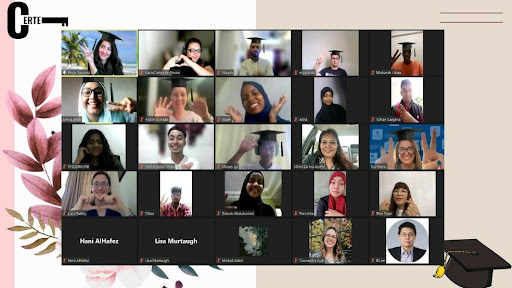
CERTE Graduation 2022
Such a move is a practical step towards inclusion. When combined with the right to work, it is a powerful catalyst for sustainable development, enabling refugees to become independent contributors to society. It equips refugee youth who face long resettlement waits with the opportunity to develop knowledge, skills, and meaningful experiences. It also encourages constructive interaction and harmony between refugees and the local society, fostering unity and understanding. By showcasing refugee graduates as positive role models, others are inspired to follow productive paths, reducing social ostracisation and the risks of illicit activities or radicalisation.
Education plays a vital role in fostering confidence, hope, and peace. In line with the theme of World Refugee Day 2023, “hope away from home,” education empowers refugee youth to become agents of change, make valuable contributions to their host countries, and ultimately work towards rebuilding their home countries. Thus, to ensure a promising future for these young individuals, it remains vital to advocate inclusive policies and programs that prioritise and provide them with the education they need.
Written by,
Priya Sharma
Director of PRME/Chair PRME Chapter ASEAN+
School of Business
Monash University Malaysia