
Monash University Malaysia student wins national James Dyson Award
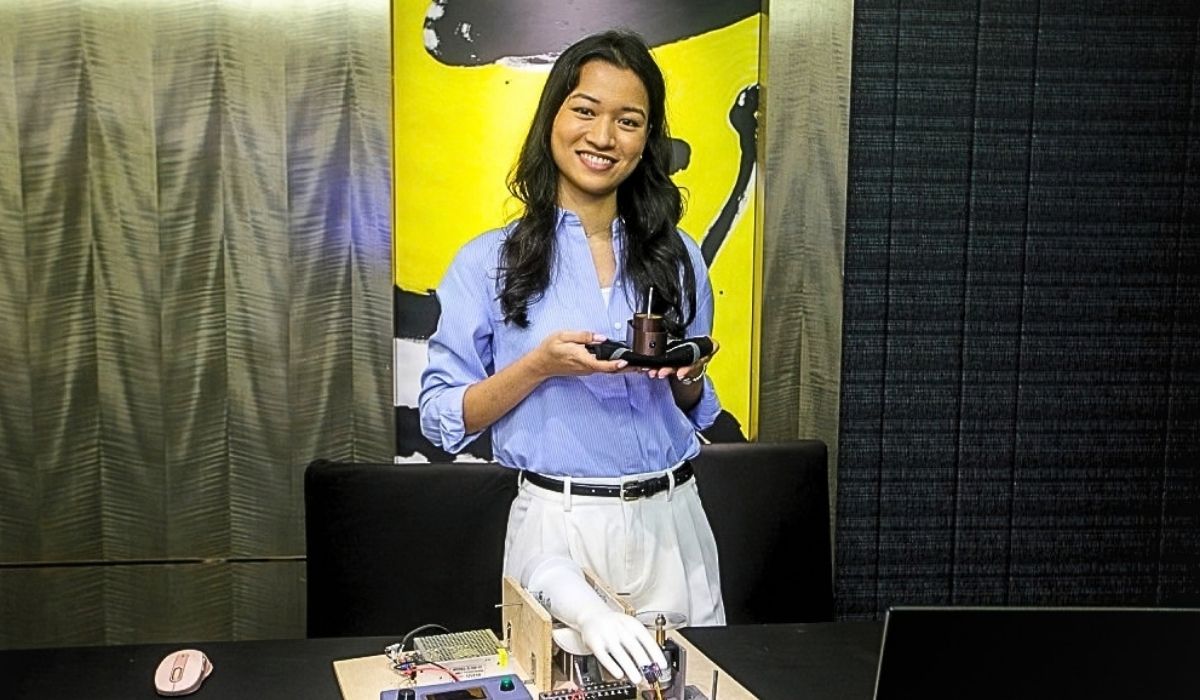 Hayley Nea Iaduray, National Winner of the 2026 James Dyson Award (Photo credit: Raymond Manuel).
Robotics and Mechatronics Engineering student, Hayley Nea Iaduray, has been named the Malaysia National Winner of the 2026 James Dyson Award for ZeMor, a tunable, battery-free wearable device designed to help reduce hand tremors associated with Parkinson’s disease. Developed as her final-year engineering project, the invention explores how a familiar mechanical principle can be adapted to support everyday independence.
The James Dyson Award is an international design competition run by the James Dyson Foundation that celebrates and encourages the next generation of design engineers.
ZeMor, short for “Zero Tremor”, draws inspiration from tuned mass dampers, mechanisms used in tall buildings such as Taipei 101 to reduce swaying. Hayley applied this principle on a miniature scale, developing a weighted mechanism that moves in response to tremors, helping absorb and dissipate kinetic energy without batteries or electrical power.
The device can be adjusted to suit different tremor frequencies by adding or removing weights. Its design combines readily available components, including slotted weights, steel ball bearings and spring-based dampers, with a 3D-printed housing.
Over the course of a year, Hayley developed and refined multiple prototypes, testing the concept using a custom-built rig that simulated Parkinsonian tremors. The process involved examining how the components interacted and making adjustments to improve the internal mechanism's movement.
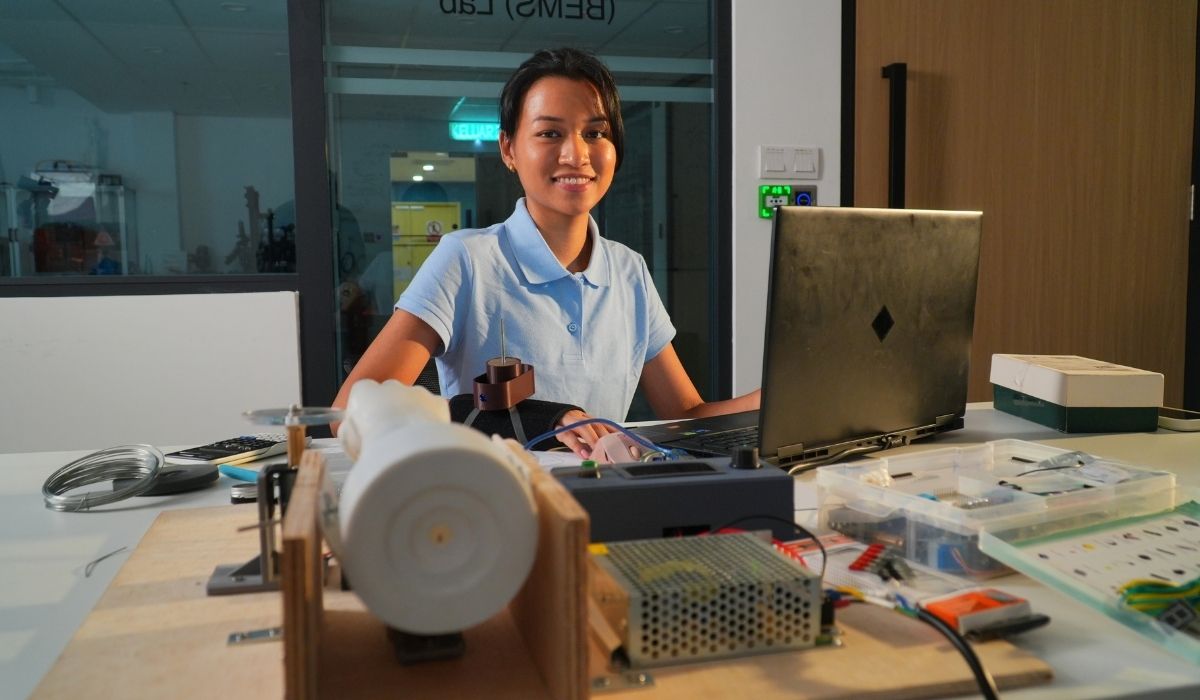 Hayley working on the ZeMor prototype (Photo credit: James Dyson Award).
Reflecting on the achievement, Hayley said the possibility of helping people manage everyday activities remained central to her work. “What excites me most is the possibility that a relatively simple piece of engineering could help people regain confidence in everyday tasks that many of us take for granted. This recognition is a reminder that good ideas don't always have to be complex, they just need to solve a real problem in a meaningful way,” she said.
She then further added, “It’s also incredibly motivating. There is still a lot of work to be done, but this recognition gives me the confidence to continue refining the design and exploring how ZeMor can evolve in the future. If ZeMor can one day help even one person gain a little more independence in their daily life, every challenge and failed prototype along the way will have been worth it.”
Pae Yusof, Head of Design Engineering at Dyson and a judge for the 2026 James Dyson Award Malaysia, said, “Among this year's entries, ZeMor stood out for its ability to reimagine a familiar engineering principle in a way that addresses a real-world challenge. It’s a thoughtful example of how innovation often comes from looking beyond traditional boundaries and finding new applications for existing ideas. What impressed us most was the rigour behind its development. Hayley demonstrated a clear understanding of the problem, a willingness to test and refine her assumptions, and the persistence needed to translate an idea into a functioning prototype.”
As our national winner, Hayley will receive RM27,160 from the James Dyson Foundation to support further development and improvement of the current prototype, which dampens tremors along a single axis, into a multi-directional system that can respond to tremors from multiple angles.
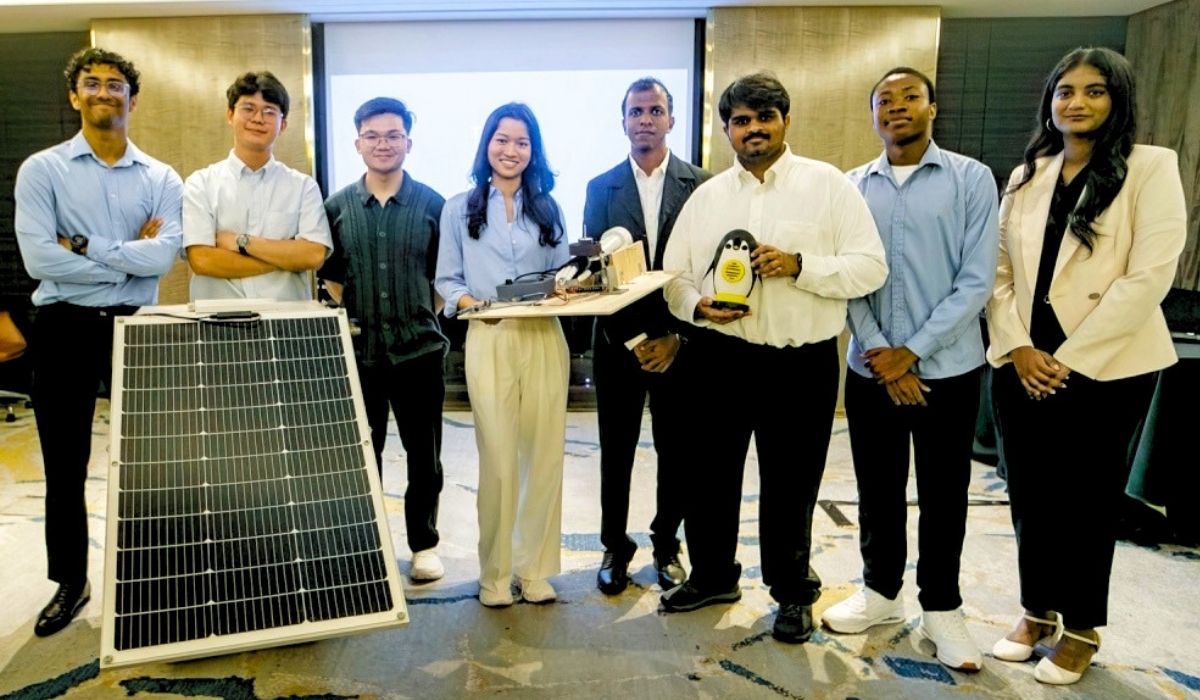 Hayley (fourth from left) alongside the Malaysia national runners-up.
The next phase will involve working with medical professionals and research partners to evaluate the device with people living with Parkinson’s disease, building on the testing conducted using simulated tremors.
ZeMor will progress to the international stage alongside Malaysia’s two national runners-up, with the opportunity to compete for an international prize of RM162,999. A global team of Dyson engineers will select the international top 20 shortlist, to be announced on 14 October 2026. The international winners, selected by Sir James Dyson, will be announced on 4 November 2026.
As she continues to refine and evaluate ZeMor, her work demonstrates how knowledge developed at university can provide a foundation for practical innovation.