
Deepfake abuse: Voice of change
The School of Arts and Social Sciences recently hosted a special lecture titled “The Global Rise of Deepfake Abuse: Harms, Implications, and Regulation,” which featured prominent activist and lawyer Noelle Martin. The session explored the circumstances and experiences of deepfake abuse that has impacted women through the non-consensual production, distribution of and threat to distribute intimate images that are manipulated as pornographic materials.
Martin shared the broader social implications of image-based sexual abuse and the shortfall in effective online safety measures that exist nowadays. The lecture covered the urgent need for effective removal practices of deepfake content as well and acknowledged the limitations of doing so. As a survivor of deepfake abuse herself, Martin dedicated her career to the prevention of image-based sexual abuse. With over a decade of lived experience, she remains an active voice for legal and policy reforms on deepfake worldwide.
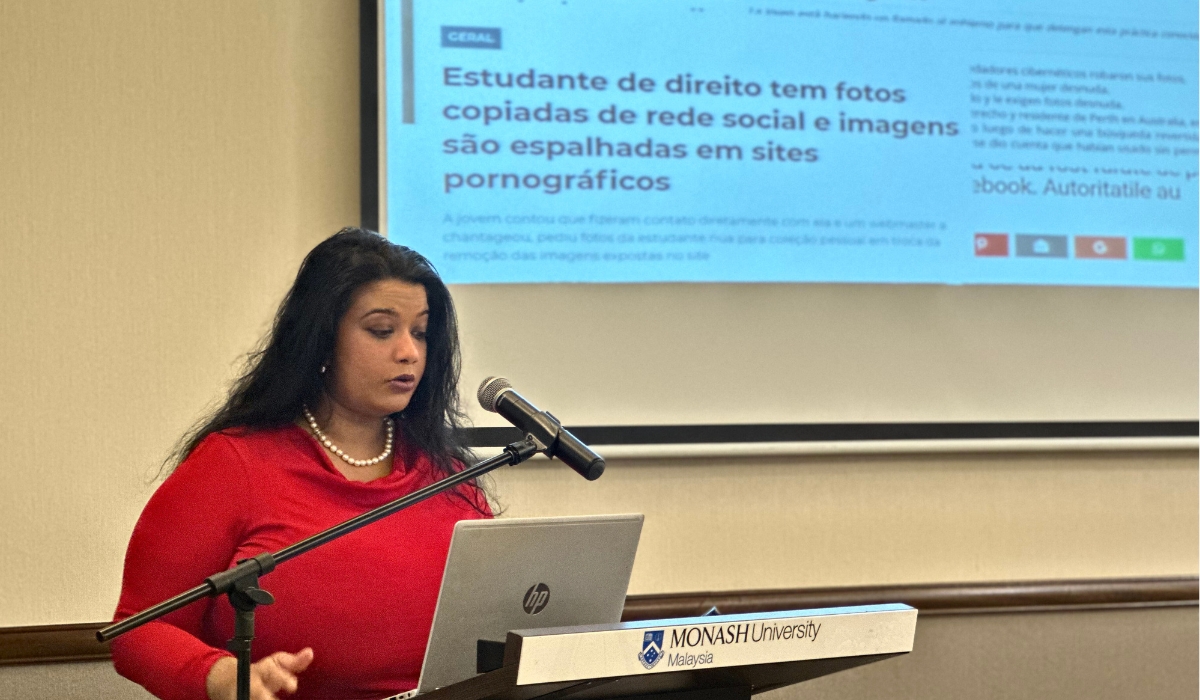 Noelle Martin discussed the broader implications of deepfake abuse, including the degradation of women.
During the lecture, Martin spoke about how complex the circumstances of the exposure of deepfake technology are and its potential to cause serious harm to individuals and communities. “You can't sugarcoat the confronting and graphic nature of this abuse,” she asserted, sharing personal experiences that illustrated how deepfake abuse often targets vulnerable populations, particularly women and children, who face harassment and emotional distress as a result of non-consensual image manipulation.
An insightful Q&A session, moderated by Dr Sharon Bong, Professor of Gender Studies at the School of Arts and Social Sciences, addressed the significant issues concerning sexual violence platforms and deepfake’s violation of one’s right to consent, bodily integrity and autonomy. One of the key questions highlighted the difficulties victims encounter in providing evidence for sexual violence cases. Martin acknowledged this challenge, emphasising the need for better legal processes that document victims' initial requests to have the content taken down.
She states, “When we focus on removal, what happens is victims will often tell people, law enforcement, regulators, they just want things removed. That is what they really want. But over time, they may realise that removal was just a product of being distressed, and they might need to pursue justice in a more meaningful sense.” By advocating for better documentation practices, Martin seeks to empower victims, allowing for more significant legal action in the future.
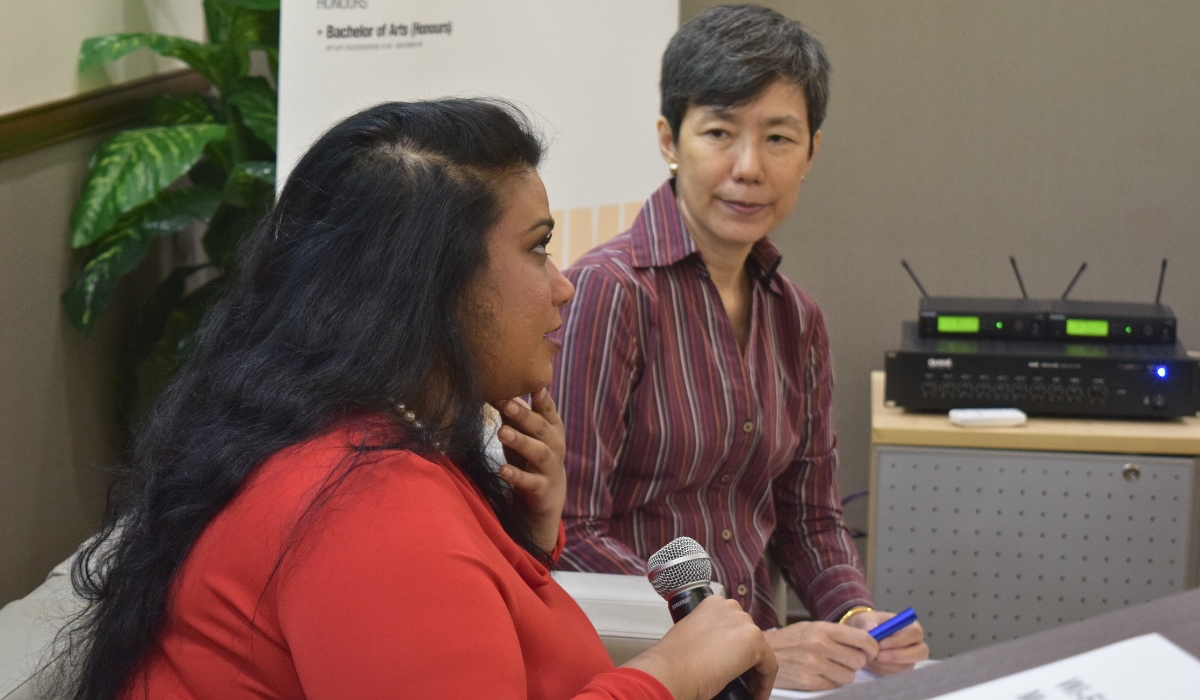 Noelle Martin describes the emotional toll of the situation and the lack of support she received.
Coping with the anger and sadness resulting from gender violence and discrimination was another important question that was raised. Martin candidly shared her struggles with these emotions, revealing the absence of a clear path for navigating such complex feelings. As a woman, she found that her appearance, her manner of speaking, the way she dressed—all of it came under attack. Being a woman of colour, she felt this even more acutely, pointing out the additional layers of challenges she faced.
She shared her thoughts on the emotional toll of speaking up about her experiences, reflecting on the sadness she felt for all the women who had suffered before her. These women, she noted, had been mistreated by a system that seemed designed to oppress them. Her words painted a picture of a deep-rooted problem, one that required a significant cultural shift.
The special lecture provided a complete and deeper understanding of the challenges posed by deepfake abuse, emphasising the urgent need for systemic change in how we approach online safety and support for victims and survivors. By addressing critical issues such as the lack of current legal processes, and the emotional toll of gender-based violence, participants gained valuable insights into navigating the reality of deepfake abuse. Monash University Malaysia stands in full support of these initiatives, demonstrating its commitment to fostering a safer online environment and advocating for the wellbeing of those affected by deepfake abuse.