
3-Minute Research Presentations
Learn from our leading researchers as they share key learning points from their research and take home practical advice on how you can contribute to a greener future. Each presentation is strictly limited to three minutes with the outcomes tied to one or more of the United Nations Sustainable Development Goals.

Associate Professor Poh Phaik Eong
Topic: Water security in rural areas
Water is essential to sustain human lives. Yet, access to potable water is challenging in many rural areas in South East Asia (SEA), leading to various health issues. In this project we aim to implement decentralised filtration system fitted with a biodegradable membrane to remove contaminants and disinfect in a single step in different sites in SEA. Installation of such system is expected to improve accessibility of sanitised water, reduce water borne diseases and quality of life.
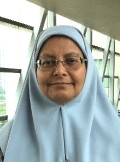
Associate Professor Sharifah Syed Hassan
Topic: Community involvement in research and control of dengue
Knowledge gained from serological and clinical data in community-based dengue studies and active community participation in dengue vector control are essential for assessing the need for effective dengue prevention and control strategies. Based on the survey questionnaire on the knowledge, attitude and practice among 327 participants in a hot spot area, we also found that the local community had good knowledge and positive attitudes on dengue infection and dengue elimination programmes promoted by the Ministry of Health. However, the community did not put this knowledge and attitude to practice in the fight against dengue infection. There need to be further brainstorming and collaboration among the three key stakeholders - researchers, inspectorate and public to promote specific behavioural change in the community in the battle against the dengue menace.

Assoc. Prof. Tan Chee Pin (Edwin)
Topic: Sustainable Integrated Transport Ecosystem
Traffic congestion affects almost everyone in this modern day and age, with consequences ranging from financial to health. With rapid urbanization, this problem is only set to get worse. This presentation discusses the preliminary results of a multi-disciplinary study that investigate factors that cause traffic congestion, and possible remedies to alleviate the problem and make the city a more liveable place.

Dr Foo Su Chern
School of Science
Topic: Touching lives, improving life: one microalgae at a time
The current world population is at 7.2 billion today with a 2018 UN forecast projected to increase to 8.1 billion by 2025. Urbanization results in complex challenges but opens up unprecedented opportunities for creative solutions. The Ocean and Rainforest are the largest natural CO2 sequestration systems in which microalgae is responsible for 70% of world oxygen whilst trees contribute to roughly 28%. Microalgae are able to convert CO2 and sun energy into useful antioxidant products (i.e. carotenoids, polyphenols). The use of microalgae is expected to achieve the ultimate goal of reducing CO2 in the atmosphere; parallel to Malaysia’s National Green Technology Policy (NGTP) on 24th July 2009 which targets to reach zero or low greenhouse gas emission.

Dr Cyren Wong Zhi Hoong
Malaysia Immersion Hub
Topic: Fighting Dengue with Nature in Malaysia
Dengue fever is one of the most widespread of mosquito-borne illnesses in Malaysia. With over 80,000 incidents and 113 deaths recorded in the first half of this year alone, dengue cases has risen to an all-time high thus spurring the need for more effective and comprehensive methods of control. The main challenges in curbing the spread of dengue lies within the life histories of its natural vectors; two species of mosquitoes from the Aedes genus that have adapted to thriving in urban environments due to higher ambient temperatures and the increasing lack of Aedes’ natural predators in these spaces.
By understanding the ecology of urban spaces, and comparing the differences in life-histories of urban and forest dwelling Aedes mosquitoes, our team’s research focuses on exploring the potential of nature-based approaches in managing the spread of dengue.